Mastenbroek T G, Karel M F A, Nagy M, Chayoua W, Korsten E I J, Coenen D M, Debets J, Konings J, Brouns A E, Leenders P J A, van Essen H, van Oerle R, Heitmeier S, Spronk H M, Kuijpers M J E, Cosemans J M E M
Department of Biochemistry, Cardiovascular Research Institute Maastricht (CARIM), Maastricht University, Maastricht, The Netherlands.
Department of Complex Tissue Regeneration, MERLN Institute for Technology-Inspired Regenerative Medicine, Maastricht, The Netherlands.
Sci Rep. 2020 Nov 9;10(1):19360. doi: 10.1038/s41598-020-76377-8.
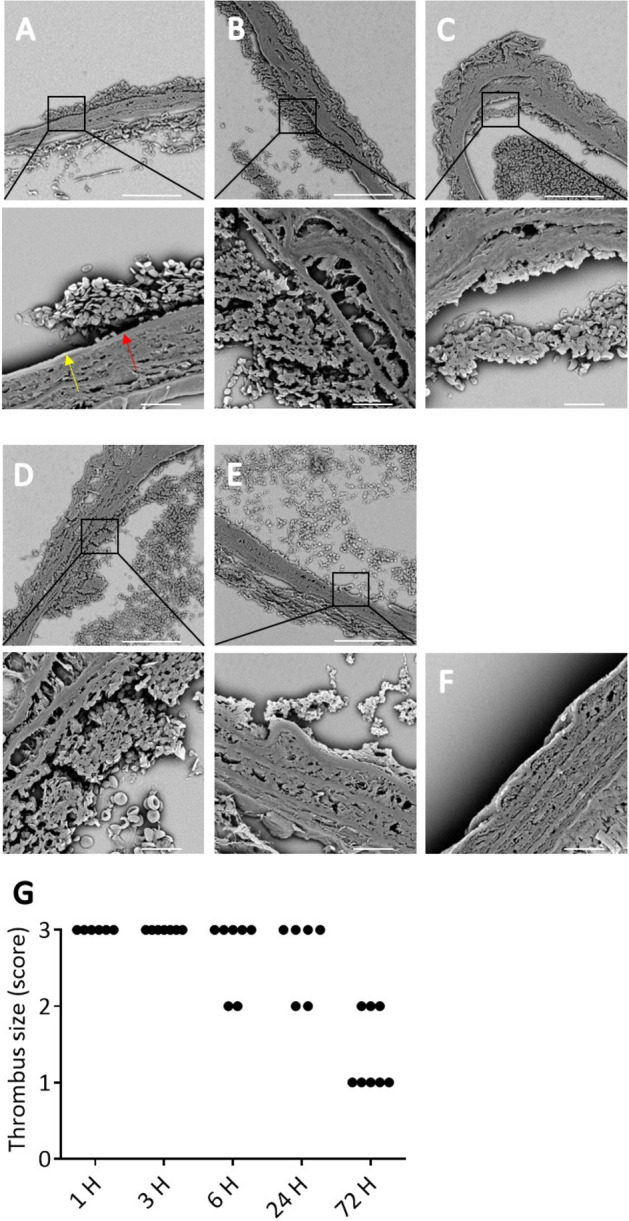
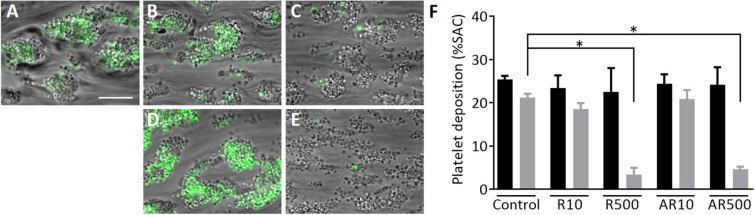
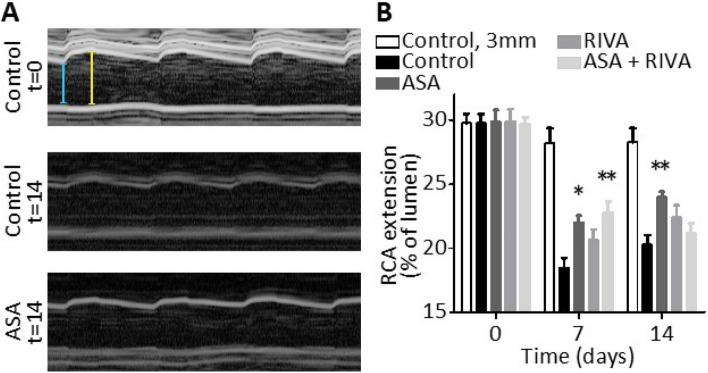
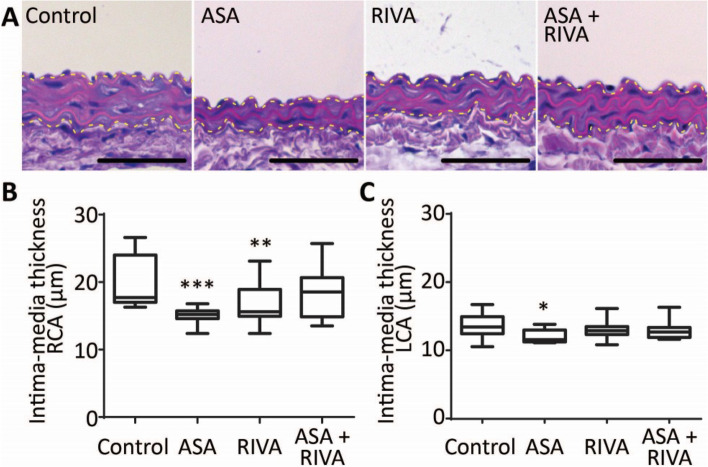
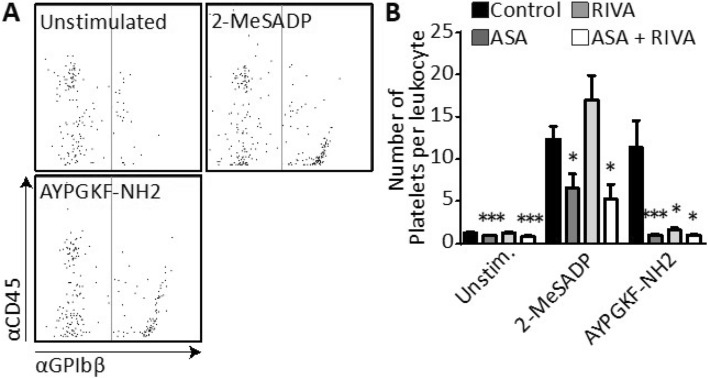
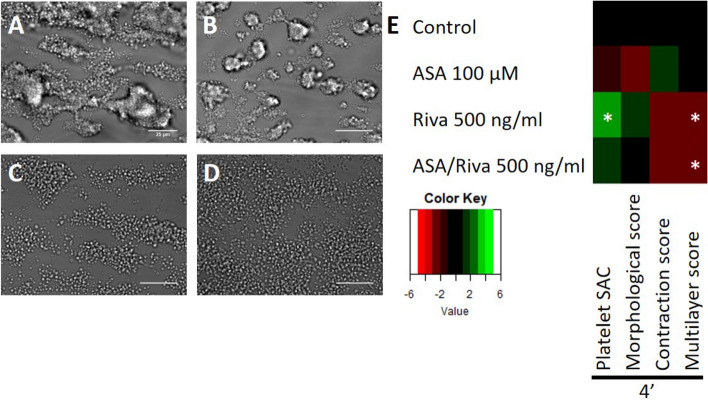
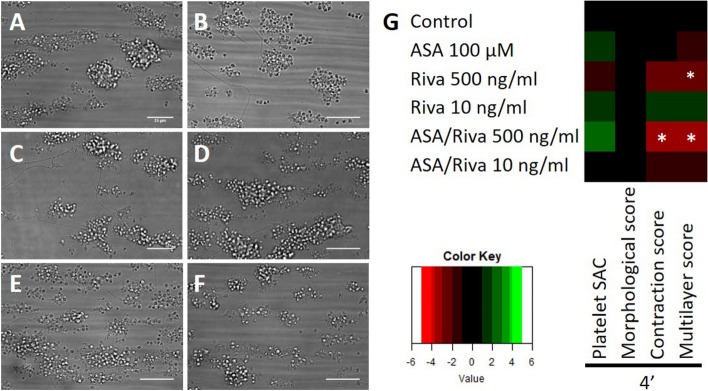
While in recent trials the dual pathway inhibition with aspirin plus rivaroxaban has shown to be efficacious in patients with atherosclerotic cardiovascular disease, little is known about the effects of this combination treatment on thrombus formation and vascular remodelling upon vascular damage. The aim of this study was to examine the effects of aspirin and/or rivaroxaban on injury-induced murine arterial thrombus formation in vivo and in vitro, vessel-wall remodelling, and platelet-leukocyte aggregates. Temporary ligation of the carotid artery of C57BL/6 mice, fed a western type diet, led to endothelial denudation and sub-occlusive thrombus formation. At the site of ligation, the vessel wall stiffened and the intima-media thickened. Aspirin treatment antagonized vascular stiffening and rivaroxaban treatment led to a positive trend towards reduced stiffening. Local intima-media thickening was antagonized by both aspirin or rivaroxaban treatment. Platelet-leukocyte aggregates and the number of platelets per leukocyte were reduced in aspirin and/or rivaroxaban treatment groups. Furthermore, rivaroxaban restricted thrombus growth and height in vitro. In sum, this study shows vascular protective effects of aspirin and rivaroxaban, upon vascular injury of the mouse artery.
虽然在最近的试验中,阿司匹林联合利伐沙班的双重途径抑制已被证明对动脉粥样硬化性心血管疾病患者有效,但对于这种联合治疗对血管损伤时血栓形成和血管重塑的影响知之甚少。本研究的目的是在体内和体外检查阿司匹林和/或利伐沙班对损伤诱导的小鼠动脉血栓形成、血管壁重塑和血小板-白细胞聚集体的影响。对喂食西式饮食的C57BL/6小鼠的颈动脉进行临时结扎,导致内皮剥脱和亚闭塞性血栓形成。在结扎部位,血管壁变硬,内膜-中膜增厚。阿司匹林治疗可对抗血管硬化,利伐沙班治疗则显示出减轻硬化的积极趋势。阿司匹林或利伐沙班治疗均可对抗局部内膜-中膜增厚。阿司匹林和/或利伐沙班治疗组的血小板-白细胞聚集体和每个白细胞的血小板数量减少。此外,利伐沙班在体外限制了血栓的生长和高度。总之,本研究显示了阿司匹林和利伐沙班对小鼠动脉血管损伤的血管保护作用。