Centre for Genomic Regulation (CRG), The Barcelona Institute of Science and Technology, Barcelona, Spain.
ICFO-Institut de Ciencies Fotoniques, The Barcelona Institute of Science and Technology, Barcelona, Spain.
Elife. 2020 Nov 10;9:e59426. doi: 10.7554/eLife.59426.
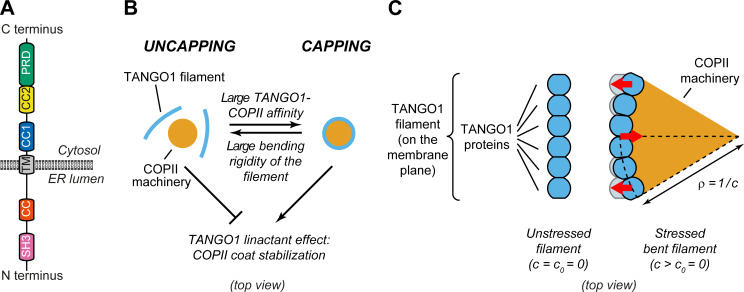
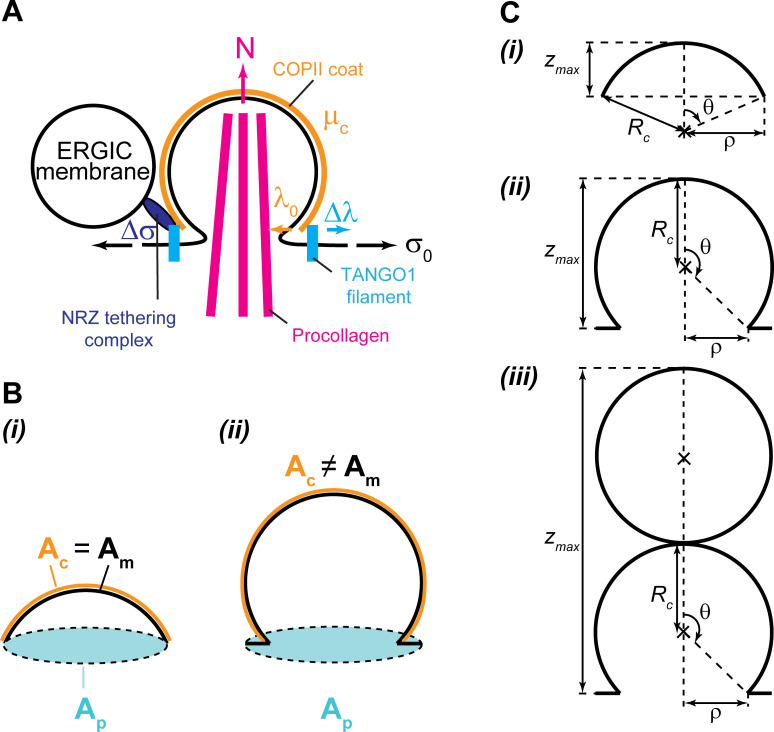
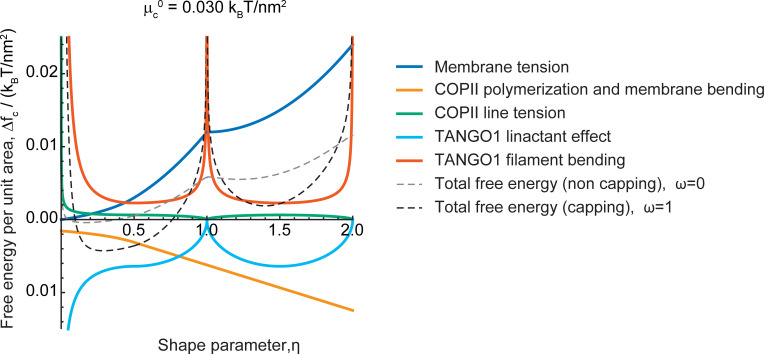
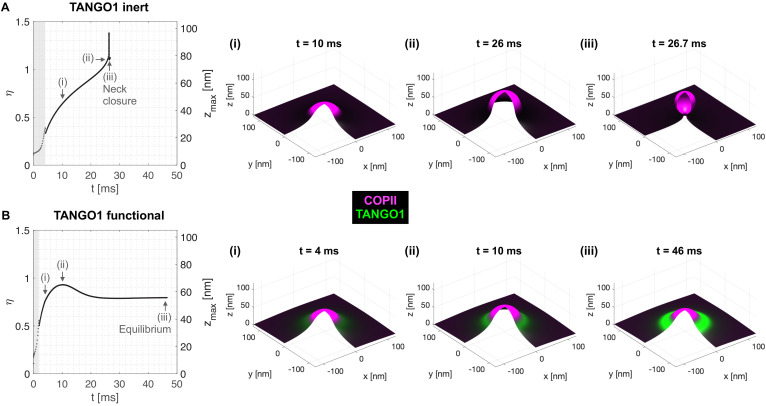
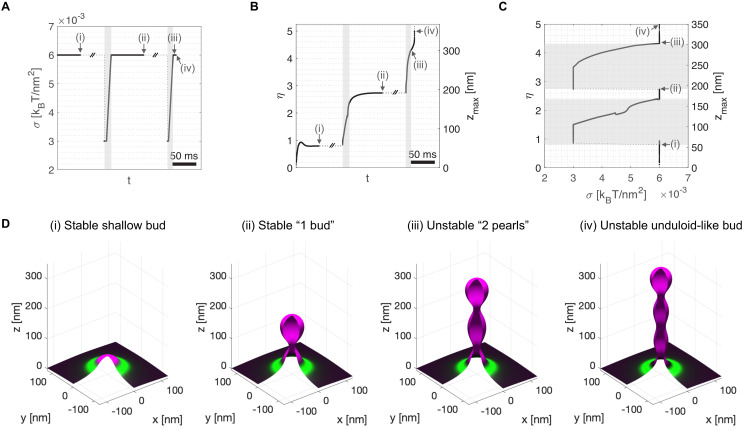
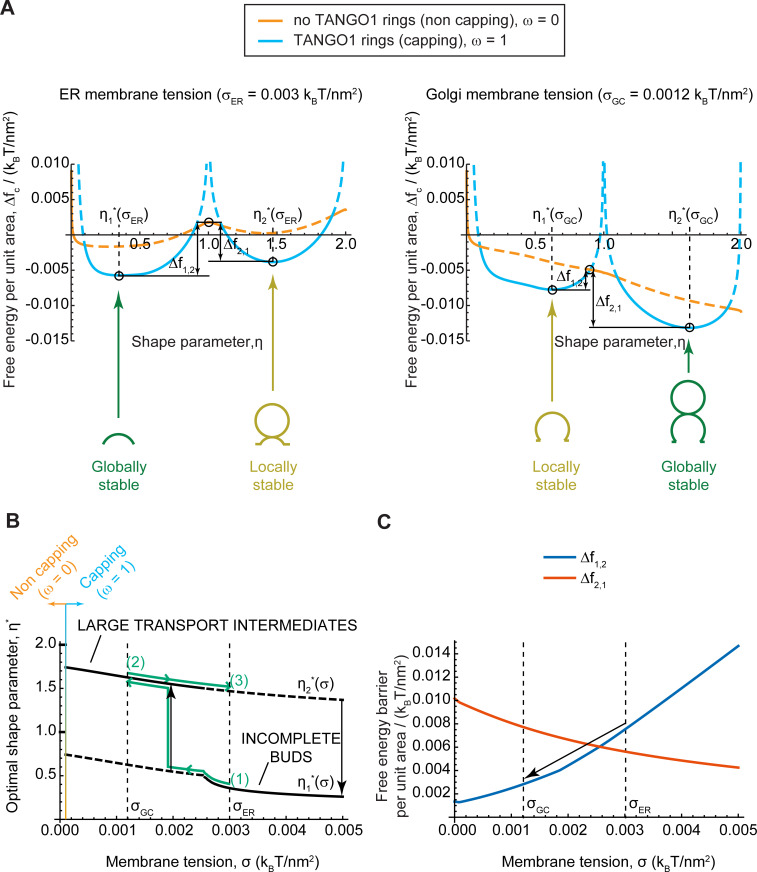
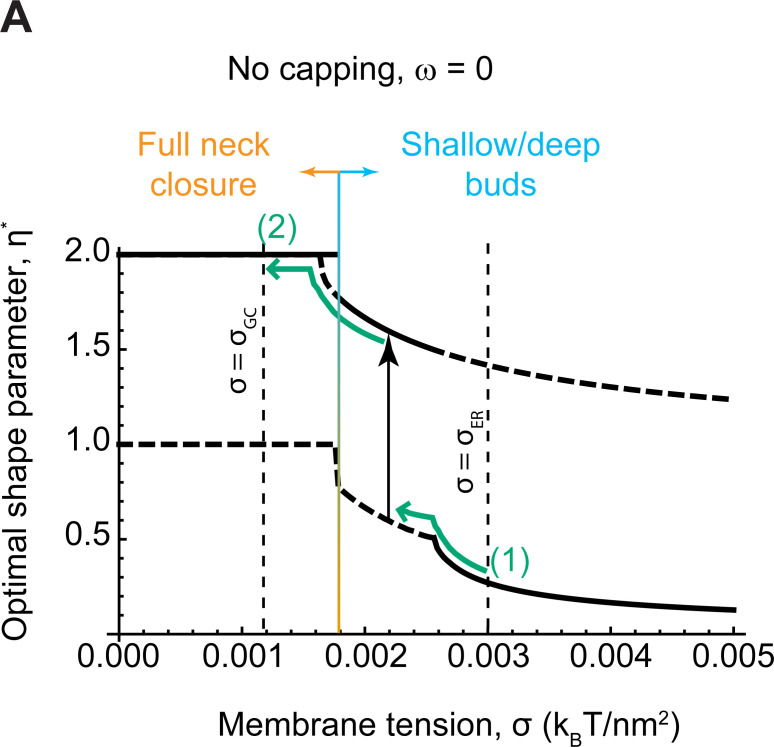
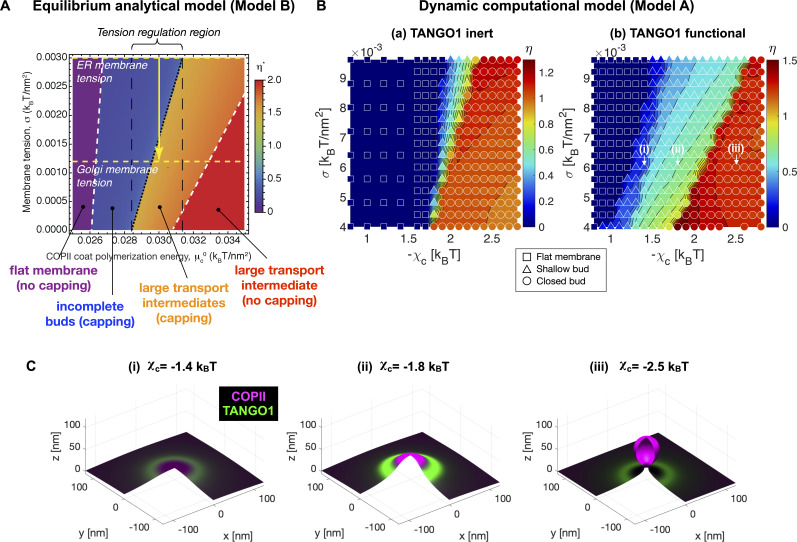
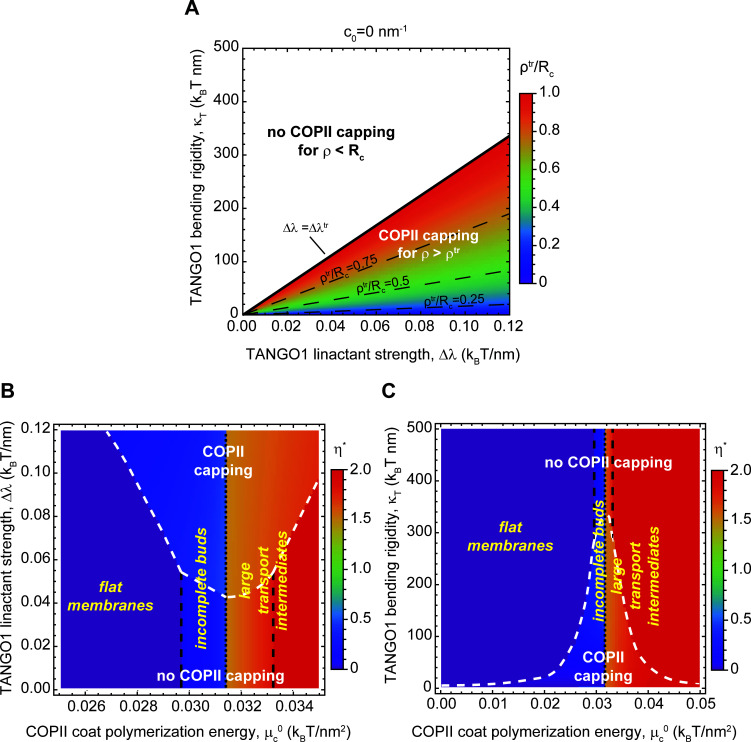
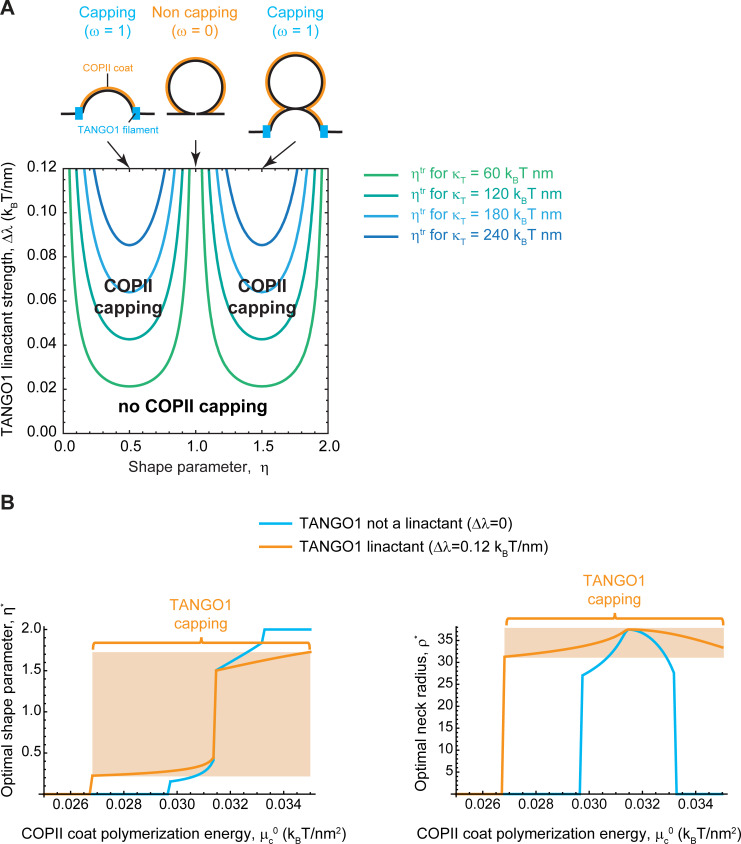
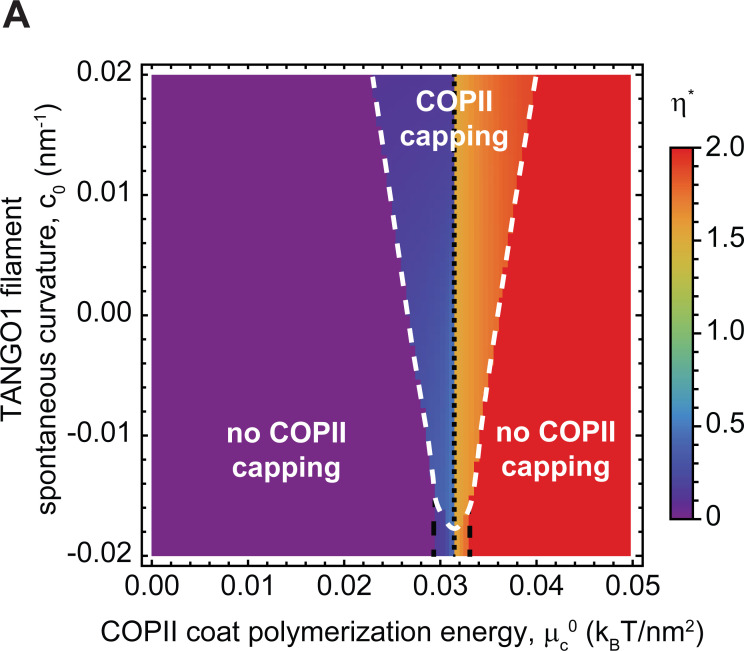
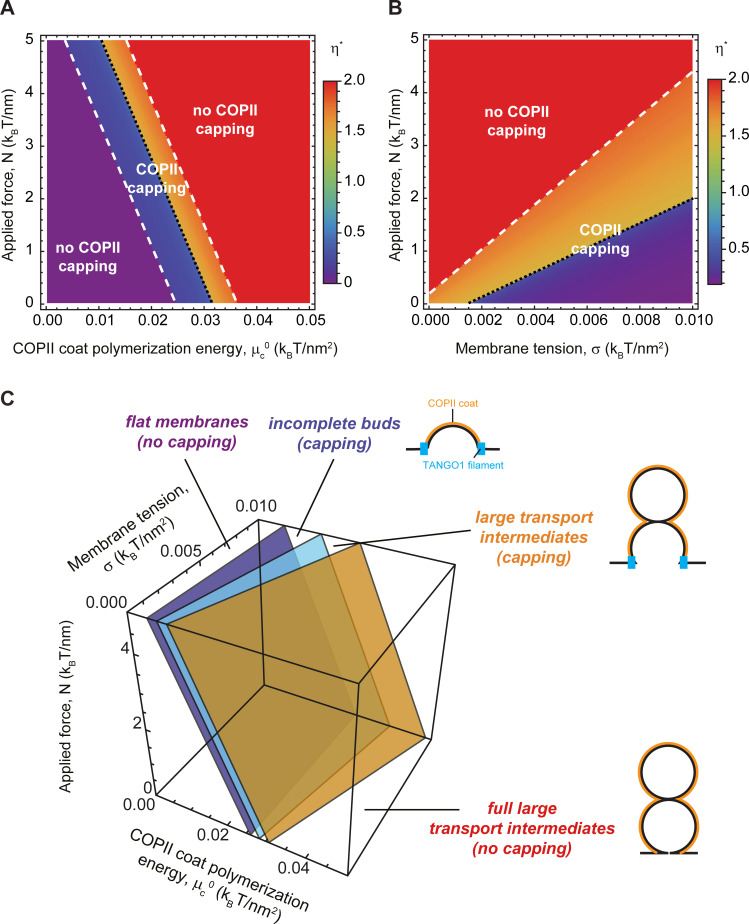
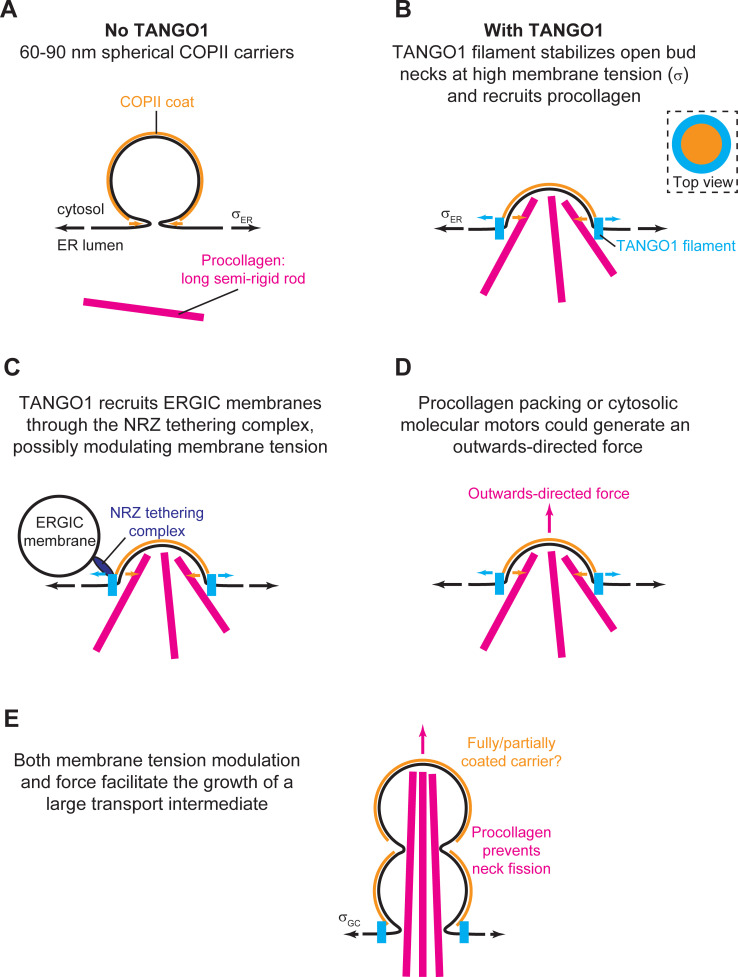
The endoplasmic reticulum (ER)-resident protein TANGO1 assembles into a ring around ER exit sites (ERES), and links procollagens in the ER lumen to COPII machinery, tethers, and ER-Golgi intermediate compartment (ERGIC) in the cytoplasm (Raote et al., 2018). Here, we present a theoretical approach to investigate the physical mechanisms of TANGO1 ring assembly and how COPII polymerization, membrane tension, and force facilitate the formation of a transport intermediate for procollagen export. Our results indicate that a TANGO1 ring, by acting as a linactant, stabilizes the open neck of a nascent COPII bud. Elongation of such a bud into a transport intermediate commensurate with bulky procollagens is then facilitated by two complementary mechanisms: (i) by relieving membrane tension, possibly by TANGO1-mediated fusion of retrograde ERGIC membranes and (ii) by force application. Altogether, our theoretical approach identifies key biophysical events in TANGO1-driven procollagen export.
内质网(ER)驻留蛋白 TANGO1 在内质网出口部位(ERES)周围组装成一个环,并将腔内质胶原与 COPII 机械、系绳和细胞质中的内质网-高尔基体中间 compartment(ERGIC)连接起来(Raote 等人,2018 年)。在这里,我们提出了一种理论方法来研究 TANGO1 环组装的物理机制,以及 COPII 聚合、膜张力和力如何促进胶原前体出口的运输中间产物的形成。我们的结果表明,TANGO1 环通过充当 linactant,稳定了新生 COPII 芽的开放颈部。然后,通过两种互补的机制促进这种芽的伸长成为与大体积胶原前体相称的运输中间产物:(i)通过缓解膜张力,可能通过 TANGO1 介导的逆行 ERGIC 膜融合,以及(ii)通过力的应用。总的来说,我们的理论方法确定了 TANGO1 驱动的胶原前体输出中的关键生物物理事件。