Department of Immunology, Blavatnik Institute and Ludwig Center at Harvard, Harvard Medical School, Boston, United States.
Evergrande Center for Immunologic Diseases, Harvard Medical School and Brigham and Women's Hospital, Boston, United States.
Elife. 2020 Nov 10;9:e62420. doi: 10.7554/eLife.62420.
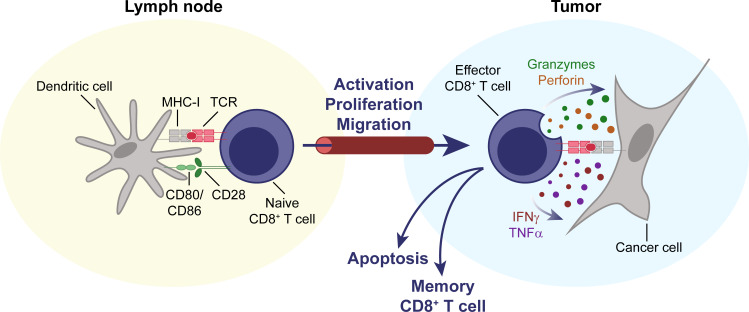
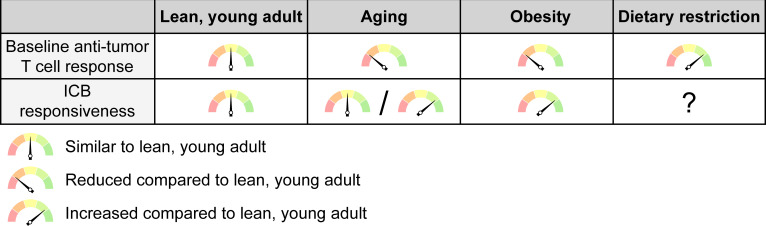
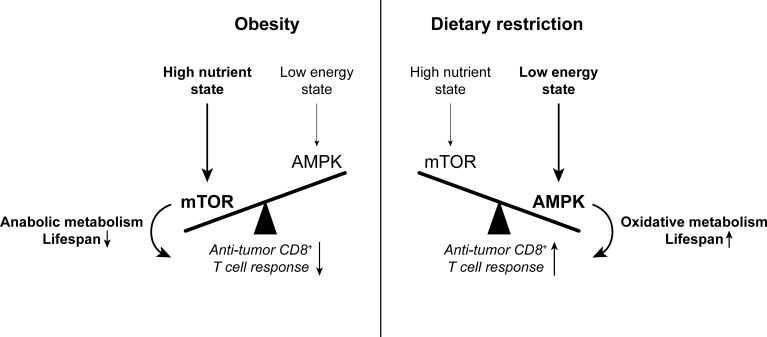
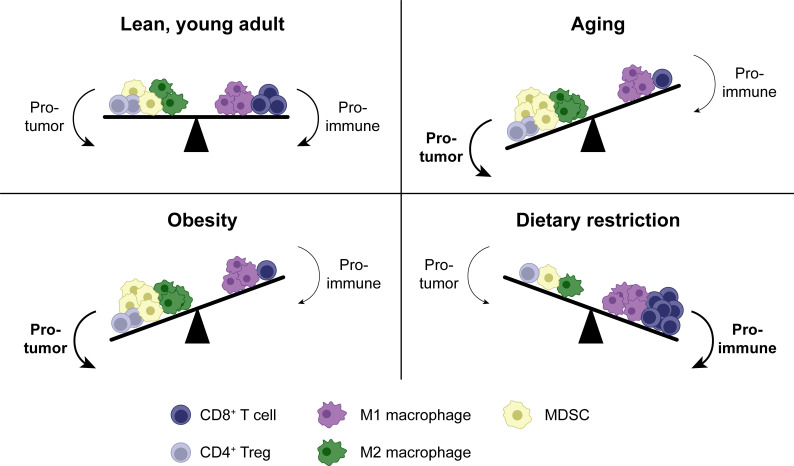
Average age and obesity prevalence are increasing globally. Both aging and obesity are characterized by profound systemic metabolic and immunologic changes and are cancer risk factors. The mechanisms linking age and body weight to cancer are incompletely understood, but recent studies have provided evidence that the anti-tumor immune response is reduced in both conditions, while responsiveness to immune checkpoint blockade, a form of cancer immunotherapy, is paradoxically intact. Dietary restriction, which promotes health and lifespan, may enhance cancer immunity. These findings illustrate that the systemic context can impact anti-tumor immunity and immunotherapy responsiveness. Here, we review the current knowledge of how age and systemic metabolic state affect the anti-tumor immune response, with an emphasis on CD8 T cells, which are key players in anti-tumor immunity. A better understanding of the underlying mechanisms may lead to novel therapies enhancing anti-tumor immunity in the context of aging or metabolic dysfunction.
全球范围内,人口平均年龄和肥胖症的患病率都在不断上升。衰老和肥胖的特征是全身性代谢和免疫的深刻变化,也是癌症的风险因素。将年龄和体重与癌症联系起来的机制尚不完全清楚,但最近的研究提供了证据,表明这两种情况都降低了抗肿瘤免疫反应,而对免疫检查点阻断的反应,即癌症免疫治疗的一种形式,却出人意料地完好无损。限制饮食,促进健康和延长寿命,可能会增强癌症免疫力。这些发现表明,全身情况会影响抗肿瘤免疫和免疫治疗的反应。在这里,我们回顾了目前关于年龄和全身代谢状态如何影响抗肿瘤免疫反应的知识,重点是 CD8 T 细胞,它是抗肿瘤免疫的关键因素。对潜在机制的更好理解可能会导致新的治疗方法,在衰老或代谢功能障碍的情况下增强抗肿瘤免疫。