Spear Morwenna J, Broda Magdalena
BioComposites Centre, Bangor University, Deiniol Road, Bangor, Gwynedd LL57 2UW, UK.
Department of Wood Science and Thermal Techniques, Faculty of Forestry and Wood Technology, Poznań University of Life Sciences, Wojska Polskiego 38/42, 60-637 Poznań, Poland.
Materials (Basel). 2020 Nov 7;13(21):5026. doi: 10.3390/ma13215026.
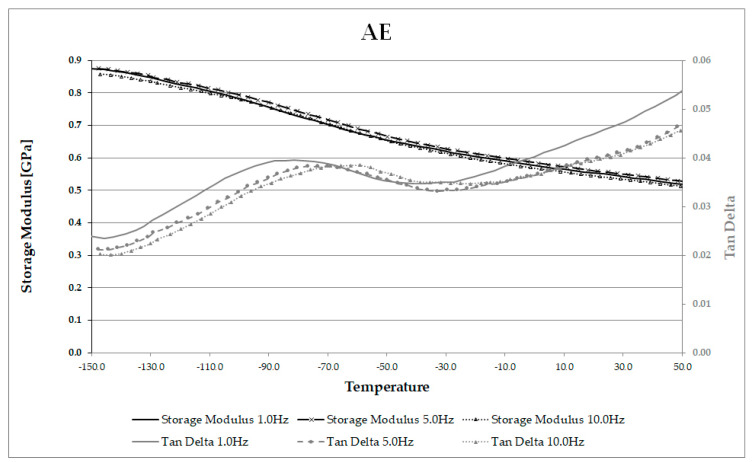
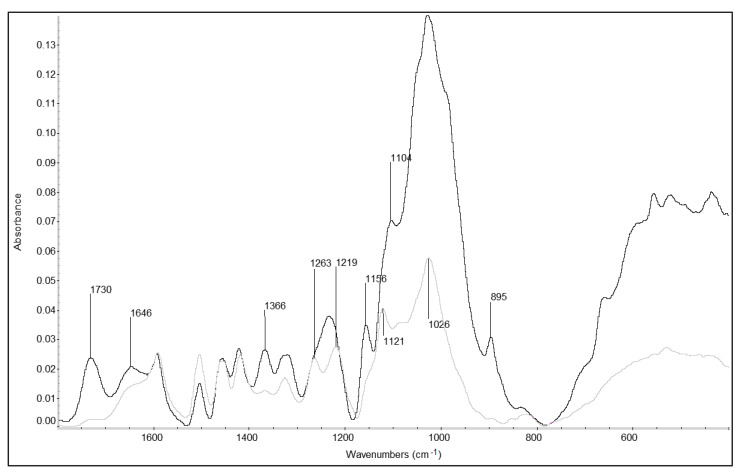
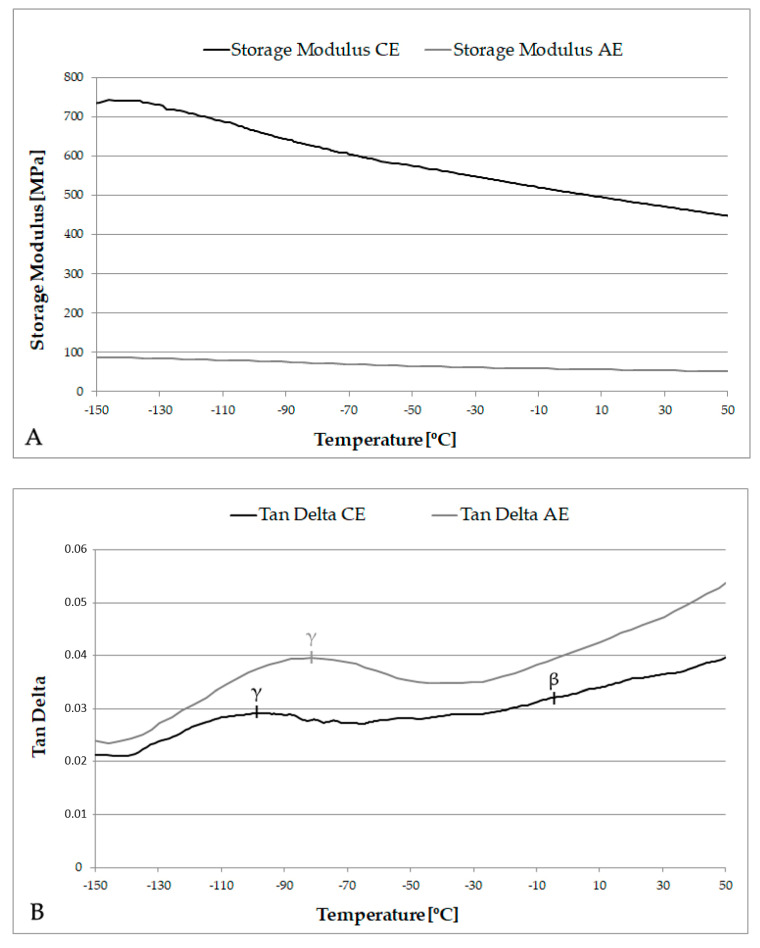
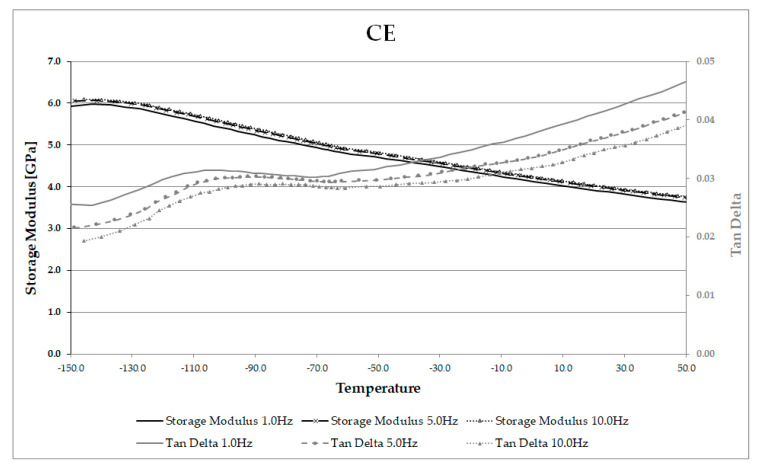
This paper describes dynamic mechanical analysis (DMA) experiments on archaeological and contemporary elm tested under air-dry conditions, to explore the suitability of this technique for increasing understanding of the viscoelastic behaviour of archaeological wood. A strong reduction of storage modulus of archaeological elm (AE) was seen in comparison with contemporary wood (CE), resulting from the high degree of wood degradation, notably the reduction in hemicelluloses and cellulose content of AE, as demonstrated by Attenuated Total Reflection-Fourier Transform Infra-Red spectroscopy (ATR-FTIR). The γ relaxation peak was observed in all samples. The γ peak in AE shifted to a higher temperature, and the activation energy for γ-peak motions was lower in AE (29 kJ/mol) than in CE (50 kJ/mol) indicating that motion is less restricted within the degraded AE cell wall, or possibly a difference in the monomer undergoing rotation. Detection of changes in storage modulus are well known, but the DMA temperature scan technique proved to be useful for probing the degree of wood degradation, relating to the changes in location and intensity of secondary relaxation peaks. The γ peak in loss factor can be used to confirm that cell wall degradation is at an advanced stage, and to improve understanding of the internal spatial structure of the degraded wood cell wall.
本文描述了在空气干燥条件下对考古用和当代榆木进行的动态力学分析(DMA)实验,以探索该技术在增进对考古木材粘弹性行为理解方面的适用性。与当代木材(CE)相比,考古榆木(AE)的储能模量大幅降低,这是由于木材降解程度较高,特别是AE中半纤维素和纤维素含量的减少,衰减全反射傅里叶变换红外光谱(ATR-FTIR)证实了这一点。在所有样品中均观察到γ弛豫峰。AE中的γ峰向更高温度移动,且AE中γ峰运动的活化能(29 kJ/mol)低于CE(50 kJ/mol),这表明在降解的AE细胞壁内运动受限较小,或者可能是发生旋转的单体存在差异。储能模量变化的检测是众所周知的,但DMA温度扫描技术被证明有助于探测木材降解程度,这与次级弛豫峰的位置和强度变化有关。损耗因子中的γ峰可用于确认细胞壁降解处于高级阶段,并有助于增进对降解木材细胞壁内部空间结构的理解。