Zhang Luoyan, Xie Shaoqiu, Yang Cheng, Cao Dongling, Fan Shoujin, Zhang Xuejie
Key Lab of Plant Stress Research, College of Life Science, Shandong Normal University, Jinan 250014, China.
Biology (Basel). 2022 May 6;11(5):711. doi: 10.3390/biology11050711.
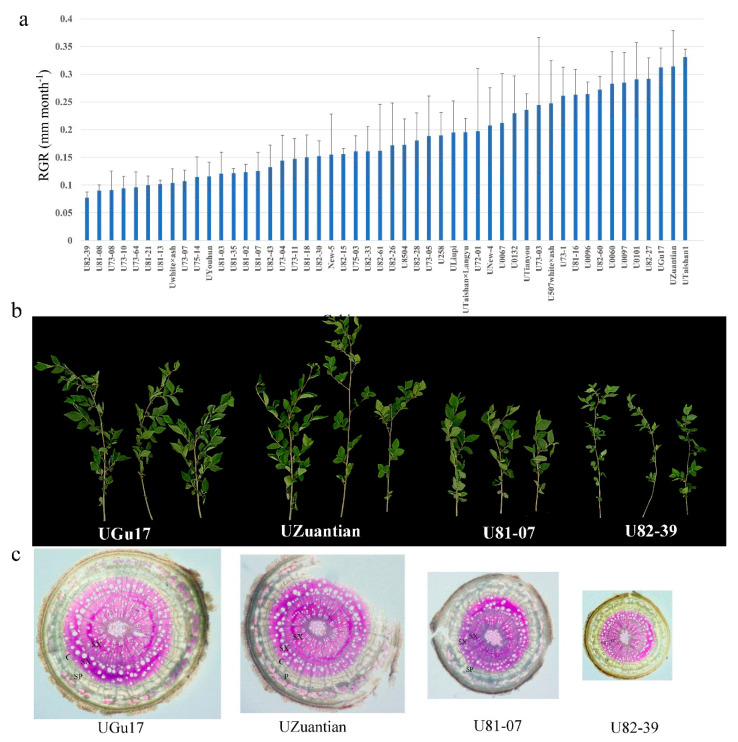
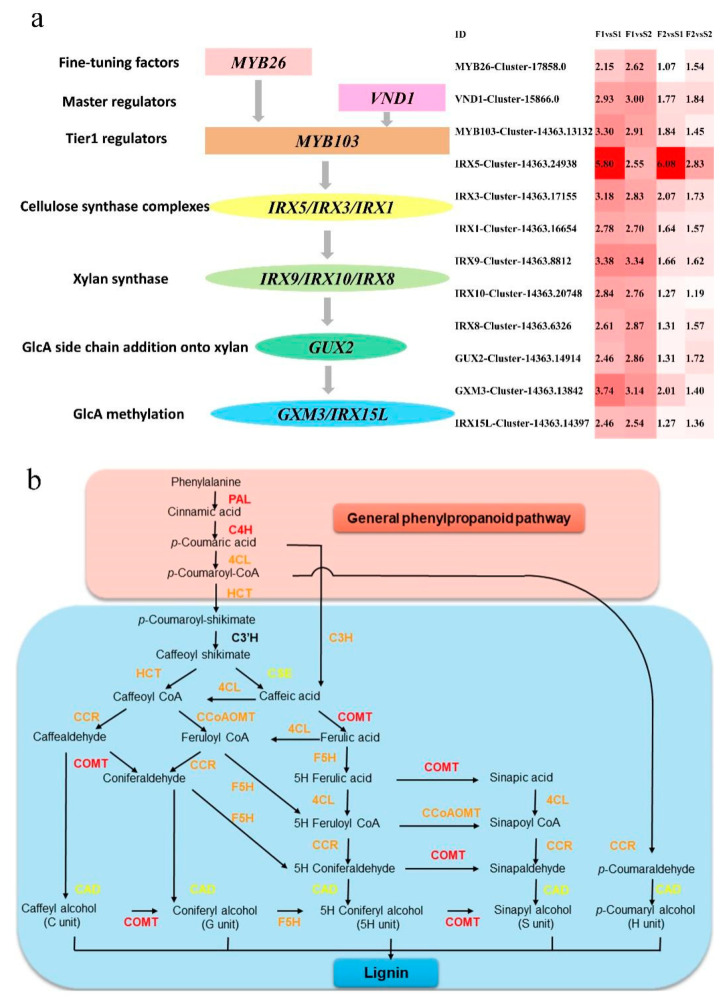
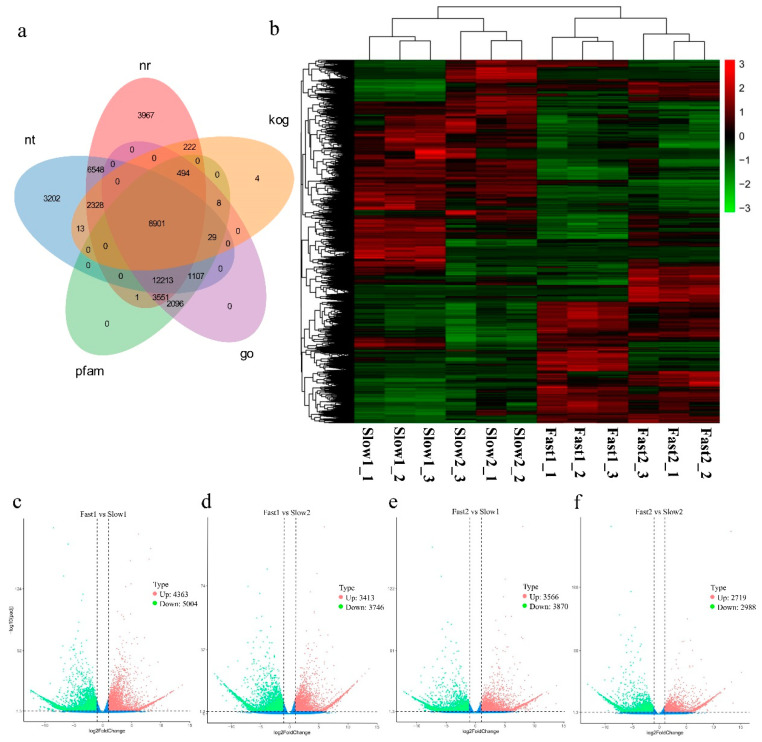
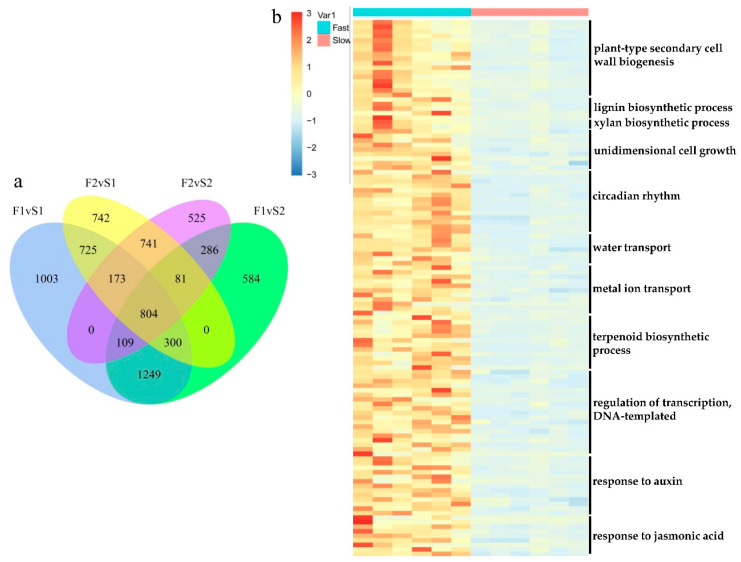
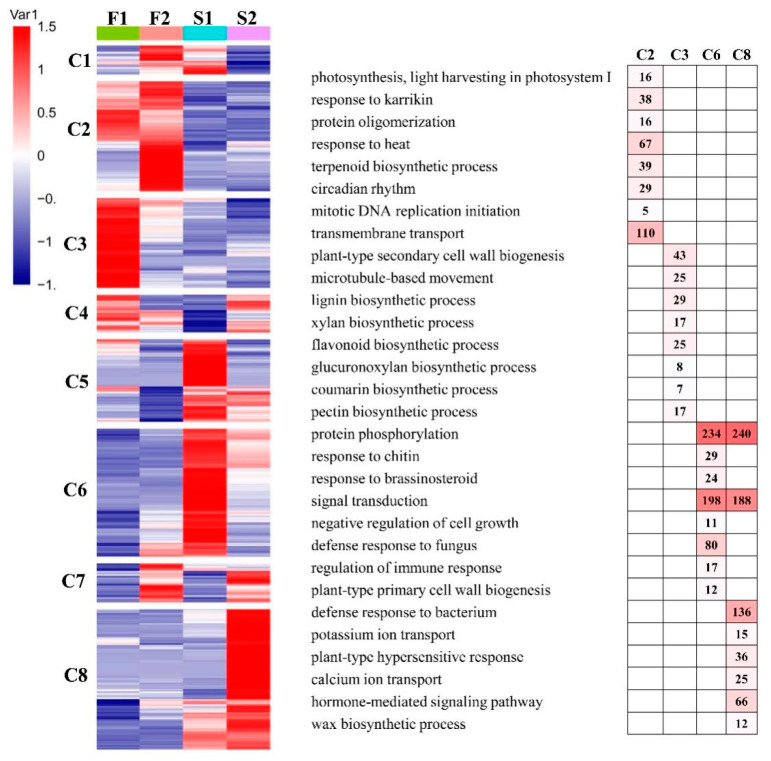
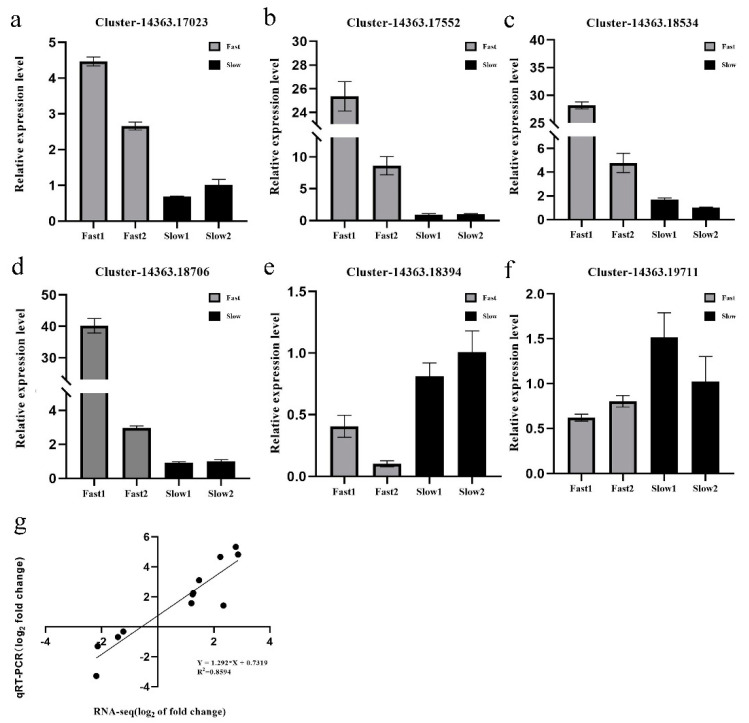
Wood plays a vital role in human life. It is important to study the thickening mechanism of tree branches and explore the mechanism of wood formation. Elm () is a strong essential wood, and it is widely used in cabinets, sculptures, and ship making. In the present study, phenotypic and comparative transcriptomic analyses were performed in fast- (UGu17 and UZuantian) and slow-growing cultivars (U81-07 and U82-39). Phenotypic observation showed that the thickness of secondary xylem of 2-year-old fast-growing branches was greater compared with slow-growing cultivars. A total of 9367 (up = 4363, down = 5004), 7159 (3413/3746), 7436 (3566/3870), and 5707 (2719/2988) differentially expressed genes (DEGs) were identified between fast- and slow-growing cultivars. Moreover, GO and KEGG enrichment analyses predicted that many pathways were involved in vascular development and transcriptional regulation in elm, such as "plant-type secondary cell wall biogenesis", "cell wall thickening", and "phenylpropanoid biosynthesis". NAC domain transcriptional factors (TFs) and their master regulators (/), cellulose synthase catalytic subunits (CESAs) (such as //), xylan synthesis, and secondary wall thickness (such as //) were supposed to function in the thickening mechanism of elm branches. Our results indicated that the general phenylpropanoid pathway (such as //) and lignin metabolism (such as ////) had vital functions in the growth of elm branches. Our transcriptome data were consistent with molecular results for branch thickening in elm cultivars.
木材在人类生活中起着至关重要的作用。研究树枝增粗机制并探索木材形成机制具有重要意义。榆树是一种优质的重要木材,广泛应用于橱柜、雕塑和造船等领域。在本研究中,对速生品种(UGu17和Uzuantian)和慢生品种(U81 - 07和U82 - 39)进行了表型和比较转录组分析。表型观察表明,与慢生品种相比,2年生速生枝条的次生木质部厚度更大。在速生和慢生品种之间共鉴定出9367个(上调 = 4363,下调 = 5004)、7159个(3413/3746)、7436个(3566/3870)和5707个(2719/2988)差异表达基因(DEGs)。此外,GO和KEGG富集分析预测,许多途径参与了榆树的维管发育和转录调控,如“植物型次生细胞壁生物合成”、“细胞壁增厚”和“苯丙烷生物合成”。NAC结构域转录因子(TFs)及其主调控因子(/)、纤维素合酶催化亚基(CESAs)(如//)、木聚糖合成和次生壁厚度(如//)被认为在榆树树枝增粗机制中发挥作用。我们的结果表明,一般苯丙烷途径(如//)和木质素代谢(如////)在榆树树枝生长中具有重要作用。我们的转录组数据与榆树品种树枝增粗的分子结果一致。