Nutrition Institute, Tržaška cesta 40, SI-1000 Ljubljana, Slovenia.
Biotechnical Faculty, University of Ljubljana, Jamnikarjeva ulica 101, SI-1000 Ljubljana, Slovenia.
Int J Environ Res Public Health. 2020 Nov 7;17(21):8239. doi: 10.3390/ijerph17218239.
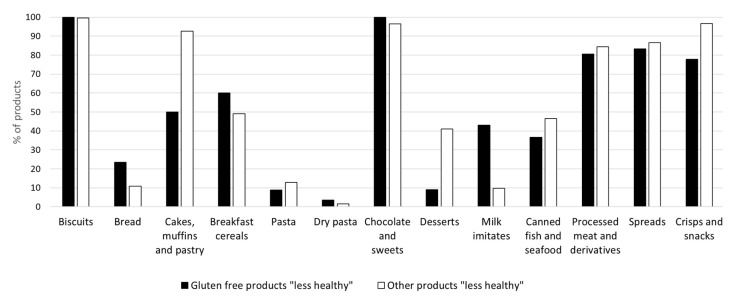
The market of gluten-free (GF) foods has been expanding in recent years. GF foods are consumed not only by those with medical predispositions for avoiding gluten, but also by a specific segment of consumers, searching for "healthier" food choices. For these, such practices can present a serious limitation in the variability of food choices. Considering that GF foods are commonly perceived as healthier alternatives, there is a lack of knowledge on the nutritional profile and content of specific nutrients of GF-labelled foods compared to general food supply. A comparison of nutritional composition of GF/non-GF packed foods in the Slovenian food supply was conducted. The nutrient profiling scoring criterion (NPSC) and content of specific nutrients/energy was compared between GF-labelled and regular foods. The highest proportion of GF-labelled products were found in food categories, which typically do not contain gluten (Cheese imitates, Milk imitates, Yoghurt imitates, Canned fish and seafood and Processed meat). Significant differences in the nutrient profile between GF-labelled and regular products were found in Cakes, muffins and pastry, Crisps and snacks, Desserts and Milk imitates. GF-labelled foods often had lower protein and sugar content. Energy value was comparable in most categories and no significant differences in salt content were found, compared to non-GF products. In conclusion, GF-labelled foods will unlikely bring health benefits to those who are not medically required to follow GF diet. Public health initiatives should aim towards promotion of consuming non-processed foods and provision of reliable information about who is required to consume GF foods.
近年来,无麸质(GF)食品市场不断扩大。不仅有医学上避免食用麸质倾向的人会食用 GF 食品,还有一部分消费者也在寻找“更健康”的食品选择,他们也会食用 GF 食品。对于这些人来说,这种做法可能会严重限制他们的食物选择变化。由于 GF 食品通常被认为是更健康的替代品,因此与一般食品供应相比,人们对 GF 标签食品的营养状况和特定营养素含量的了解较少。本研究比较了斯洛文尼亚食品供应中 GF/非 GF 包装食品的营养成分。使用营养素评分标准(NPSC)比较 GF 标签食品和常规食品的特定营养素/能量含量。GF 标签产品的比例最高的食品类别为通常不含麸质的食品(奶酪仿制品、牛奶仿制品、酸奶仿制品、罐头鱼和海鲜以及加工肉类)。在蛋糕、松饼和糕点、薯片和零食、甜点和牛奶仿制品中,GF 标签食品和常规食品的营养状况存在显著差异。GF 标签食品的蛋白质和糖含量往往较低。与非 GF 产品相比,大多数类别中的能量值相当,盐含量没有显著差异。总之,对于那些并非医学上必须遵循 GF 饮食的人来说,GF 标签食品不太可能带来健康益处。公共卫生倡议应致力于促进食用非加工食品,并提供有关谁需要食用 GF 食品的可靠信息。