Department of Chemistry, Faculty of Science, Universiti Putra Malaysia, UPM Serdang 43400, Selangor, Malaysia.
Integrated Chemical BioPhysics Research, Faculty of Science, Universiti Putra Malaysia, UPM Serdang 43400, Selangor, Malaysia.
Molecules. 2020 Nov 6;25(21):5162. doi: 10.3390/molecules25215162.
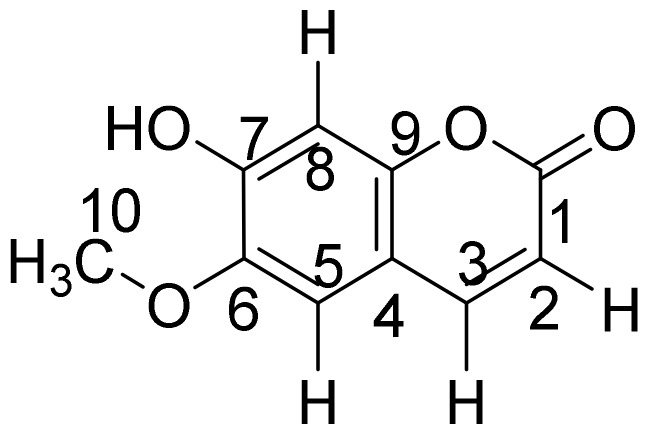
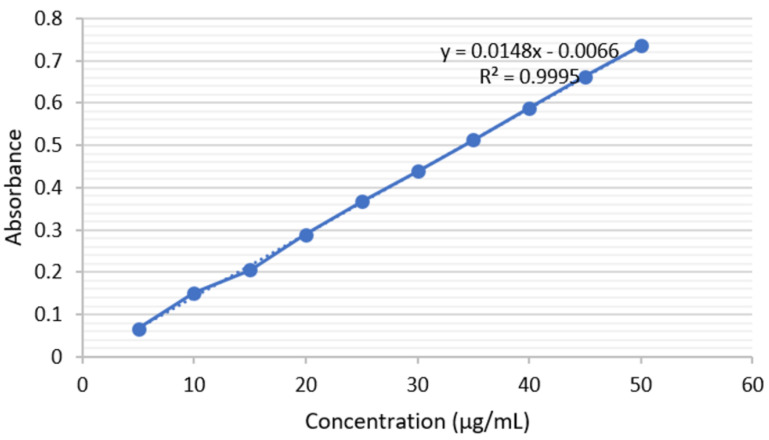
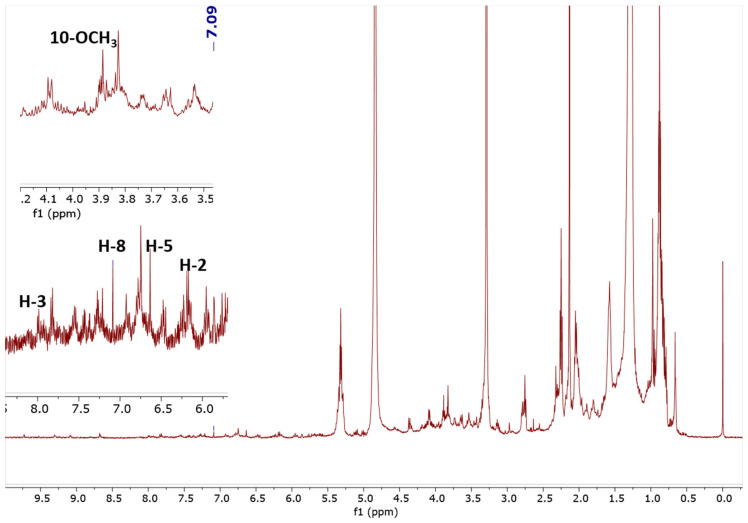
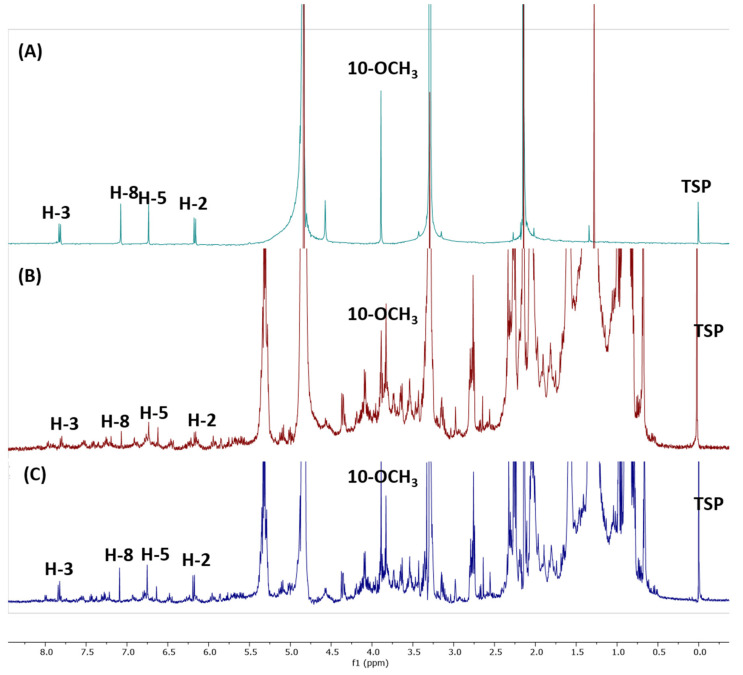
Scopoletin has previously been reported as a biomarker for the standardization of twigs. This study is the first report on the determination and quantification of scopoletin using quantitative nuclear magnetic resonance (qNMR) in the different extracts of twigs. The validated qNMR method showed a good linearity ( = 0.9999), limit of detection (LOD) (0.009 mg/mL), and quantification (LOQ) (0.029 mg/mL), together with high stability (relative standard deviation (RSD) = 0.022%), high precision (RSD < 1%), and good recovery (94.08-108.45%). The quantification results of scopoletin concentration in chloroform extract using qNMR and microplate ultraviolet-visible (UV-vis) spectrophotometer was almost comparable. Therefore, the qNMR method is deemed accurate and reliable for quality control of and other medicinal plants without extensive sample preparation.
此前曾有报道称,紫丁香苷可作为枝标准品的生物标志物。本研究首次采用定量核磁共振(qNMR)法测定和定量分析枝的不同提取物中的紫丁香苷。经验证的 qNMR 方法具有良好的线性(=0.9999)、检测限(LOD)(0.009mg/mL)和定量限(LOQ)(0.029mg/mL),同时具有高稳定性(相对标准偏差(RSD)=0.022%)、高精确度(RSD<1%)和良好的回收率(94.08-108.45%)。qNMR 法和微孔板紫外-可见(UV-vis)分光光度计法测定氯仿提取物中紫丁香苷浓度的定量结果几乎相当。因此,qNMR 法可用于控制枝和其他药用植物的质量,无需进行广泛的样品制备。