Chen Qian, Hu Lang, Huang Dongping, Chen Kaihua, Qiu Xiaoqiang, Qiu Bingqing
Department of Research, Guangxi Medical University Cancer Hospital, Nanning, China.
Guangxi Medical University Cancer Hospital, Nanning, China.
Front Genet. 2020 Oct 14;11:533628. doi: 10.3389/fgene.2020.533628. eCollection 2020.
This study searched for immune-related long noncoding RNAs (lncRNAs) to predict the prognosis of patients with cervical cancer.
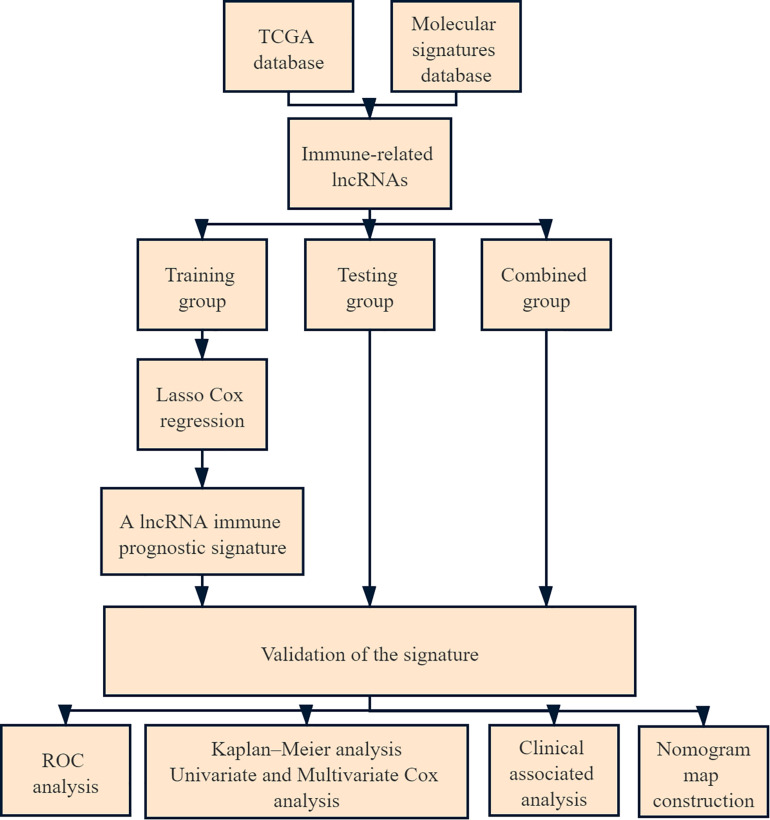
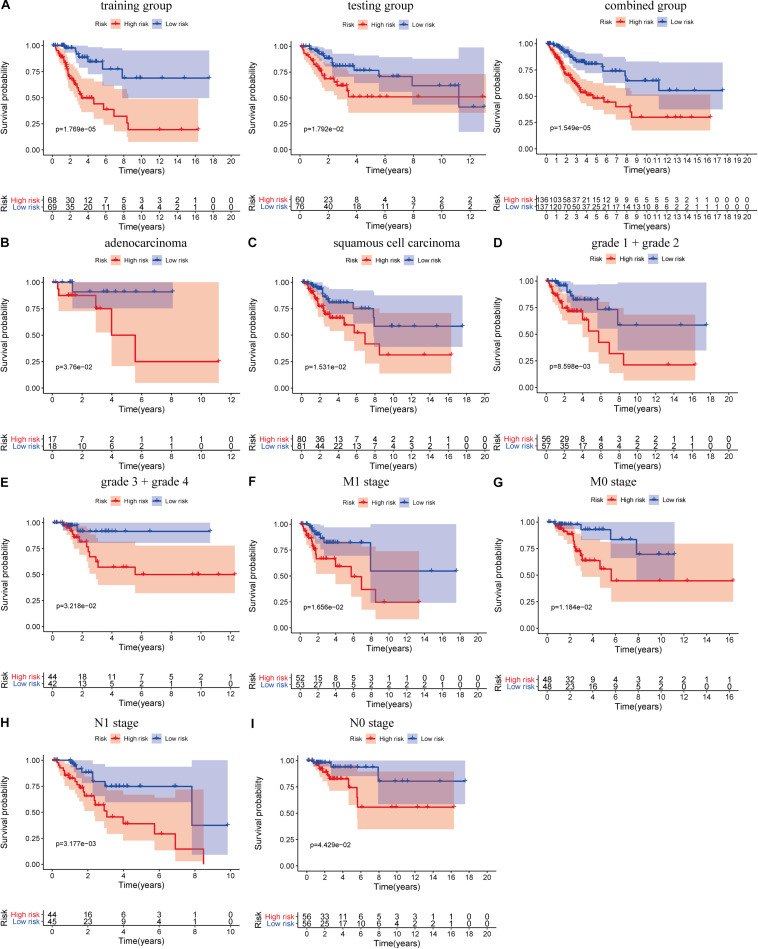
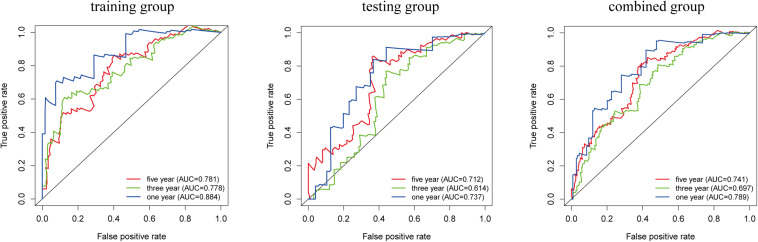
We obtained immunologically relevant lncRNA expression profiles and clinical follow-up data from cervical cancer patients from The Cancer Genome Atlas database and the Molecular Signatures Database. Cervical cancer patients were randomly divided into a training group, testing group and combined group. The immune prognostic signature was constructed by Least Absolute Shrinkage and Selection Operator Cox regression, prognosis was analyzed by Kaplan-Meier curves between different groups, and the accuracy of the prognostic model was assessed by receiver operating characteristic-area under the curve (ROC-AUC) analysis.
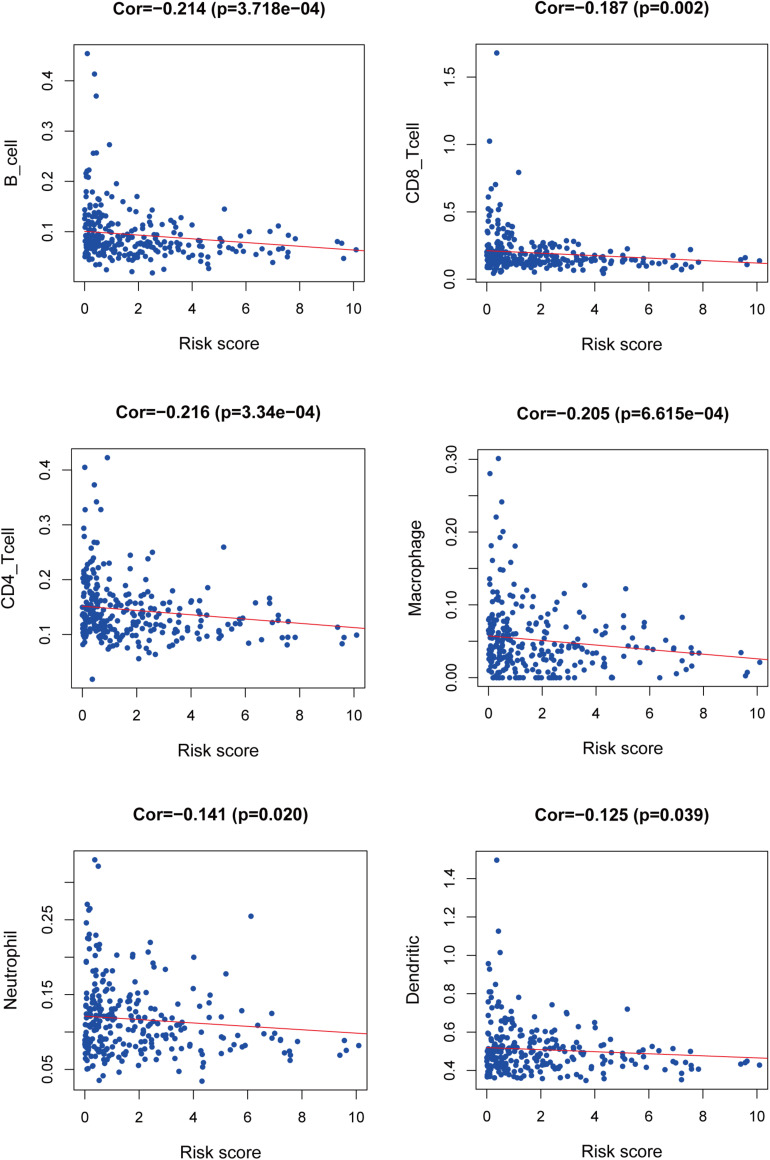
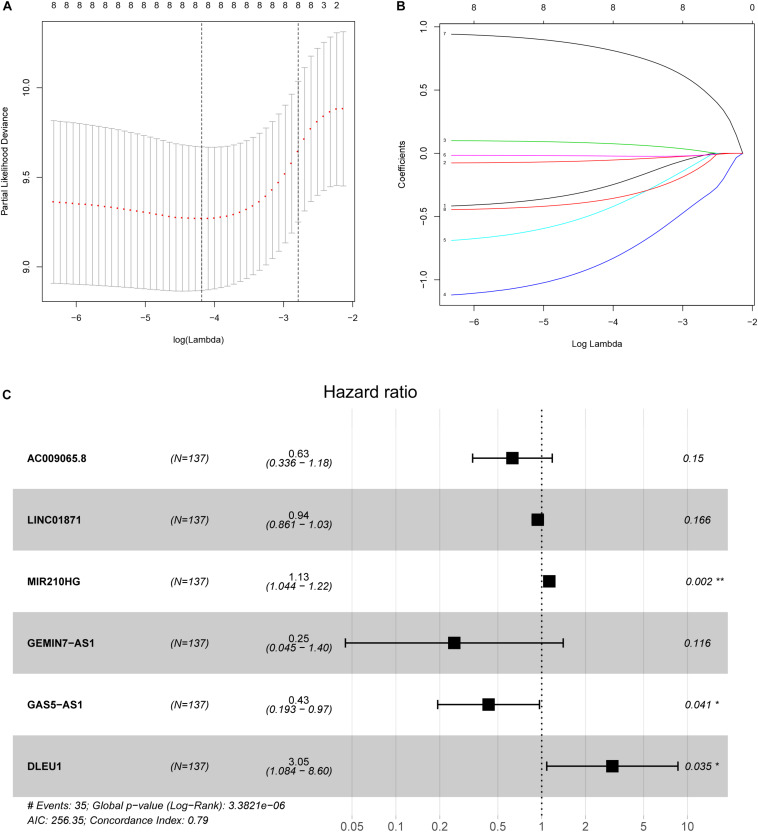
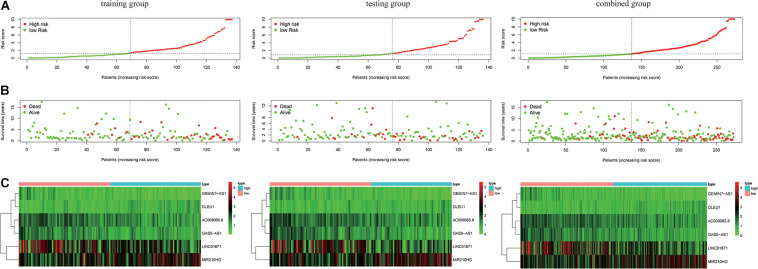
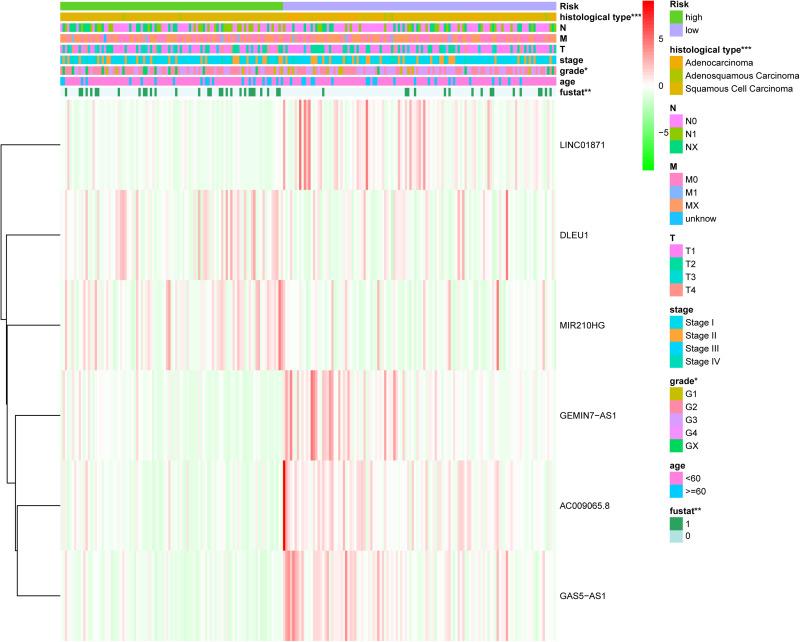
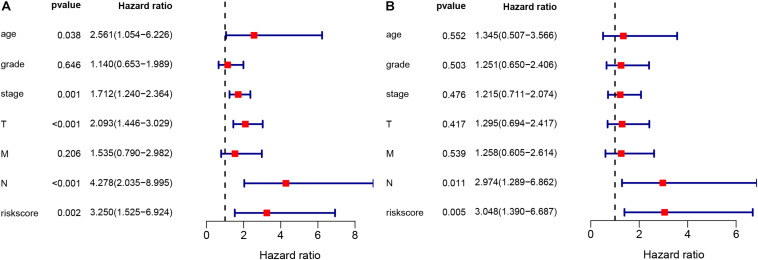
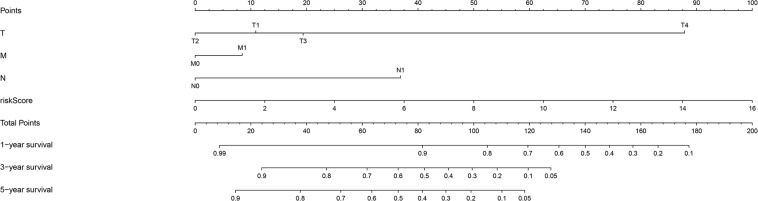
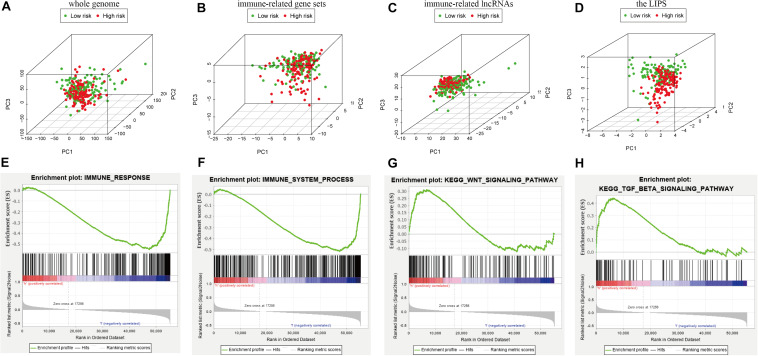
A six-lncRNA immune prognostic signature (LIPS) was constructed to predict the prognosis of cervical cancer. The six lncRNAs are as follows: AC009065.8, LINC01871, MIR210HG, GEMIN7-AS1, GAS5-AS1, and DLEU1. A ROC-AUC analysis indicated that the model could predict the prognosis of cervical cancer patients in different subgroups. A Kaplan-Meier analysis showed that patients with high risk scores had a poor prognosis; these results were equally meaningful in the subgroup analyses. Risk scores differed depending on the clinical pathology and tumor grade and were independent risk factors for cervical cancer prognosis. Gene set enrichment analysis revealed an association between the LIPS and the immune response, Wnt signaling pathway, and TGF beta signaling pathway.
Our study shows that the six-LIPS can predict the prognosis of cervical cancer and contribute to decisions regarding the immunotherapeutic strategy.
本研究旨在寻找免疫相关的长链非编码RNA(lncRNA)以预测宫颈癌患者的预后。
我们从癌症基因组图谱数据库和分子特征数据库中获取了宫颈癌患者的免疫相关lncRNA表达谱和临床随访数据。将宫颈癌患者随机分为训练组、测试组和合并组。通过最小绝对收缩和选择算子Cox回归构建免疫预后特征,用Kaplan-Meier曲线分析不同组之间的预后情况,并通过受试者工作特征曲线下面积(ROC-AUC)分析评估预后模型的准确性。
构建了一个由六个lncRNA组成的免疫预后特征(LIPS)来预测宫颈癌的预后。这六个lncRNA如下:AC009065.8、LINC01871、MIR210HG、GEMIN7-AS1、GAS5-AS1和DLEU1。ROC-AUC分析表明该模型可以预测不同亚组宫颈癌患者的预后。Kaplan-Meier分析显示高风险评分的患者预后较差;这些结果在亚组分析中同样有意义。风险评分因临床病理和肿瘤分级而异,是宫颈癌预后的独立危险因素。基因集富集分析揭示了LIPS与免疫反应、Wnt信号通路和TGF-β信号通路之间的关联。
我们的研究表明,六个lncRNA组成的LIPS可以预测宫颈癌的预后,并有助于制定免疫治疗策略的决策。