Department of Pathophysiology, School of Basic Medicine Sciences, Nanchang University Medical College, Nanchang, Jiangxi 330006, P.R. China.
Mol Med Rep. 2020 Dec;22(6):4463-4474. doi: 10.3892/mmr.2020.11567. Epub 2020 Oct 7.
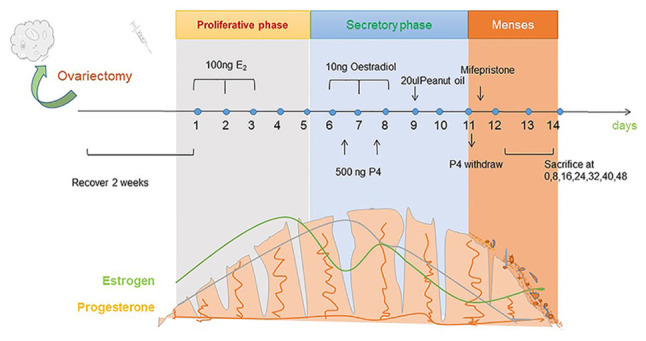
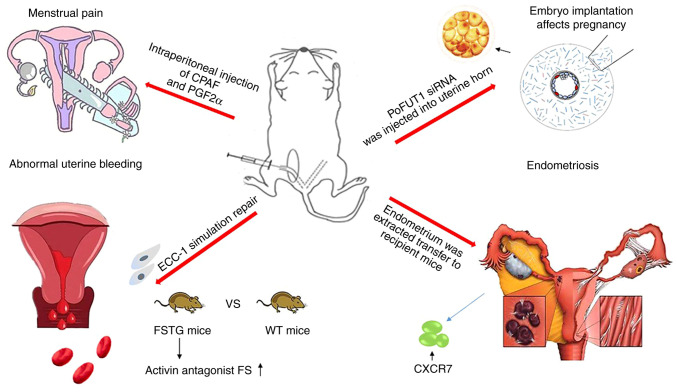
Abnormal menstruation may result in several pathological alterations and gynaecological diseases, including endometriosis, menstrual pain and miscarriage. However, the pathogenesis of menstruation remains unclear due to the limited number of animal models available to study the menstrual cycle. In recent years, an effective, reproducible, and highly adaptive mouse model to study menstruation has been developed. In this model, progesterone and oestrogen were administered in cycles following the removal of ovaries. Subsequently, endometrial decidualisation was induced using sesame oil, followed by withdrawal of progesterone administration. Vaginal bleeding in mice is similar to that in humans. Therefore, the use of mice as a model organism to study the mechanism of menstruation and gynaecological diseases may prove to be an important breakthrough. The present review is focussed ond the development and applications of a mouse model of menstruation. Furthermore, various studies have been described to improve this model and the research findings that may aid in the treatment of menstrual disorders in women are presented.
异常子宫出血可能导致多种病理改变和妇科疾病,包括子宫内膜异位症、痛经和流产。然而,由于用于研究月经周期的动物模型数量有限,月经的发病机制仍不清楚。近年来,已经开发出一种有效、可重复和高度适应的用于研究月经的小鼠模型。在该模型中,在切除卵巢后,周期性给予孕酮和雌激素。随后,用芝麻油诱导子宫内膜蜕膜化,然后停止给予孕酮。小鼠的阴道出血类似于人类。因此,使用小鼠作为研究月经和妇科疾病机制的模型生物可能被证明是一个重要的突破。本综述重点介绍了月经的小鼠模型的发展和应用。此外,还描述了各种旨在改进该模型的研究,以及可能有助于治疗女性月经紊乱的研究结果。