Division of Biology and Biological Engineering, Computation and Neural Systems, Pasadena, United States.
Howard Hughes Medical Institute, Pasadena, United States.
Elife. 2020 Nov 11;9:e58360. doi: 10.7554/eLife.58360.
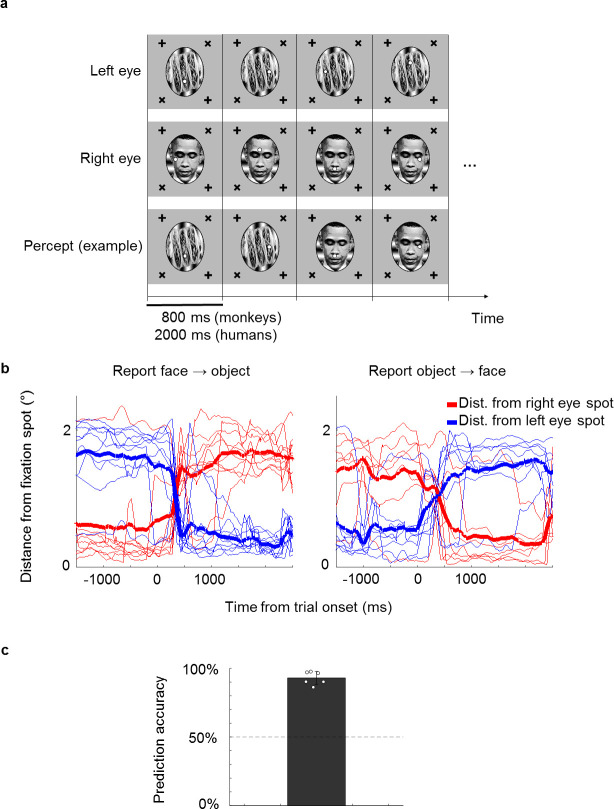
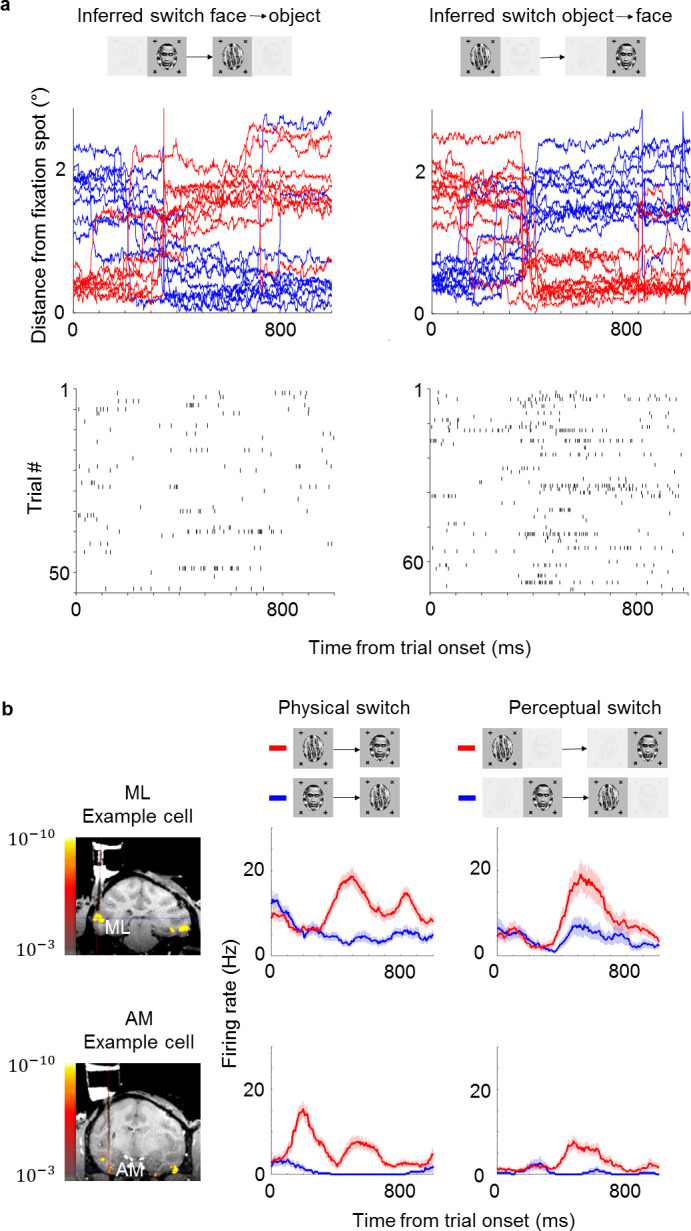
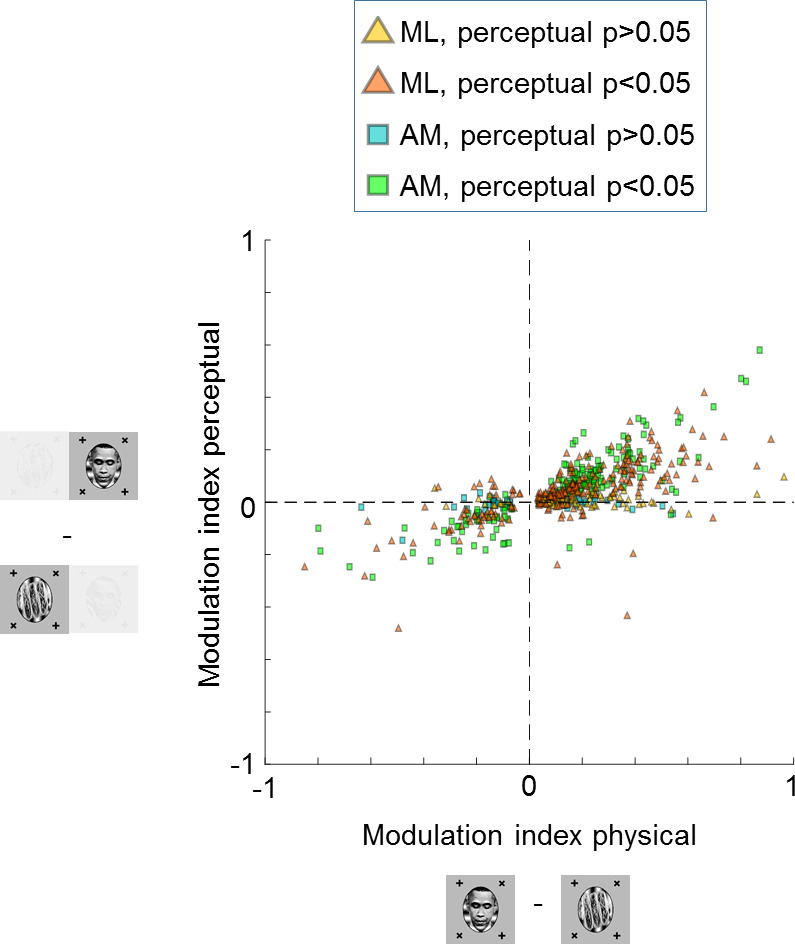
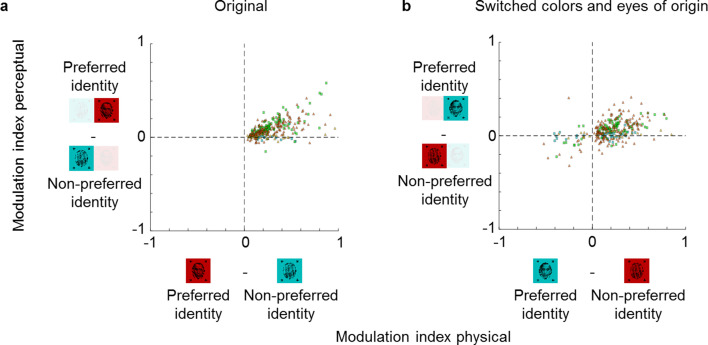
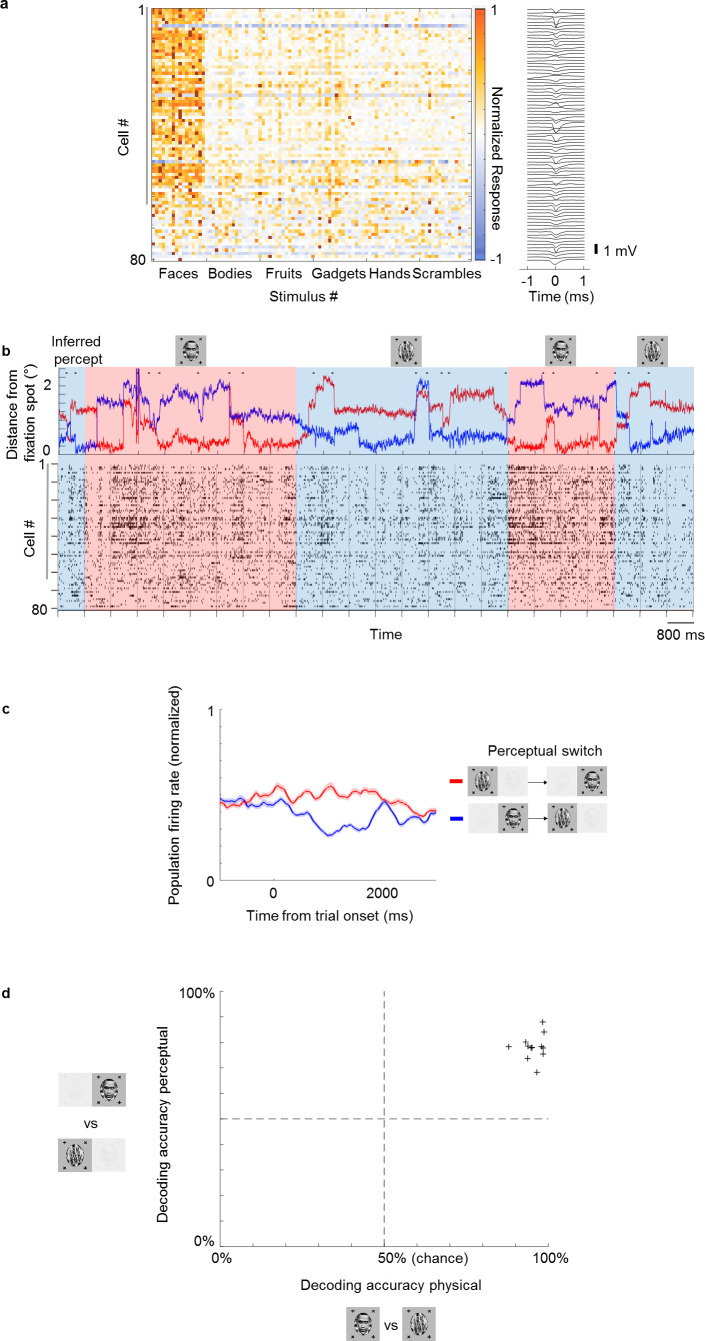
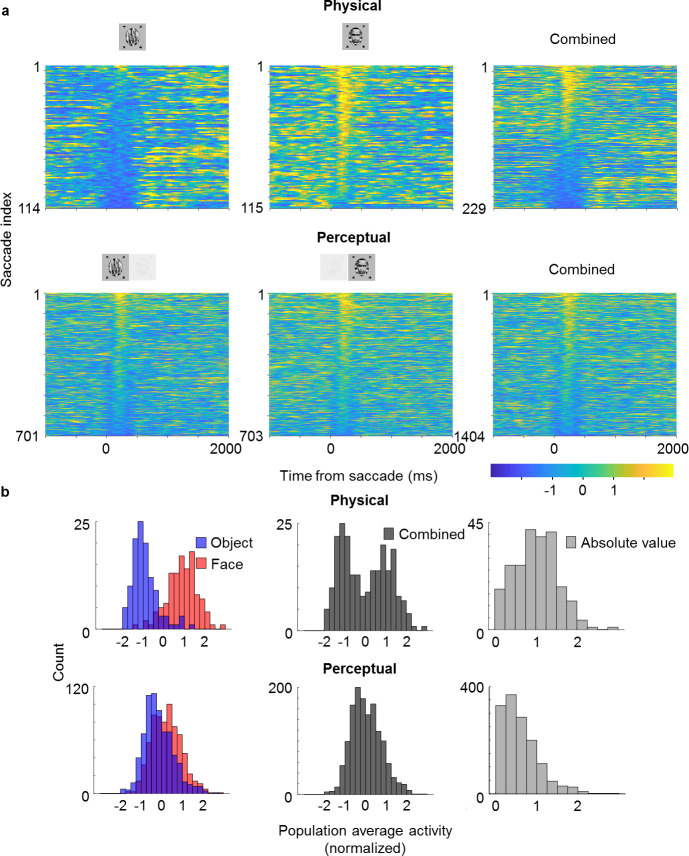
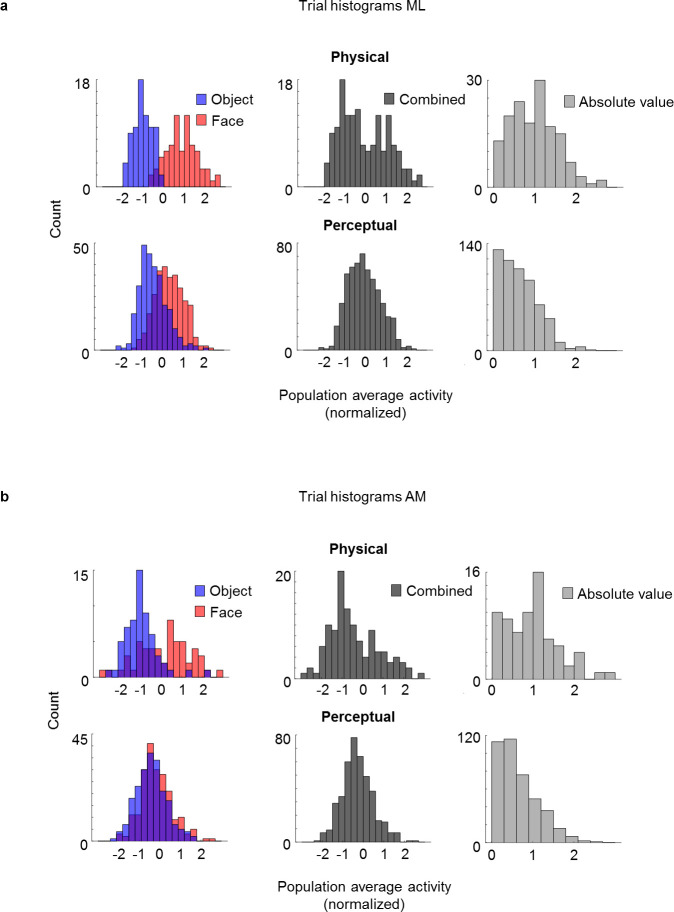
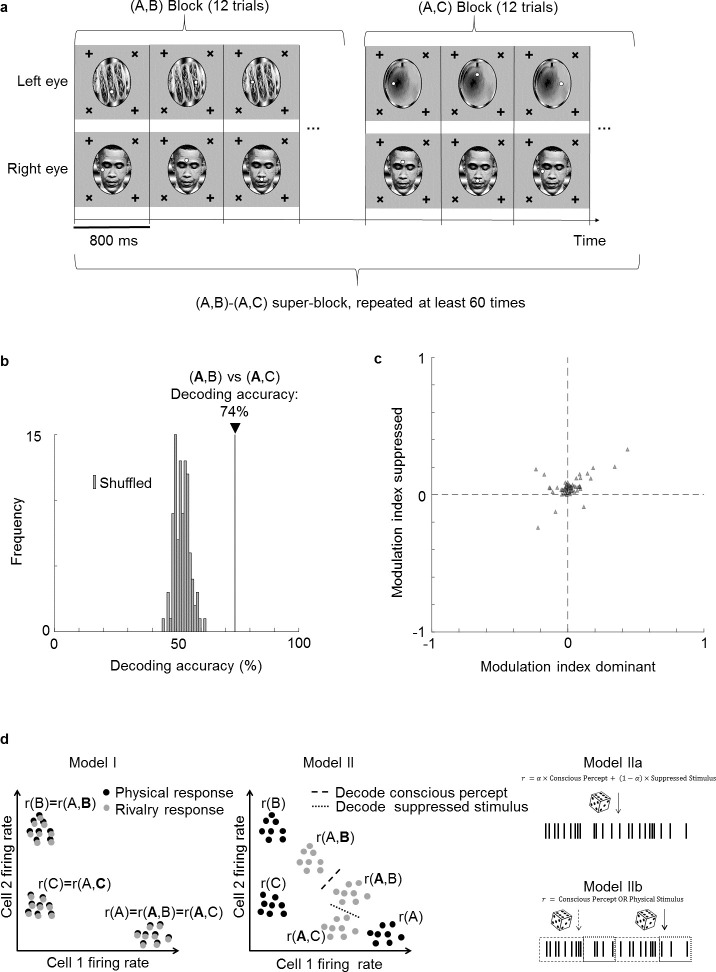
A powerful paradigm to identify neural correlates of consciousness is binocular rivalry, wherein a constant visual stimulus evokes a varying conscious percept. It has recently been suggested that activity modulations observed during rivalry may represent the act of report rather than the conscious percept itself. Here, we performed single-unit recordings from face patches in macaque inferotemporal (IT) cortex using a no-report paradigm in which the animal's conscious percept was inferred from eye movements. We found that large proportions of IT neurons represented the conscious percept even without active report. Furthermore, on single trials we could decode both the conscious percept and the suppressed stimulus. Together, these findings indicate that (1) IT cortex possesses a true neural correlate of consciousness and (2) this correlate consists of a population code wherein single cells multiplex representation of the conscious percept and veridical physical stimulus, rather than a subset of cells perfectly reflecting consciousness.
一种强大的范式可以识别意识的神经相关物,即双眼竞争,其中一个恒定的视觉刺激会引起不断变化的意识知觉。最近有人提出,在竞争过程中观察到的活动调制可能代表报告行为,而不是意识知觉本身。在这里,我们使用无报告范式,从猕猴下颞叶(IT)皮层的面部斑块中进行了单细胞记录,在该范式中,动物的意识知觉是从眼球运动中推断出来的。我们发现,即使没有主动报告,很大比例的 IT 神经元也代表了意识知觉。此外,在单个试验中,我们可以解码有意识的知觉和被抑制的刺激。这些发现共同表明:(1)IT 皮层具有真正的意识神经相关物;(2)这种相关物由一个群体代码组成,其中单个细胞对意识知觉和真实物理刺激进行多重表示,而不是由一组完全反映意识的细胞组成。