Faculty of Medicine, Institute of Biochemistry I, Goethe-University Frankfurt, Frankfurt, Germany.
Chair of Food Chemistry, Faculty of Mathematics and Natural Sciences, University of Wuppertal, Wuppertal, Germany.
Cell Death Differ. 2021 Apr;28(4):1301-1316. doi: 10.1038/s41418-020-00652-4. Epub 2020 Nov 11.
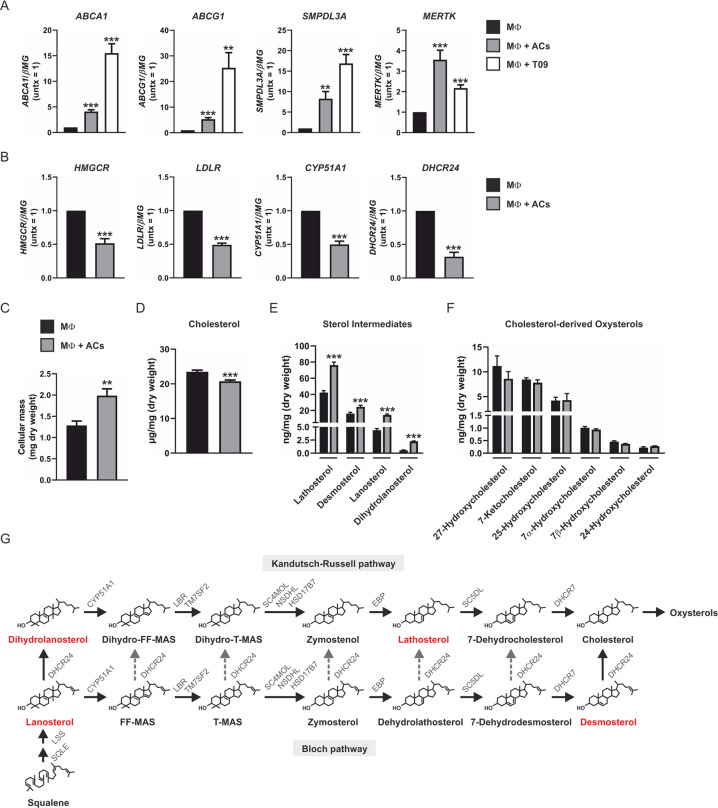
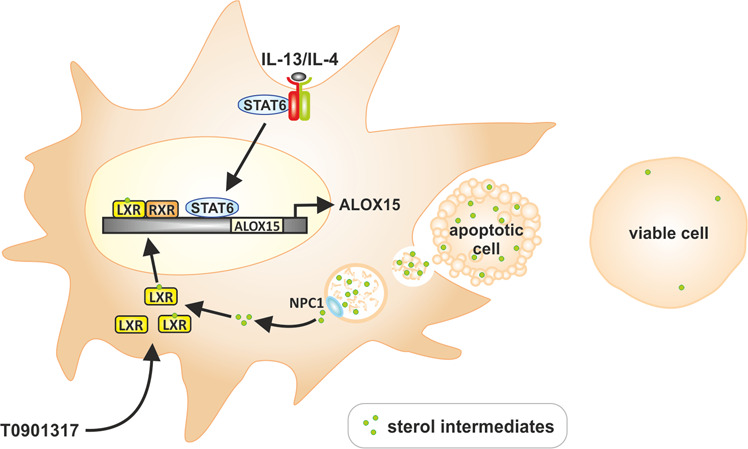
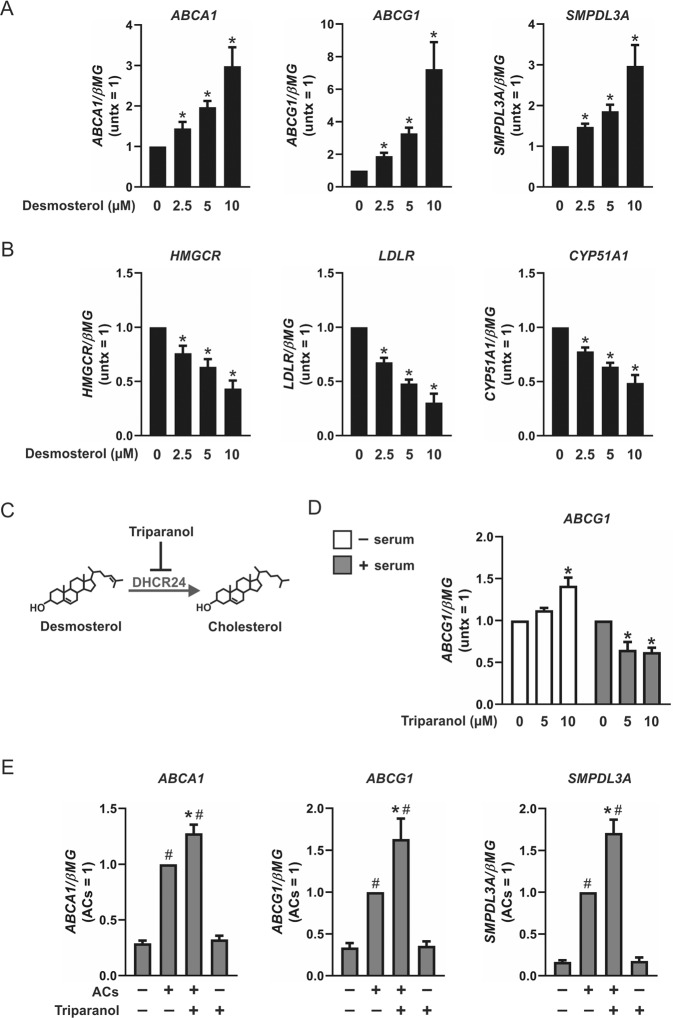
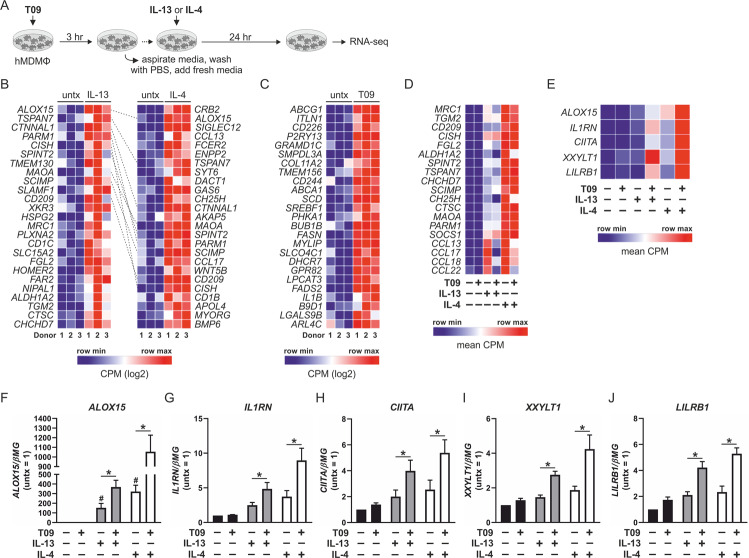
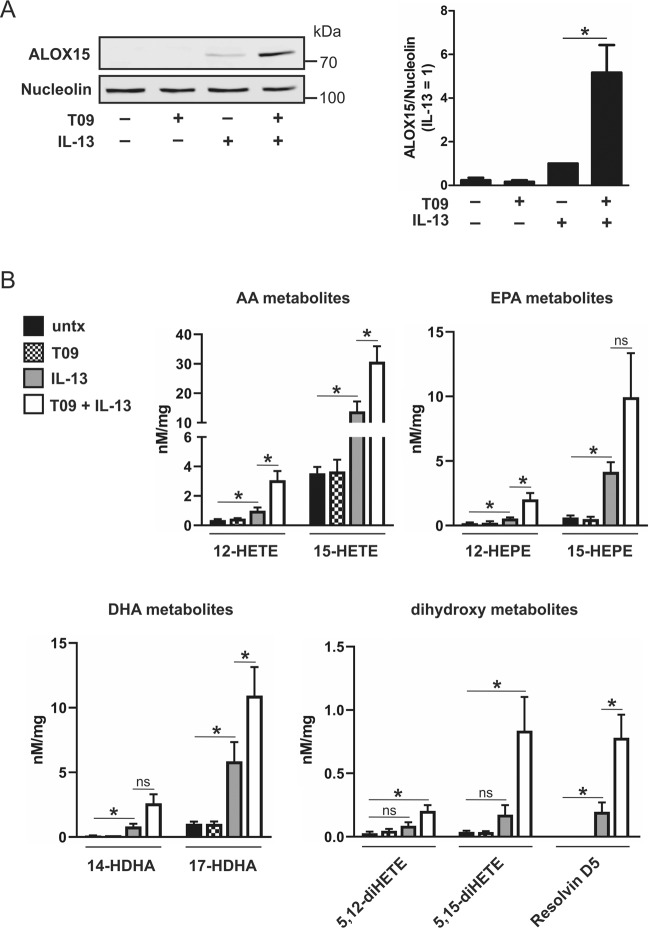
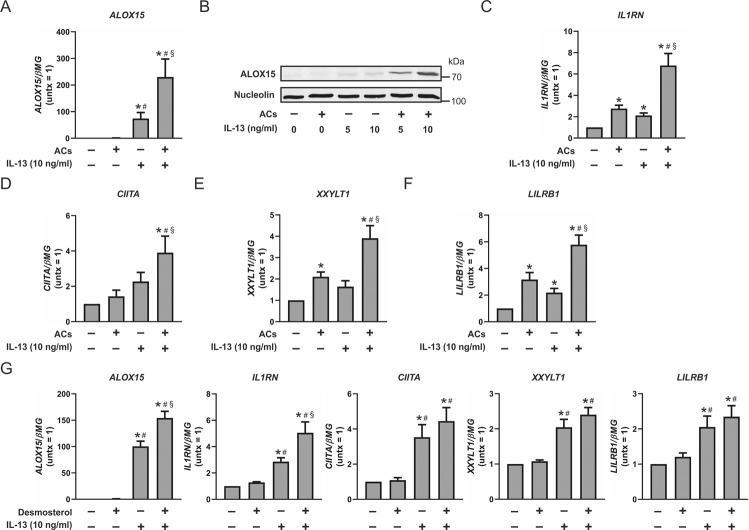
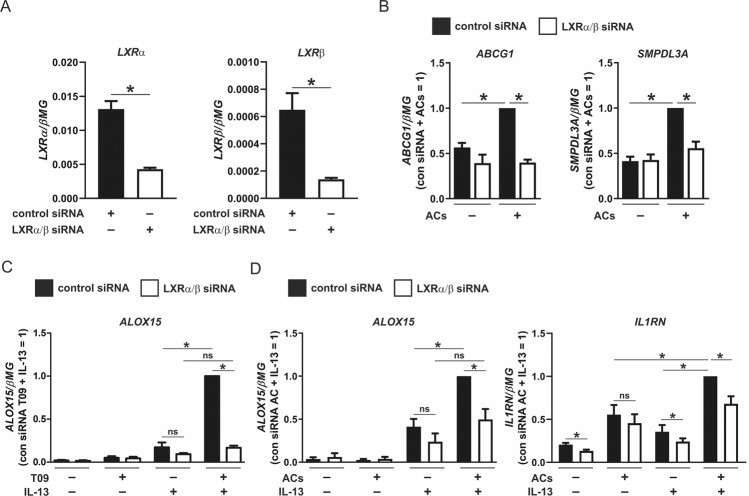
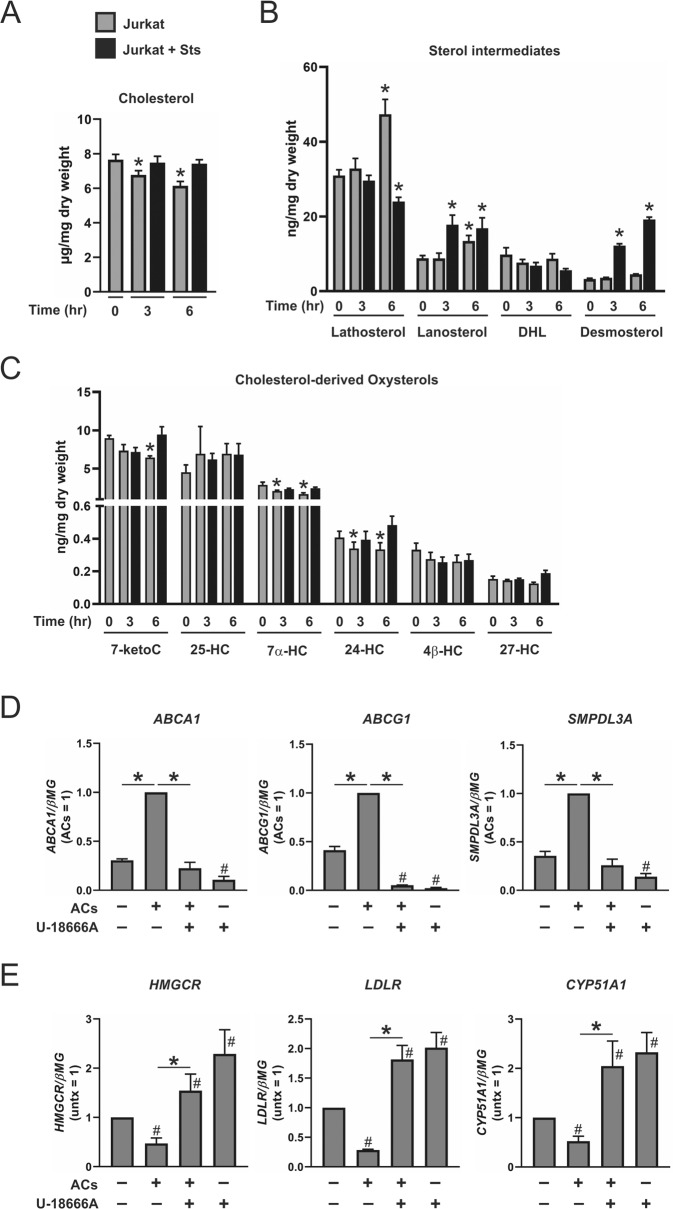
Macrophages acquire anti-inflammatory and proresolving functions to facilitate resolution of inflammation and promote tissue repair. While alternatively activated macrophages (AAMs), also referred to as M2 macrophages, polarized by type 2 (Th2) cytokines IL-4 or IL-13 contribute to the suppression of inflammatory responses and play a pivotal role in wound healing, contemporaneous exposure to apoptotic cells (ACs) potentiates the expression of anti-inflammatory and tissue repair genes. Given that liver X receptors (LXRs), which coordinate sterol metabolism and immune cell function, play an essential role in the clearance of ACs, we investigated whether LXR activation following engulfment of ACs selectively potentiates the expression of Th2 cytokine-dependent genes in primary human AAMs. We show that AC uptake simultaneously upregulates LXR-dependent, but suppresses SREBP-2-dependent gene expression in macrophages, which are both prevented by inhibiting Niemann-Pick C1 (NPC1)-mediated sterol transport from lysosomes. Concurrently, macrophages accumulate sterol biosynthetic intermediates desmosterol, lathosterol, lanosterol, and dihydrolanosterol but not cholesterol-derived oxysterols. Using global transcriptome analysis, we identify anti-inflammatory and proresolving genes including interleukin-1 receptor antagonist (IL1RN) and arachidonate 15-lipoxygenase (ALOX15) whose expression are selectively potentiated in macrophages upon concomitant exposure to ACs or LXR agonist T0901317 (T09) and Th2 cytokines. We show priming macrophages via LXR activation enhances the cellular capacity to synthesize inflammation-suppressing specialized proresolving mediator (SPM) precursors 15-HETE and 17-HDHA as well as resolvin D5. Silencing LXRα and LXRβ in macrophages attenuates the potentiation of ALOX15 expression by concomitant stimulation of ACs or T09 and IL-13. Collectively, we identify a previously unrecognized mechanism of regulation whereby LXR integrates AC uptake to selectively shape Th2-dependent gene expression in AAMs.
巨噬细胞获得抗炎和促愈功能,以促进炎症消退和组织修复。而由 2 型(Th2)细胞因子 IL-4 或 IL-13 极化的选择性激活的巨噬细胞(AAMs),也称为 M2 巨噬细胞,有助于抑制炎症反应,并在伤口愈合中发挥关键作用,同时暴露于凋亡细胞(ACs)会增强抗炎和组织修复基因的表达。鉴于肝脏 X 受体(LXRs)协调固醇代谢和免疫细胞功能,在 AC 的清除中发挥重要作用,我们研究了吞噬 AC 后 LXR 的激活是否会选择性增强原发性人 AAMs 中 Th2 细胞因子依赖性基因的表达。我们发现,AC 的摄取同时上调了 LXR 依赖性,但抑制了 SREBP-2 依赖性基因表达,这两种表达均被抑制溶酶体中尼曼-匹克 C1(NPC1)介导的固醇转运所阻止。同时,巨噬细胞积累固醇生物合成中间体 desmosterol、lathosterol、lanosterol 和 dihydrolanosterol,但不积累胆固醇衍生的氧化固醇。通过全转录组分析,我们确定了抗炎和促愈基因,包括白细胞介素 1 受体拮抗剂(IL1RN)和花生四烯酸 15-脂氧合酶(ALOX15),其表达在同时暴露于 AC 或 LXR 激动剂 T0901317(T09)和 Th2 细胞因子时被选择性增强。我们发现,通过 LXR 激活对巨噬细胞进行预处理,可增强细胞合成炎症抑制性特殊促愈介质(SPM)前体 15-HETE 和 17-HDHA 以及 resolvin D5 的能力。沉默巨噬细胞中的 LXRα 和 LXRβ 会减弱 AC 刺激或 T09 和 IL-13 共同刺激时 ALOX15 表达的增强。总的来说,我们确定了一种以前未被识别的调节机制,即 LXR 整合 AC 的摄取,以选择性地塑造 AAMs 中 Th2 依赖性基因的表达。