Stanford Clinical Excellence Research Center, Stanford University, Stanford, California, USA.
IBM Research, Cambridge, Massachusetts, USA.
J Am Med Inform Assoc. 2021 Mar 1;28(3):588-595. doi: 10.1093/jamia/ocaa247.
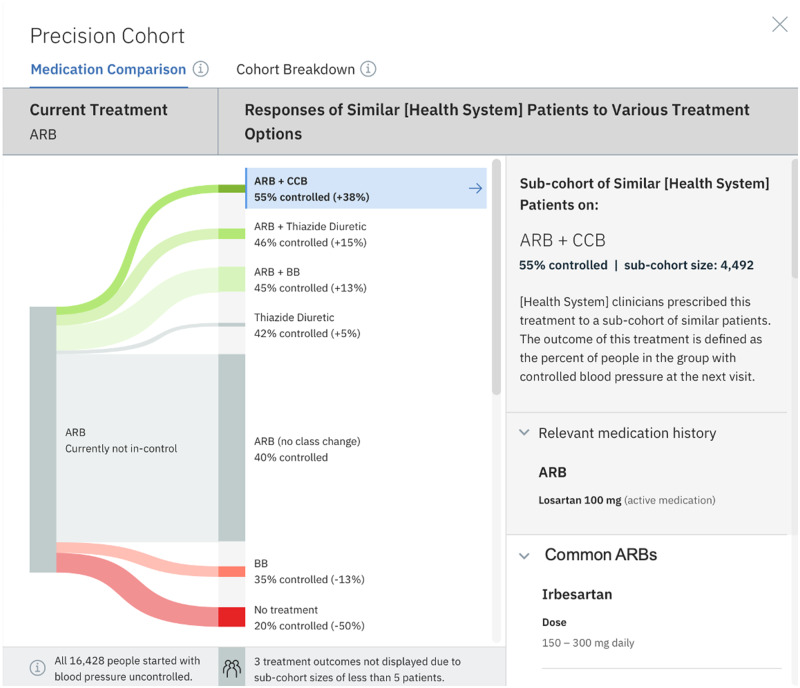
To present clinicians at the point-of-care with real-world data on the effectiveness of various treatment options in a precision cohort of patients closely matched to the index patient.
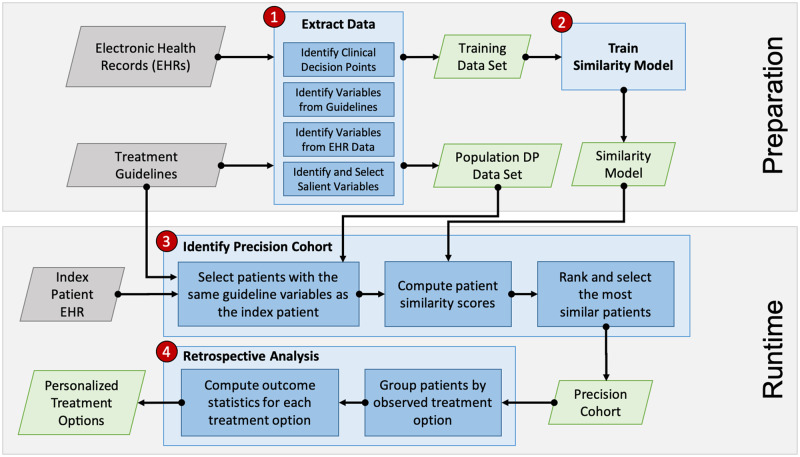
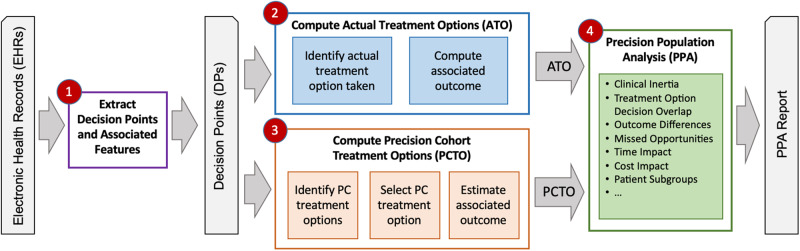
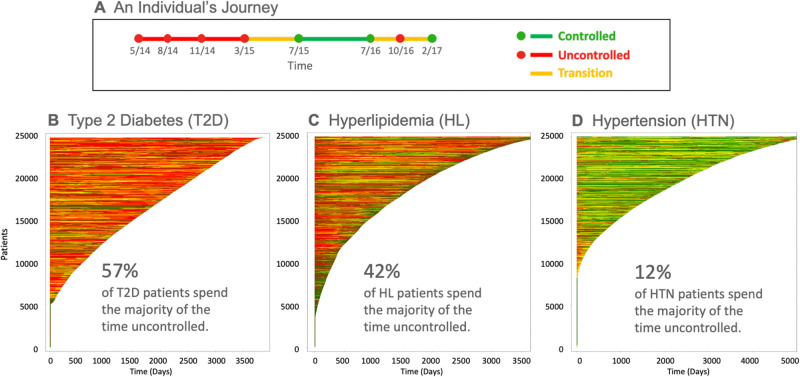
We developed disease-specific, machine-learning, patient-similarity models for hypertension (HTN), type II diabetes mellitus (T2DM), and hyperlipidemia (HL) using data on approximately 2.5 million patients in a large medical group practice. For each identified decision point, an encounter during which the patient's condition was not controlled, we compared the actual outcome of the treatment decision administered to that of the best-achieved outcome for similar patients in similar clinical situations.
For the majority of decision points (66.8%, 59.0%, and 83.5% for HTN, T2DM, and HL, respectively), there were alternative treatment options administered to patients in the precision cohort that resulted in a significantly increased proportion of patients under control than the treatment option chosen for the index patient. The expected percentage of patients whose condition would have been controlled if the best-practice treatment option had been chosen would have been better than the actual percentage by: 36% (65.1% vs 48.0%, HTN), 68% (37.7% vs 22.5%, T2DM), and 138% (75.3% vs 31.7%, HL).
Clinical guidelines are primarily based on the results of randomized controlled trials, which apply to a homogeneous subject population. Providing the effectiveness of various treatment options used in a precision cohort of patients similar to the index patient can provide complementary information to tailor guideline recommendations for individual patients and potentially improve outcomes.
为临床医生提供实际数据,展示在与索引患者密切匹配的精准患者队列中,各种治疗选择的有效性,以便在治疗点即时做出决策。
我们使用大型医疗集团约 250 万患者的数据,为高血压 (HTN)、2 型糖尿病 (T2DM) 和高脂血症 (HL) 开发了特定疾病的机器学习患者相似性模型。对于每个确定的决策点,即患者病情未得到控制的就诊时,我们将索引患者接受的实际治疗决策结果与类似临床情况下相似患者的最佳治疗效果进行比较。
对于大多数决策点(HTN、T2DM 和 HL 的分别为 66.8%、59.0%和 83.5%),在精准队列中,为患者提供了替代治疗方案,结果表明,控制病情的患者比例明显高于为索引患者选择的治疗方案。如果选择最佳实践治疗方案,预计会有更多的患者病情得到控制,比实际控制的患者比例高出:36%(65.1%对 48.0%,HTN)、68%(37.7%对 22.5%,T2DM)和 138%(75.3%对 31.7%,HL)。
临床指南主要基于随机对照试验的结果,这些结果适用于同质的研究人群。提供与索引患者相似的精准患者队列中使用的各种治疗选择的有效性,可以为个别患者提供补充信息,有助于为其量身定制指南建议,并有可能改善治疗效果。