Tsai Chia-Fang, Pan Whei-Lin, Pan Yi-Ping, Chan Chiu-Po, Ju Yuh-Ren, Wang Yuan-Min, Lin Cho-Ying, Chang Chi-Ching
Department of Periodontics, Chang Gung Memorial Hospital, Taipei.
Graduate Institute of Dental and Craniofacial Science, Chang Gung University, Taoyuan.
Medicine (Baltimore). 2020 Nov 13;99(46):e23180. doi: 10.1097/MD.0000000000023180.
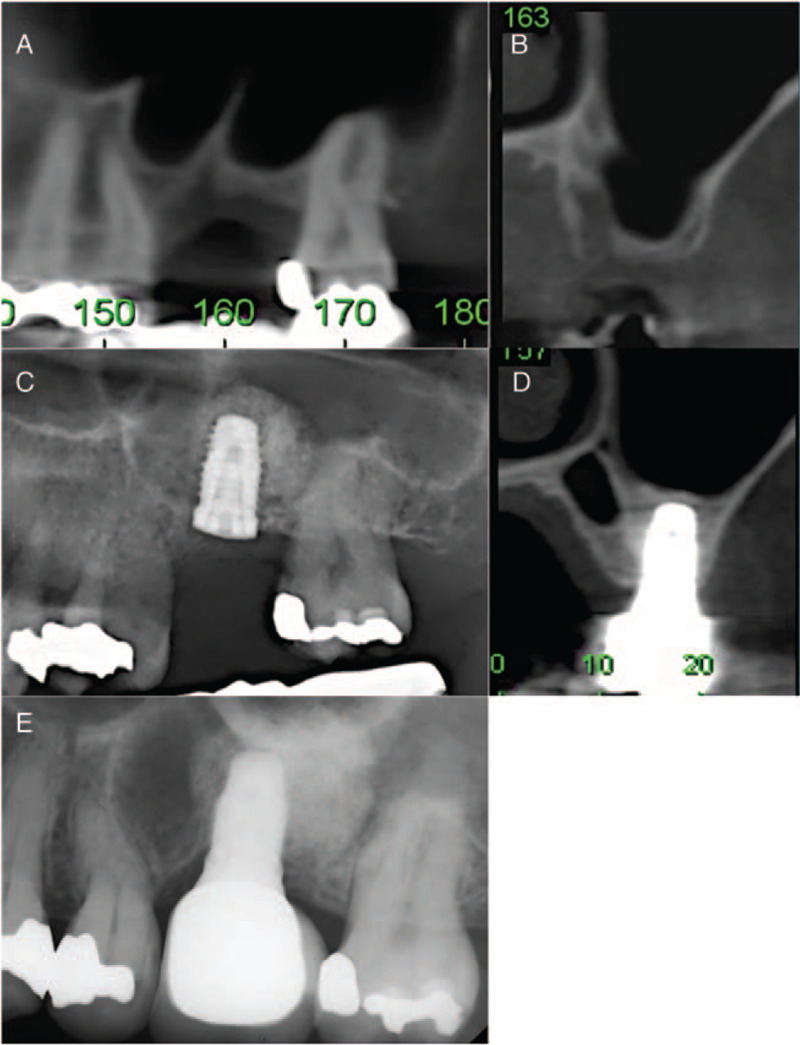
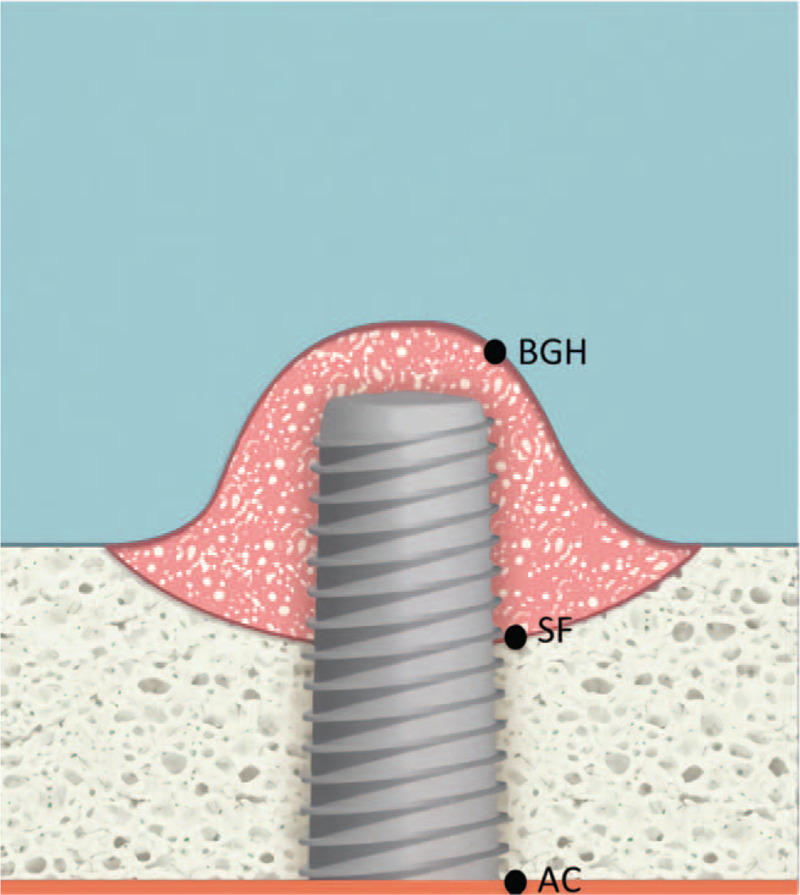
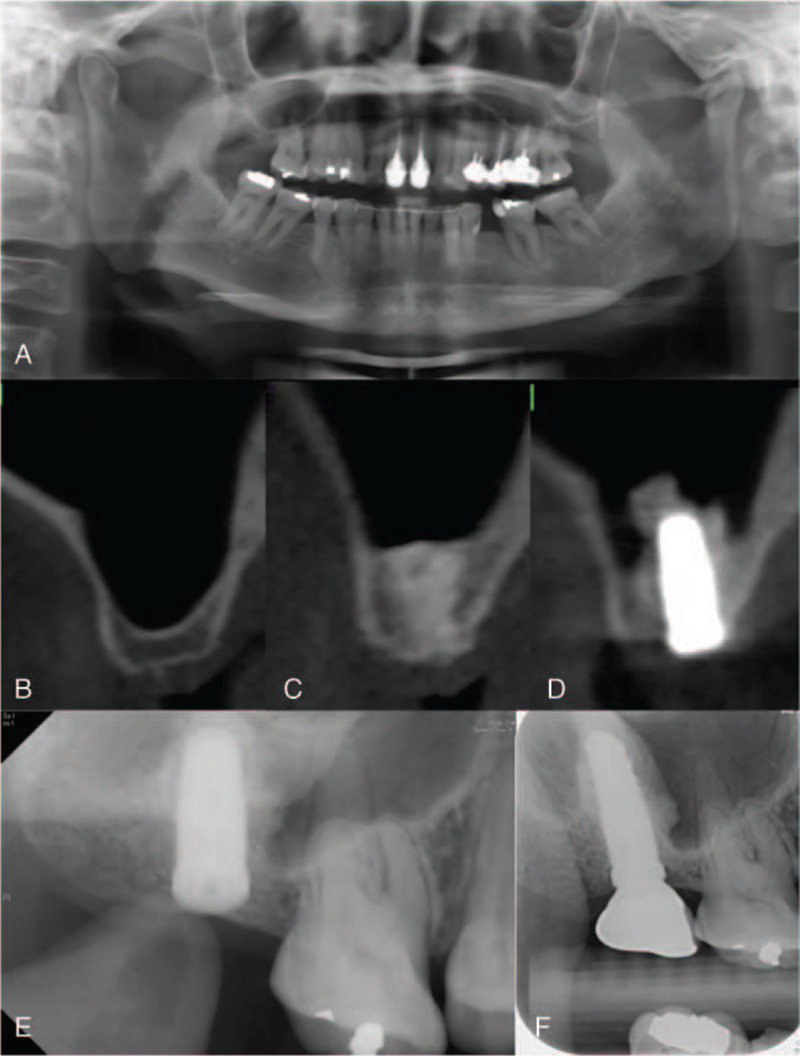
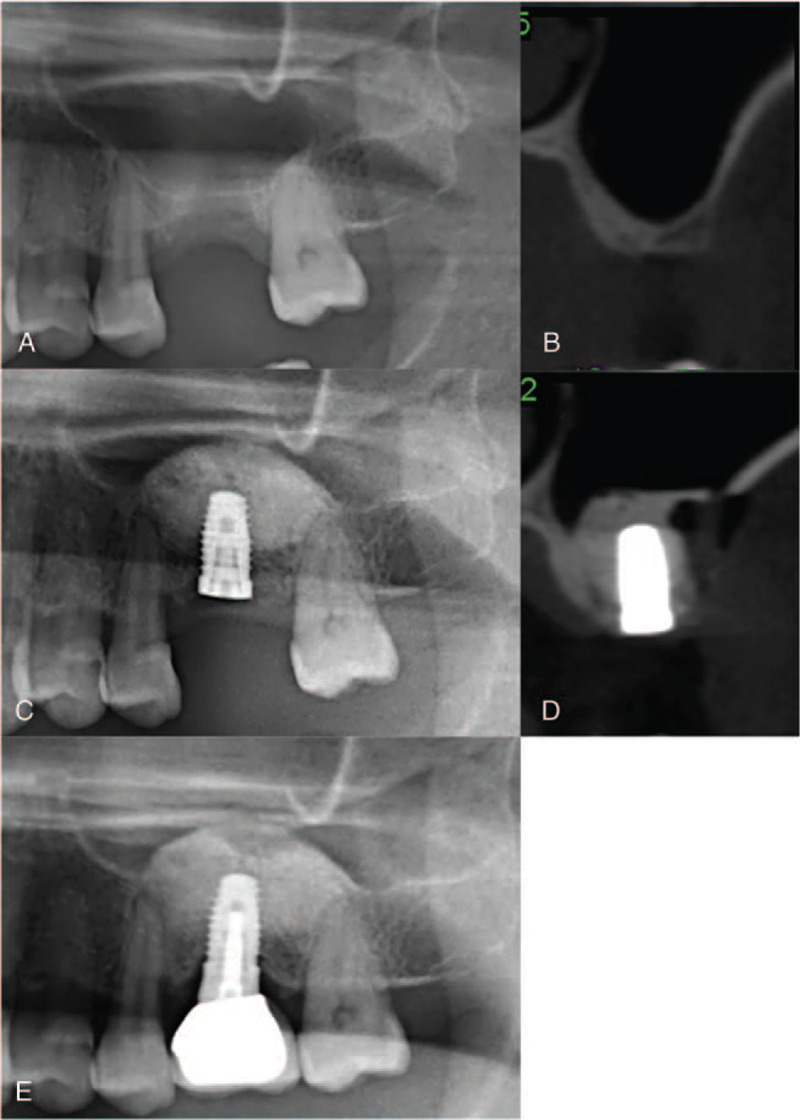
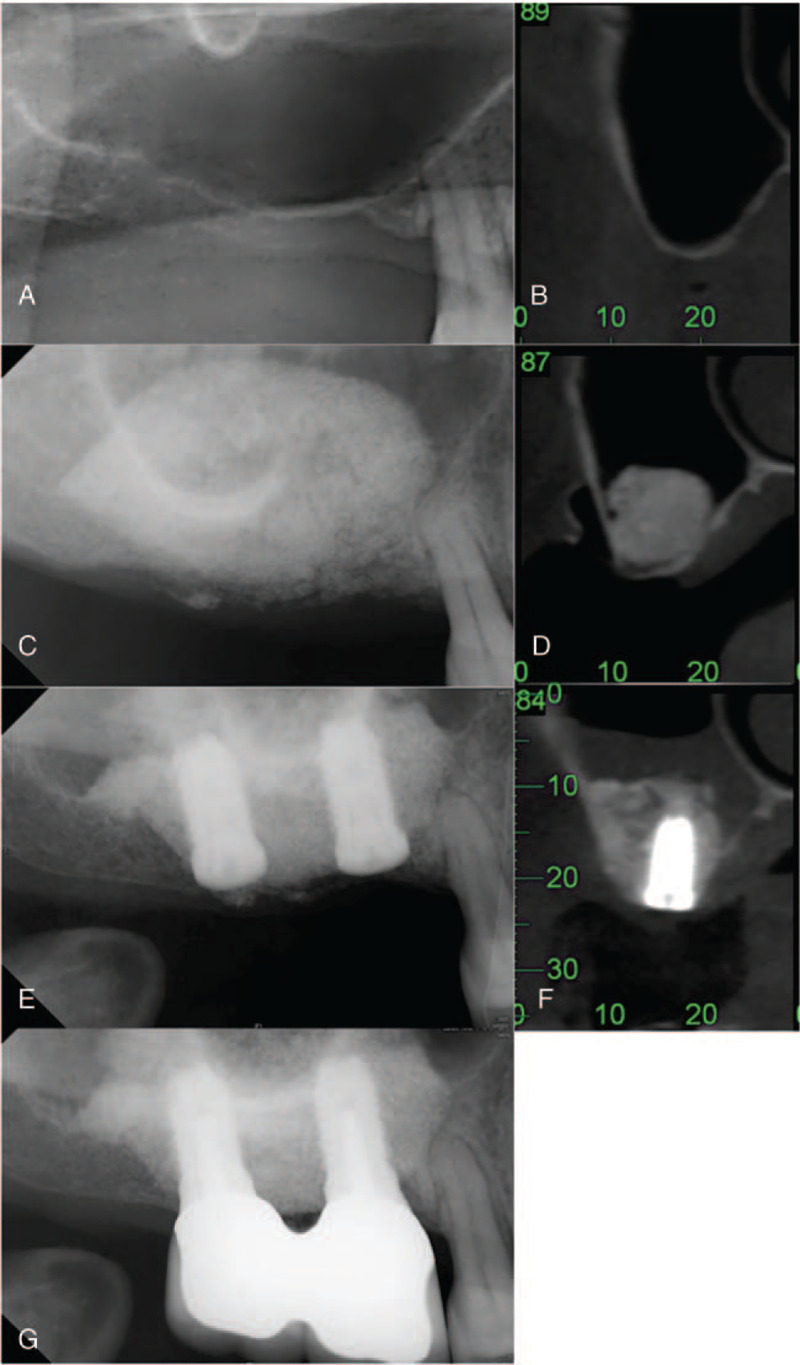
This study compared implant outcomes following maxillary sinus floor augmentation (MSFA) in edentulous patients with a residual alveolar bone height ≤3 mm. Four techniques were evaluated: 1-stage bone-added osteotome sinus floor elevation procedure (BAOSFE) with simultaneous implant placement; 2-stage BAOSFE with delayed implant placement; 1-stage lateral window sinus floor elevation with simultaneous implant placement; and 2-stage lateral window sinus floor elevation with delayed implant placement. Patients were followed for 18 to 72 months (mean: 52.5 months) after prosthesis placement. Data were analyzed with cone-beam computed tomography. A total of 96 implants from 71 patients were analyzed; pretreatment, there were no significant differences between patients. Total implant survival was 98.9%. The mean residual bone height was significantly higher in the 1-stage BAOSFE group than the other groups (P < .01); 1 implant in this group failed at 3 months. There was no significant difference in total bone height gain between groups. However, the bone height gain of 1st sinus lifting with 2-stage BAOSFE was significantly lower than the 2-stage lateral window procedure (P < .01). There was no prosthesis failure. The favorable implant outcomes suggest these 1-stage and 2-stage MSFA procedures should be considered as alternative treatment options for patients with extremely atrophic posterior maxilla.
本研究比较了剩余牙槽骨高度≤3mm的无牙患者上颌窦底提升(MSFA)后的种植效果。评估了四种技术:同期种植的一期骨增量骨凿上颌窦底提升术(BAOSFE);延期种植的二期BAOSFE;同期种植的一期侧窗上颌窦底提升术;以及延期种植的二期侧窗上颌窦底提升术。在义齿修复后对患者进行了18至72个月(平均52.5个月)的随访。采用锥形束计算机断层扫描分析数据。共分析了来自71例患者的96颗种植体;治疗前,患者之间无显著差异。种植体总存留率为98.9%。一期BAOSFE组的平均剩余骨高度显著高于其他组(P<0.01);该组有1颗种植体在3个月时失败。各组之间的总骨高度增加无显著差异。然而,二期BAOSFE首次上颌窦提升的骨高度增加显著低于二期侧窗手术(P<0.01)。无义齿失败情况。良好的种植效果表明,这些一期和二期MSFA手术应被视为上颌后牙区极度萎缩患者的替代治疗选择。