State Key Joint Laboratory of Environmental Simulation and Pollution Control, School of Environment, Tsinghua University, Beijing 100084, China; State Environmental Protection Key Laboratory of Sources and Control of Air Pollution Complex, Beijing 100084, China.
State Key Joint Laboratory of Environmental Simulation and Pollution Control, School of Environment, Tsinghua University, Beijing 100084, China.
Sci Total Environ. 2021 Jan 1;750:142323. doi: 10.1016/j.scitotenv.2020.142323. Epub 2020 Sep 11.
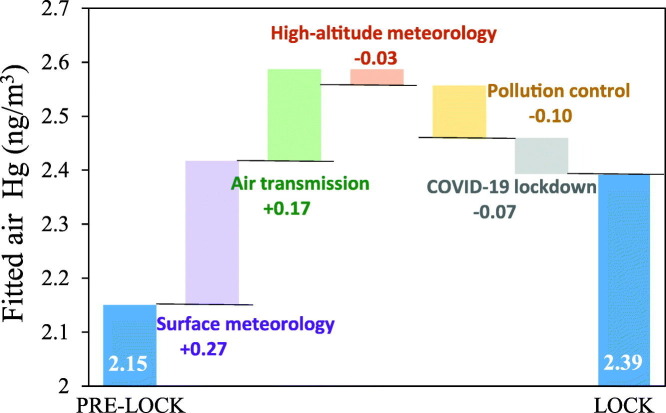
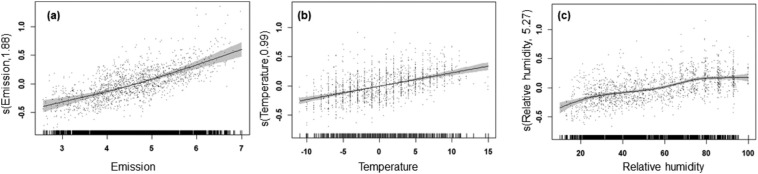
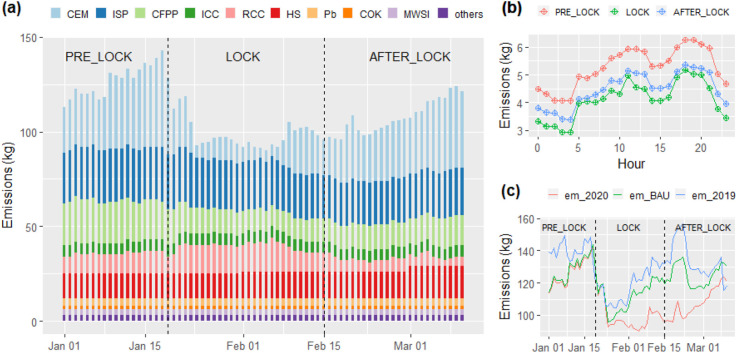
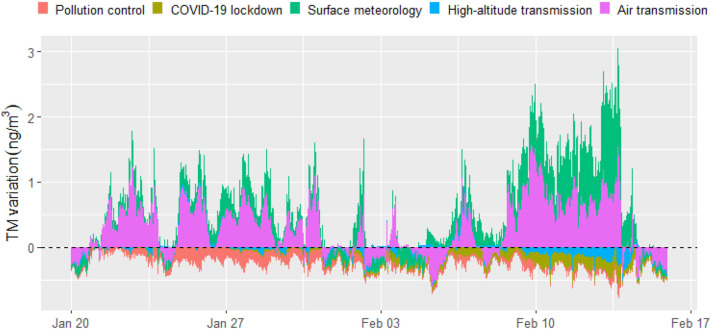
Controlling anthropogenic mercury emissions is an ongoing effort and the effect of atmospheric mercury mitigation is expected to be impacted by accelerating climate change. The lockdown measures to restrict the spread of Coronavirus Disease 2019 (COVID-19) and the following unfavorable meteorology in Beijing provided a natural experiment to examine how air mercury responds to strict control measures when the climate becomes humid and warm. Based on a high-time resolution emission inventory and generalized additive model, we found that air mercury concentration responded almost linearly to the changes in mercury emissions when excluding the impact of other factors. Existing pollution control and additional lockdown measures reduced mercury emissions by 16.7 and 12.5 kg/d during lockdown, respectively, which correspondingly reduced the concentrations of atmospheric mercury by 0.10 and 0.07 ng/m. Emission reductions from cement clinker production contributed to the largest decrease in atmospheric mercury, implying potential mitigation effects in this sector since it is currently the number one emitter in China. However, changes in meteorology raised atmospheric mercury by 0.41 ng/m. The increases in relative humidity (9.5%) and temperature (1.2 °C) significantly offset the effect of emission reduction by 0.17 and 0.09 ng/m, respectively, which highlights the challenge of air mercury control in humid and warm weather and the significance of understanding mercury behavior in the atmosphere and at atmospheric interfaces, especially the impact from relative humidity.
控制人为汞排放是一项持续的努力,预计大气汞减排的效果将受到加速气候变化的影响。为限制 2019 年冠状病毒病(COVID-19)传播而采取的封锁措施以及随后北京不利的气象条件提供了一个自然实验,以检验在气候变得潮湿和温暖时,空气汞如何对严格的控制措施做出反应。基于高时间分辨率排放清单和广义加性模型,我们发现,在排除其他因素影响的情况下,空气汞浓度几乎与汞排放的变化呈线性关系。在封锁期间,现有的污染控制措施和额外的封锁措施分别减少了 16.7 和 12.5 千克/天的汞排放,相应地将大气汞浓度降低了 0.10 和 0.07 纳克/立方米。水泥熟料生产的排放减少对大气汞的减少贡献最大,这意味着该行业可能具有缓解效果,因为它目前是中国的头号排放源。然而,气象变化使大气汞增加了 0.41 纳克/立方米。相对湿度(9.5%)和温度(1.2°C)的升高分别显著抵消了减排 0.17 和 0.09 纳克/立方米的效果,这凸显了在潮湿和温暖天气下控制空气汞的挑战,以及了解大气中和大气界面处汞行为的重要性,特别是相对湿度的影响。