Digital Image Processing Laboratory, Islamia College Peshawar, Peshawar 25120, Pakistan.
Department of Digital Contents, Sejong University, Seoul 143-747, Korea.
Sensors (Basel). 2020 Nov 10;20(22):6419. doi: 10.3390/s20226419.
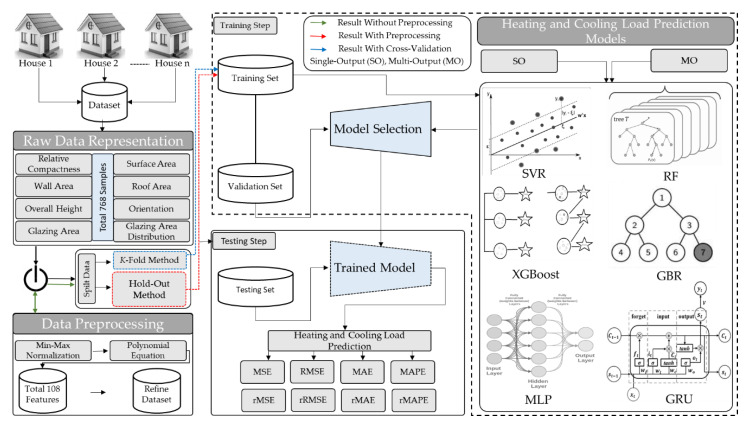
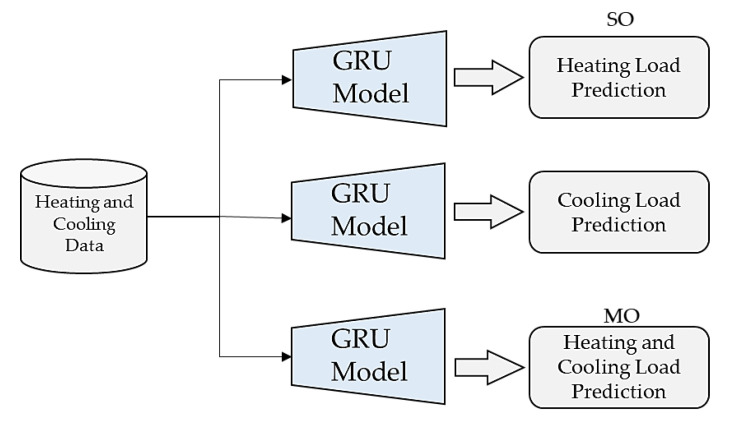
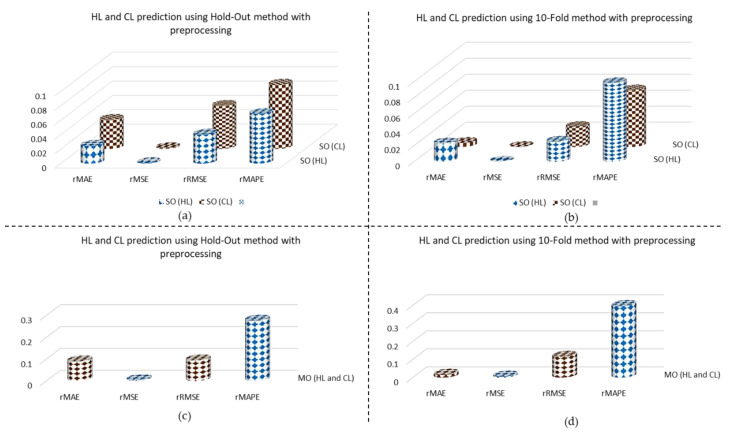
In the current technological era, energy-efficient buildings have a significant research body due to increasing concerns about energy consumption and its environmental impact. Designing an appropriate energy-efficient building depends on its layout, such as relative compactness, overall area, height, orientation, and distribution of the glazing area. These factors directly influence the cooling load (CL) and heating load (HL) of residential buildings. An accurate prediction of these load facilitates a better management of energy consumption and enhances the living standards of inhabitants. Most of the traditional machine learning (ML)-based approaches are designed for single-output (SO) prediction, which is a tedious task due to separate training processes for each output with low performance. In addition, these approaches have a high level of nonlinearity between input and output, which need more enhancement in terms of robustness, predictability, and generalization. To tackle these issues, we propose a novel framework based on gated recurrent unit (GRU) that reliably predicts the CL and HL concurrently. To the best of our knowledge, we are the first to propose a multi-output (MO) sequential learning model followed by utility preprocessing under the umbrella of a unified framework. A comprehensive set of ablation studies on ML and deep learning (DL) techniques is done over an energy efficiency dataset, where the proposed model reveals an incredible performance as compared to other existing models.
在当前的技术时代,由于人们越来越关注能源消耗及其对环境的影响,节能建筑的研究群体不断壮大。设计合适的节能建筑取决于其布局,例如相对紧凑性、总面积、高度、方向和玻璃面积的分布。这些因素直接影响住宅建筑的冷负荷 (CL) 和热负荷 (HL)。这些负荷的准确预测有助于更好地管理能源消耗,提高居民的生活水平。大多数基于传统机器学习 (ML) 的方法都是为单输出 (SO) 预测而设计的,由于每个输出都需要单独的训练过程,因此这是一项繁琐的任务,而且性能较低。此外,这些方法的输入和输出之间存在高度的非线性,需要在稳健性、可预测性和泛化方面进行更多的增强。为了解决这些问题,我们提出了一种基于门控循环单元 (GRU) 的新框架,可以可靠地同时预测 CL 和 HL。据我们所知,我们是第一个在统一框架下提出多输出 (MO) 序列学习模型并进行实用预处理的人。在一个能源效率数据集上对 ML 和深度学习 (DL) 技术进行了全面的消融研究,与其他现有模型相比,所提出的模型表现出了令人难以置信的性能。