Department of Laboratory Medicine, Central People's Hospital of Zhanjiang, Guangdong Medical University Zhanjiang Central Hospital, 236 Yuanzhu Road, 524045, Zhanjiang, P. R. China.
Division of Laboratory Medicine, Guangdong Provincial People's Hospital, Guangdong Academy of Medical Sciences, 510080, Guangzhou, P. R. China.
J Exp Clin Cancer Res. 2020 Nov 12;39(1):240. doi: 10.1186/s13046-020-01731-7.
Colorectal cancer (CRC) is one of the frequently occurred malignancies in the world. To date, several onco-microRNAs (miRNAs or miRs), including miR-96, have been identified in the pathogenesis of CRC. In the present study, we aimed to corroborate the oncogenic effect of miR-96 on CRC and to identify the specific mechanisms related to AMPKα2/FTO/m6A/MYC.
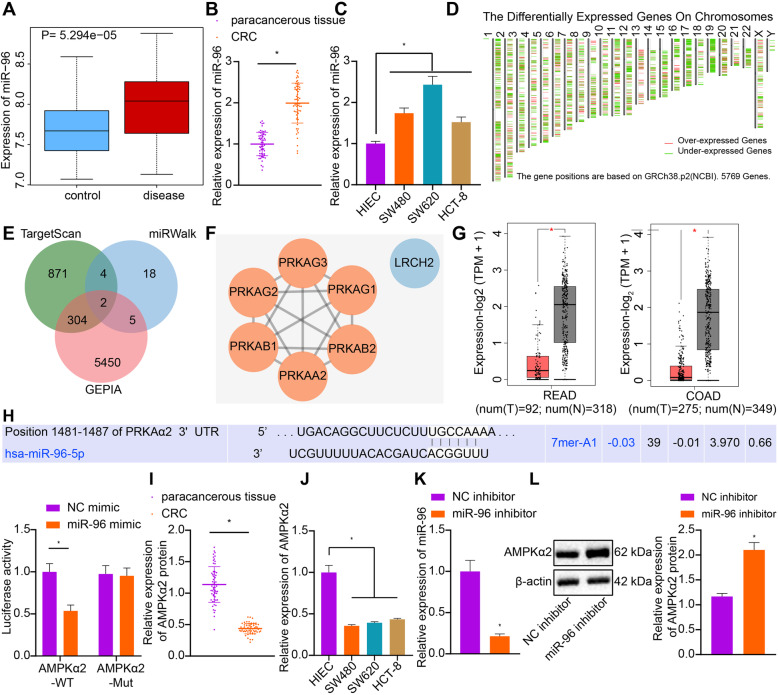
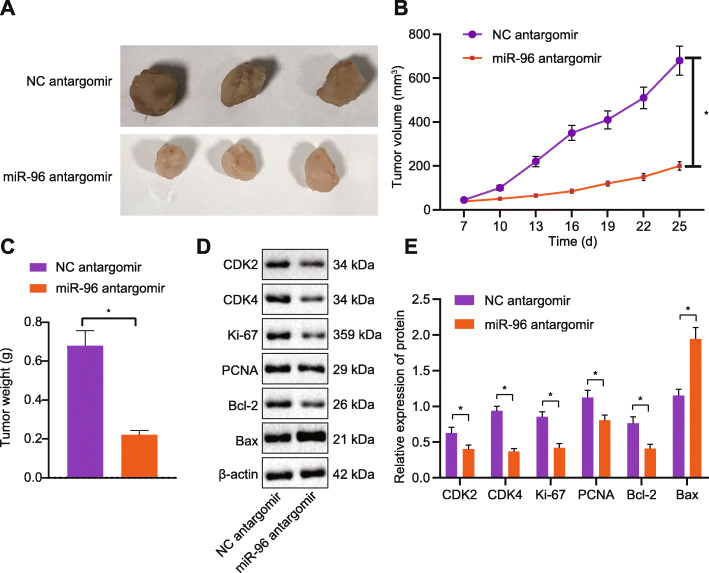
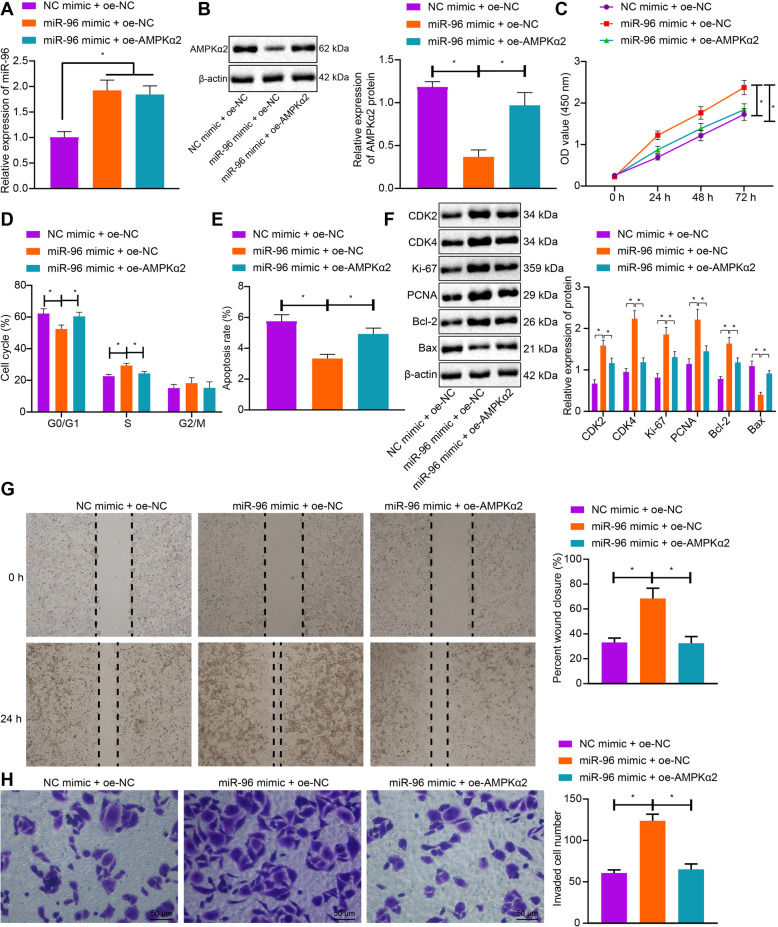
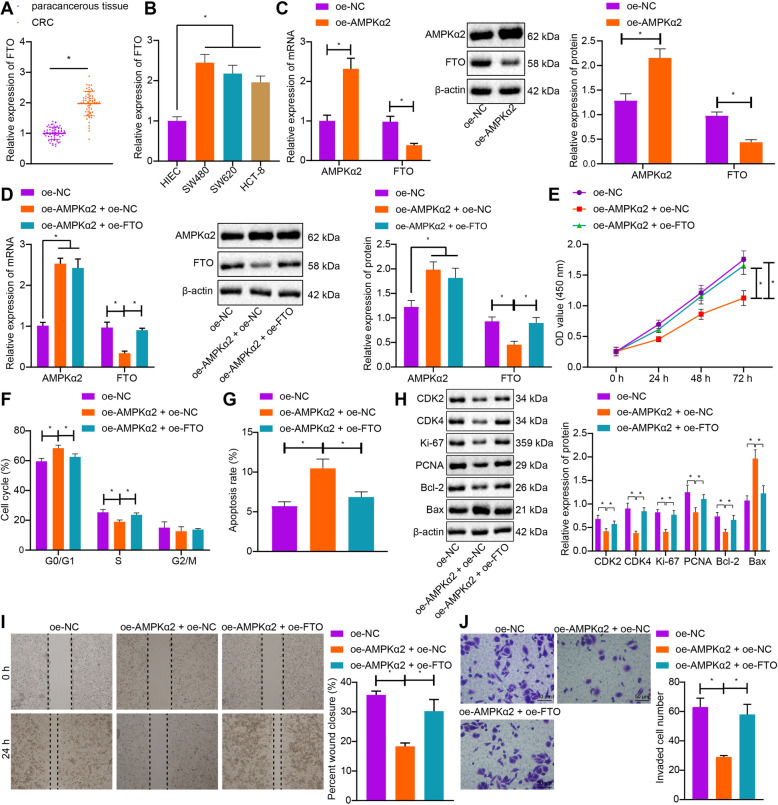
RT-qPCR and Western blot analysis were performed to examine the expression pattern of miR-96, AMPKα2, FTO and MYC in the clinical CRC tissues and cells. The relationship between miR-96 and AMPKα2 was then predicted using in silico analysis and identified by dual-luciferase reporter assay. Gain- or loss-of-function approaches were manipulated to evaluate the modulatory effects of miR-96, AMPKα2, FTO and MYC on cell growth, cycle progression and apoptosis. The mechanism of FTO-mediated m6A modification of MYC was analyzed via Me-RIP and PAR-CLIP analysis. The mediatory effects of miR-96 antagomir on cancerogenesis were validated in vivo.
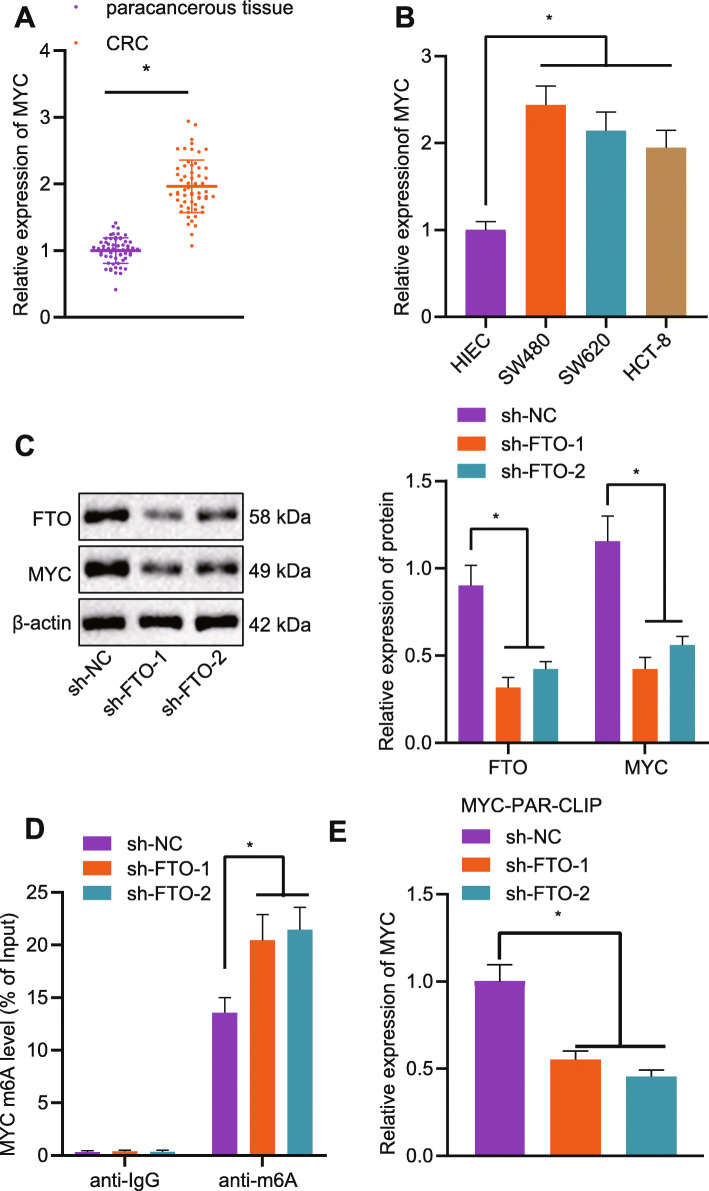
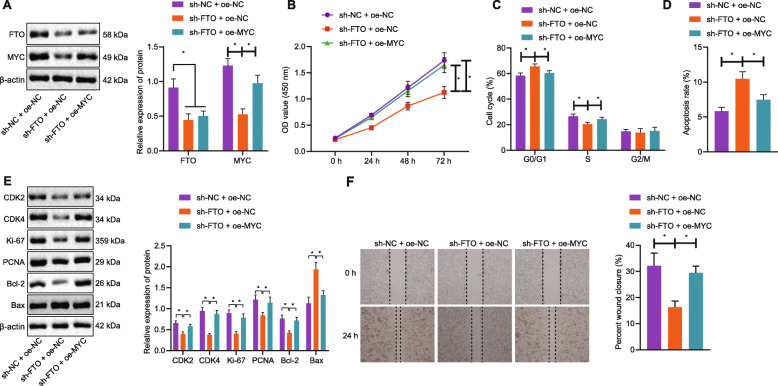
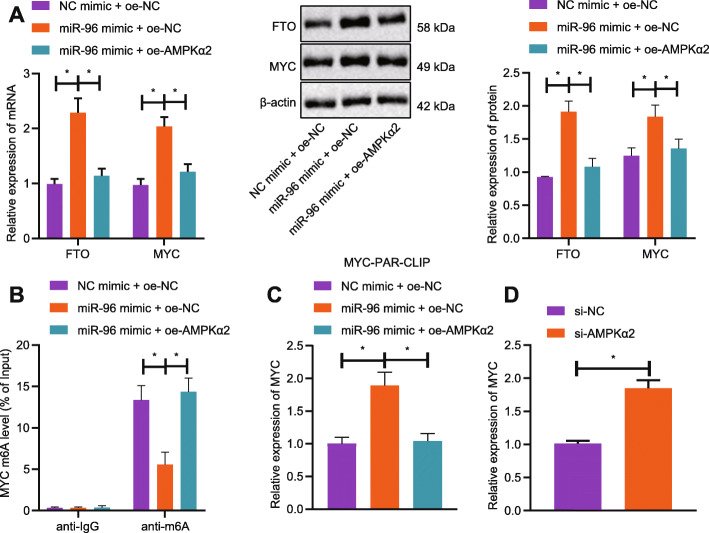
miR-96, FTO and MYC were upregulated, while AMPKα2 was downregulated in CRC tissues and cells. miR-96 could down-regulate AMPKα2, which led to increased expression of FTO and subsequent upregulated expression of MYC via blocking its m6A modification. This mechanism was involved in the pro-proliferative and anti-apoptotic roles of miR-96 in CRC cells. Besides, down-regulation of miR-96 exerted inhibitory effect on tumor growth in vivo.
Taken together, miR-96 antagomir could potentially retard the cancerogenesis in CRC via AMPKα2-dependent inhibition of FTO and blocking FTO-mediated m6A modification of MYC, highlighting novel mechanisms associated with colorectal cancerogenesis.
结直肠癌(CRC)是世界上常见的恶性肿瘤之一。迄今为止,已经在 CRC 的发病机制中鉴定出几种癌microRNAs(miRNAs 或 miRs),包括 miR-96。在本研究中,我们旨在证实 miR-96 对 CRC 的致癌作用,并确定与 AMPKα2/FTO/m6A/MYC 相关的特定机制。
使用 RT-qPCR 和 Western blot 分析检测临床 CRC 组织和细胞中 miR-96、AMPKα2、FTO 和 MYC 的表达模式。然后通过计算机分析预测 miR-96 与 AMPKα2 之间的关系,并通过双荧光素酶报告基因检测进行鉴定。通过增益或失活方法来评估 miR-96、AMPKα2、FTO 和 MYC 对细胞生长、周期进程和凋亡的调节作用。通过 Me-RIP 和 PAR-CLIP 分析分析 FTO 介导的 MYC m6A 修饰的机制。通过体内验证 miR-96 拮抗剂对癌症发生的调节作用。
miR-96、FTO 和 MYC 在 CRC 组织和细胞中上调,而 AMPKα2 下调。miR-96 可以下调 AMPKα2,导致 FTO 表达增加,随后通过阻止其 m6A 修饰而上调 MYC 的表达。这种机制涉及 miR-96 在 CRC 细胞中的促增殖和抗凋亡作用。此外,miR-96 的下调在体内对肿瘤生长具有抑制作用。
总之,miR-96 拮抗剂可能通过 AMPKα2 依赖性抑制 FTO 和阻断 FTO 介导的 MYC m6A 修饰来减缓 CRC 的癌症发生,突出了与结直肠癌发生相关的新机制。