BASF SE, 67063 Ludwigshafen am Rhein, Germany.
Department of Pharmaceutical Chemistry, Faculty of Life Sciences, University of Vienna, 1090 Vienna, Austria.
Chem Res Toxicol. 2021 Feb 15;34(2):396-411. doi: 10.1021/acs.chemrestox.0c00304. Epub 2020 Nov 13.
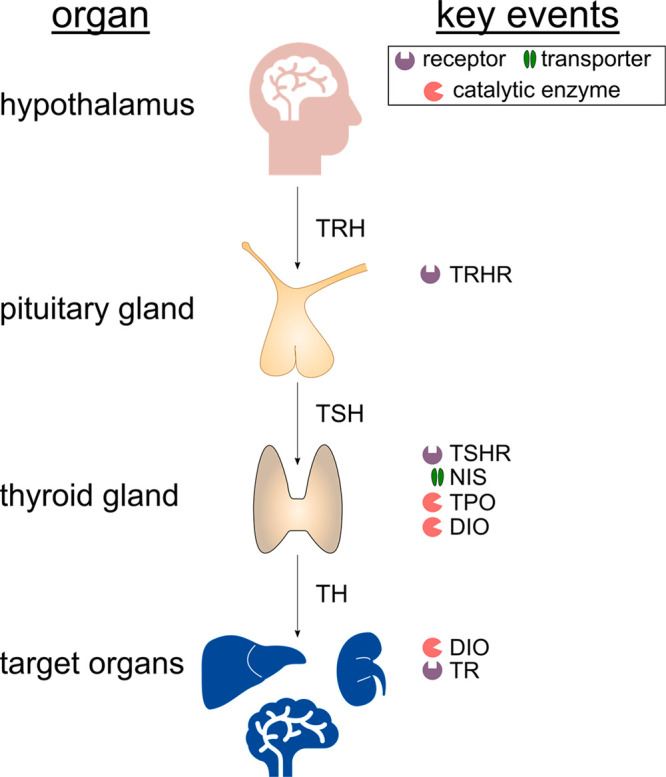
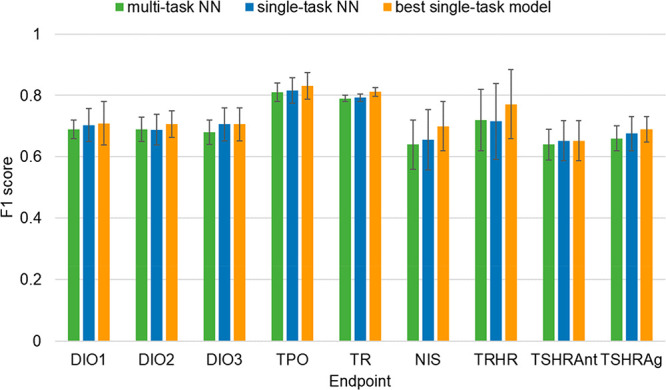
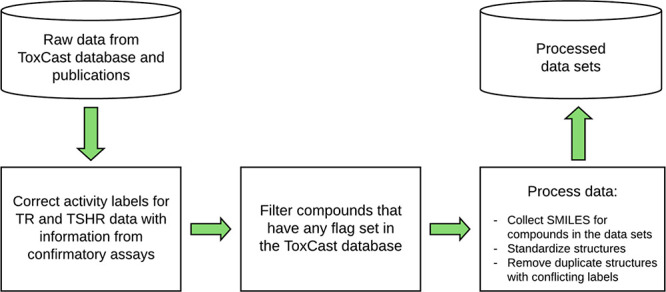
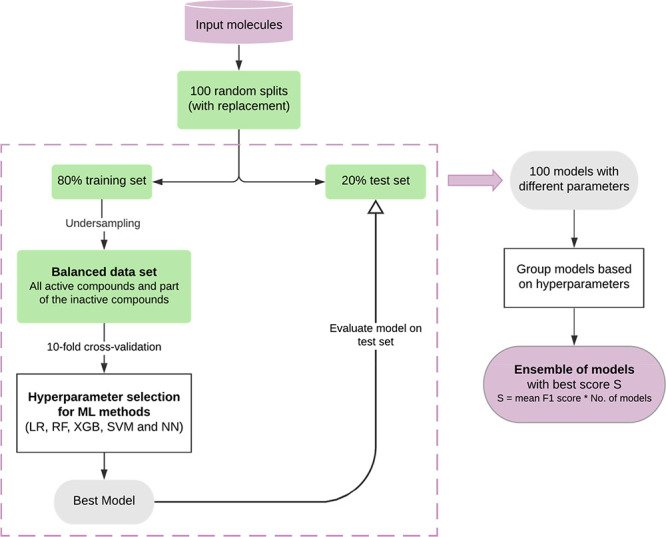
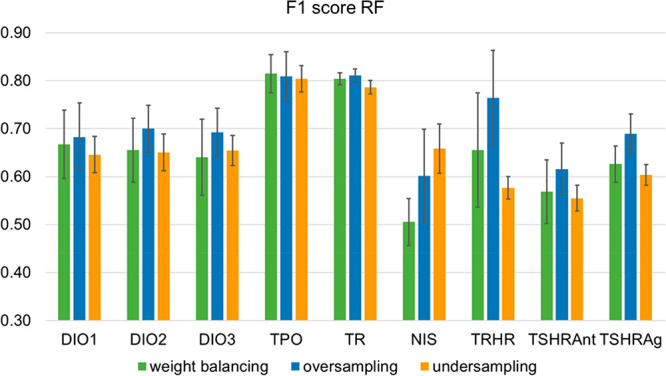
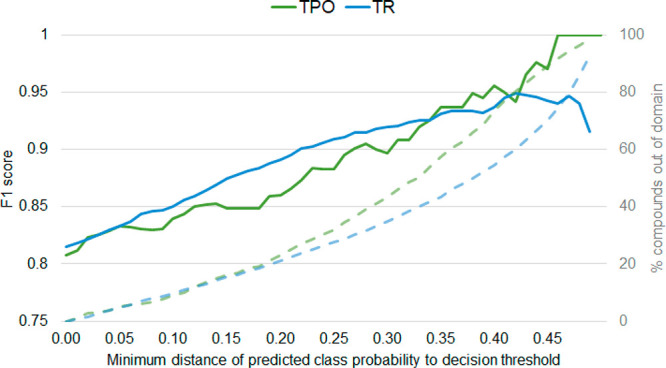
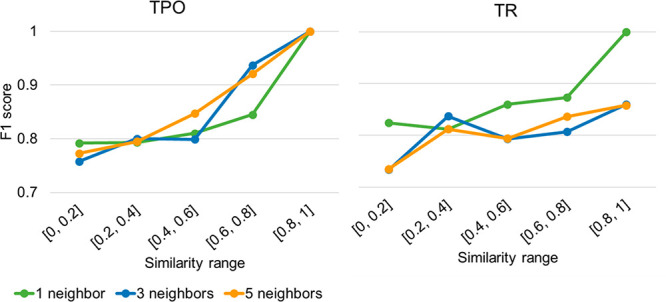
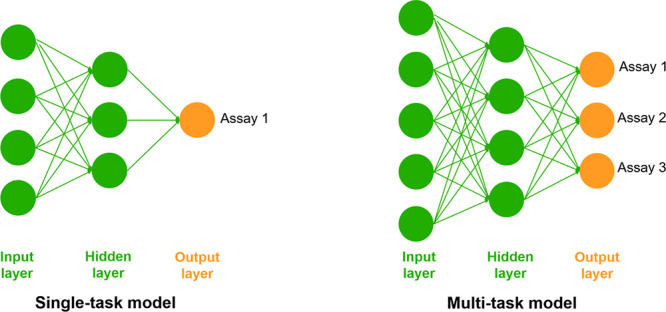
Disturbance of the thyroid hormone homeostasis has been associated with adverse health effects such as goiters and impaired mental development in humans and thyroid tumors in rats. In vitro and in silico methods for predicting the effects of small molecules on thyroid hormone homeostasis are currently being explored as alternatives to animal experiments, but are still in an early stage of development. The aim of this work was the development of a battery of in silico models for a set of targets involved in molecular initiating events of thyroid hormone homeostasis: deiodinases 1, 2, and 3, thyroid peroxidase (TPO), thyroid hormone receptor (TR), sodium/iodide symporter, thyrotropin-releasing hormone receptor, and thyroid-stimulating hormone receptor. The training data sets were compiled from the ToxCast database and related scientific literature. Classical statistical approaches as well as several machine learning methods (including random forest, support vector machine, and neural networks) were explored in combination with three data balancing techniques. The models were trained on molecular descriptors and fingerprints and evaluated on holdout data. Furthermore, multi-task neural networks combining several end points were investigated as a possible way to improve the performance of models for which the experimental data available for model training are limited. Classifiers for TPO and TR performed particularly well, with F1 scores of 0.83 and 0.81 on the holdout data set, respectively. Models for the other studied targets yielded F1 scores of up to 0.77. An in-depth analysis of the reliability of predictions was performed for the most relevant models. All data sets used in this work for model development and validation are available in the Supporting Information.
甲状腺激素平衡的紊乱与不良健康影响有关,如人类的甲状腺肿和精神发育受损,以及大鼠的甲状腺肿瘤。目前,人们正在探索体外和计算机模拟方法来预测小分子对甲状腺激素平衡的影响,作为动物实验的替代方法,但仍处于早期开发阶段。这项工作的目的是开发一组涉及甲状腺激素平衡分子起始事件的靶标(脱碘酶 1、2 和 3、甲状腺过氧化物酶 (TPO)、甲状腺激素受体 (TR)、钠/碘转运体、促甲状腺激素释放激素受体和促甲状腺激素受体)的计算模型。训练数据集是从 ToxCast 数据库和相关科学文献中编译的。经典统计学方法以及几种机器学习方法(包括随机森林、支持向量机和神经网络)与三种数据平衡技术相结合进行了探索。这些模型是基于分子描述符和指纹进行训练的,并在保留数据上进行了评估。此外,还研究了将多个终点结合在一起的多任务神经网络,作为一种可能的方法来提高对于可用实验数据有限的模型的性能。TPO 和 TR 的分类器表现特别出色,在保留数据集上的 F1 分数分别为 0.83 和 0.81。对于其他研究目标的模型,F1 分数高达 0.77。对最相关的模型进行了预测可靠性的深入分析。这项工作中用于模型开发和验证的所有数据集都可在支持信息中找到。