Chemistry Research Laboratory, Department of Chemistry, University of Oxford, UK.
Sir William Dunn School of Pathology, University of Oxford, UK.
FEBS J. 2021 Jun;288(12):3715-3726. doi: 10.1111/febs.15625. Epub 2020 Dec 1.
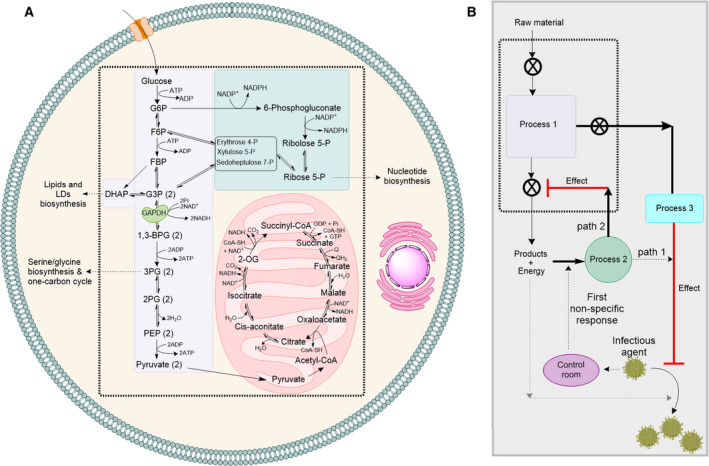
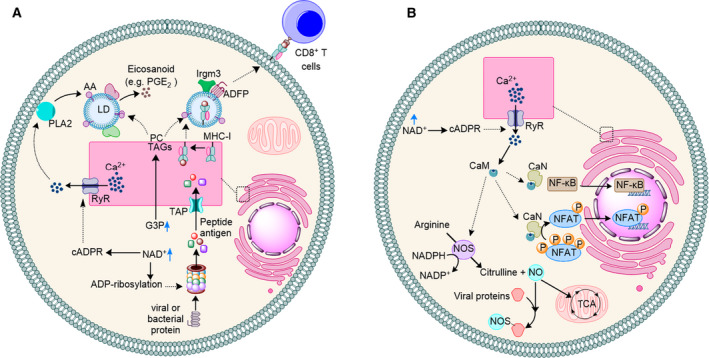
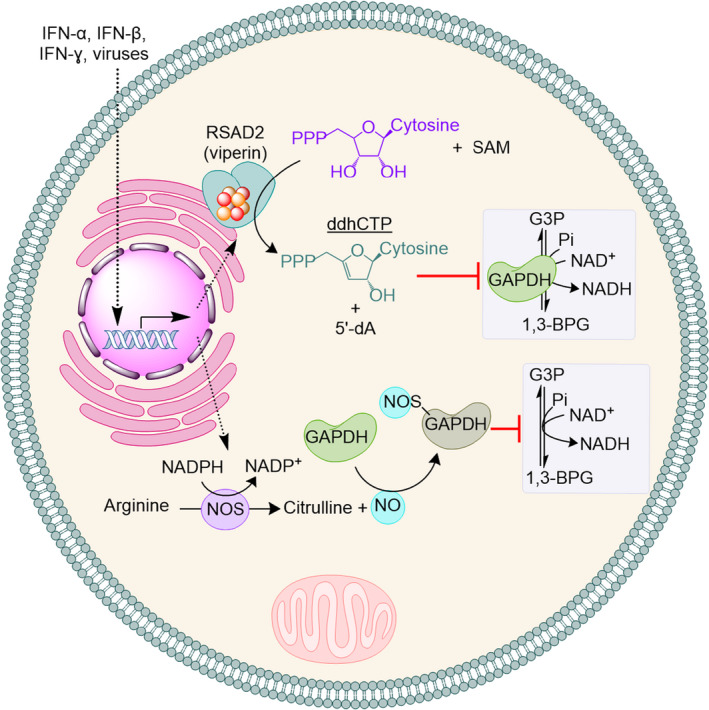
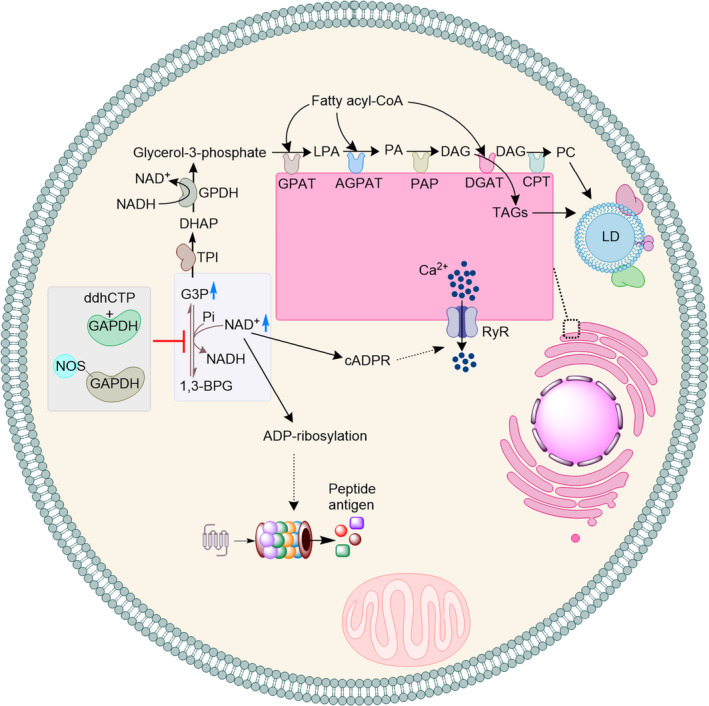
In response to viral infections, the innate immune system rapidly activates expression of several interferon-stimulated genes (ISGs), whose protein and metabolic products are believed to directly interfere with the viral life cycle. Here, we argue that biochemical reactions performed by two specific protein products of ISGs modulate central carbon metabolism to support a broad-spectrum antiviral response. We demonstrate that the metabolites generated by metalloenzymes nitric oxide synthase and the radical S-adenosylmethionine (SAM) enzyme RSAD2 inhibit the activity of the housekeeping and glycolytic enzyme glyceraldehyde 3-phosphate dehydrogenase (GAPDH). We discuss that this inhibition is likely to stimulate a range of metabolic and signalling processes to support a broad-spectrum immune response. Based on these analyses, we propose that inhibiting GAPDH in individuals with deteriorated cellular innate immune response like elderly might help in treating viral diseases such as COVID-19.
针对病毒感染,先天免疫系统会迅速激活几种干扰素刺激基因(ISGs)的表达,其蛋白质和代谢产物被认为可以直接干扰病毒的生命周期。在这里,我们认为 ISGs 的两种特定蛋白质产物的生化反应调节中心碳代谢以支持广谱抗病毒反应。我们证明,金属酶一氧化氮合酶和自由基 S-腺苷甲硫氨酸(SAM)酶 RSAD2 产生的代谢物抑制管家和糖酵解酶甘油醛 3-磷酸脱氢酶(GAPDH)的活性。我们讨论了这种抑制可能会刺激一系列代谢和信号过程,以支持广谱免疫反应。基于这些分析,我们提出在细胞先天免疫反应恶化的个体(如老年人)中抑制 GAPDH 可能有助于治疗 COVID-19 等病毒疾病。