The Department of Physiology & Biophysics, University of California, Irvine, California, USA; Research Service, The VA Long Beach Health Care System, Long Beach, California, USA; The Gavin Herbert Eye Institute, Department of Ophthalmology, University of California, Irvine, California, USA.
The Department of Physiology & Biophysics, University of California, Irvine, California, USA; The Gavin Herbert Eye Institute, Department of Ophthalmology, University of California, Irvine, California, USA; The Department of Chemistry, University of California, Irvine, California, USA.
J Biol Chem. 2021 Jan-Jun;296:100072. doi: 10.1074/jbc.REV120.014405. Epub 2020 Nov 23.
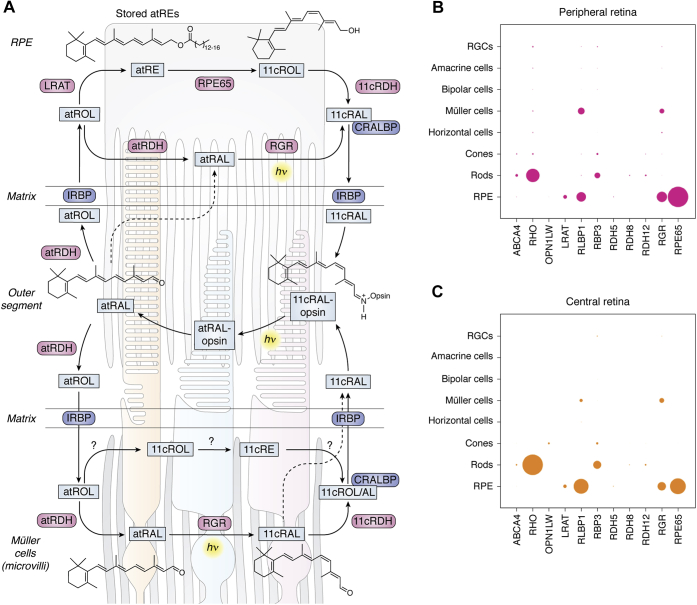
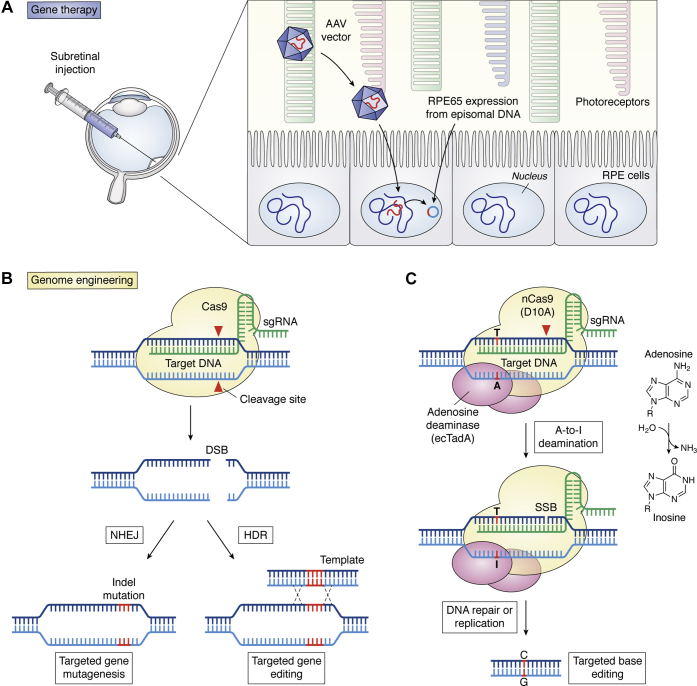
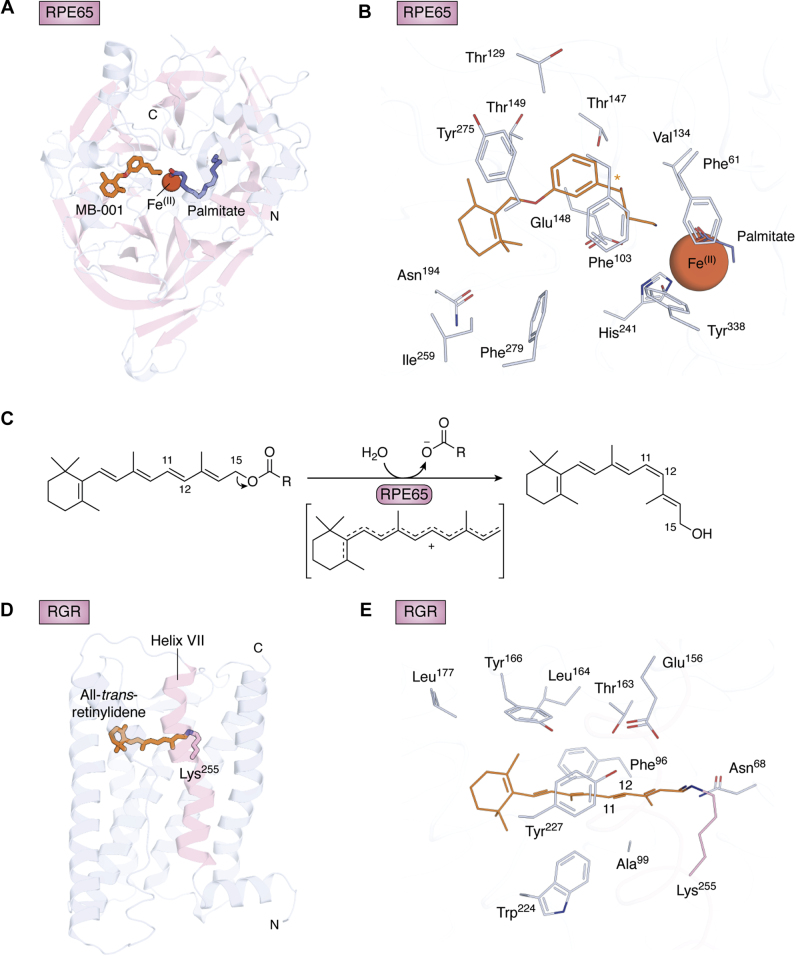
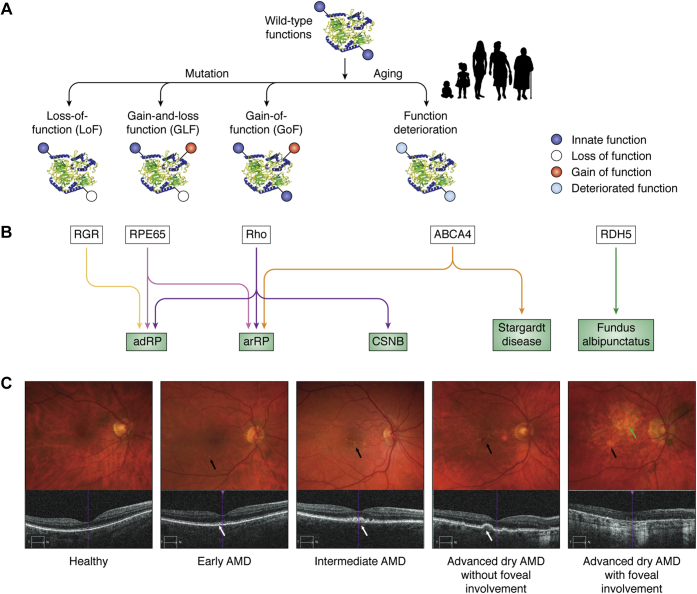
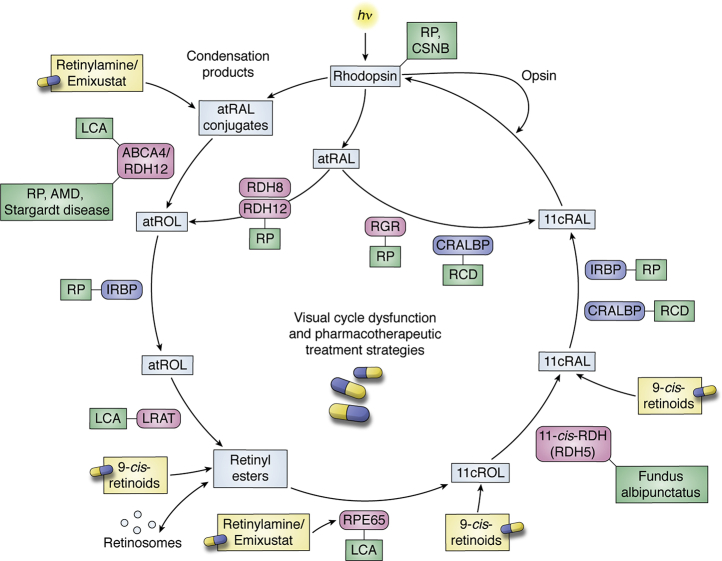
All that we view of the world begins with an ultrafast cis to trans photoisomerization of the retinylidene chromophore associated with the visual pigments of rod and cone photoreceptors. The continual responsiveness of these photoreceptors is then sustained by regeneration processes that convert the trans-retinoid back to an 11-cis configuration. Recent biochemical and electrophysiological analyses of the retinal G-protein-coupled receptor (RGR) suggest that it could sustain the responsiveness of photoreceptor cells, particularly cones, even under bright light conditions. Thus, two mechanisms have evolved to accomplish the reisomerization: one involving the well-studied retinoid isomerase (RPE65) and a second photoisomerase reaction mediated by the RGR. Impairments to the pathways that transform all-trans-retinal back to 11-cis-retinal are associated with mild to severe forms of retinal dystrophy. Moreover, with age there also is a decline in the rate of chromophore regeneration. Both pharmacological and genetic approaches are being used to bypass visual cycle defects and consequently mitigate blinding diseases. Rapid progress in the use of genome editing also is paving the way for the treatment of disparate retinal diseases. In this review, we provide an update on visual cycle biochemistry and then discuss visual-cycle-related diseases and emerging therapeutics for these disorders. There is hope that these advances will be helpful in treating more complex diseases of the eye, including age-related macular degeneration (AMD).
我们所看到的世界的一切都始于视蛋白中视黄醛发色团的超快顺式到反式光异构化,而视蛋白存在于杆状和锥状光感受器中。这些光感受器的持续反应能力则是通过将反式视黄醛转化回 11-顺式构型的再生过程来维持的。最近对视网膜 G 蛋白偶联受体(RGR)的生化和电生理分析表明,它可以维持光感受器细胞,特别是锥状细胞的反应能力,即使在强光条件下也是如此。因此,有两种机制可以实现异构化:一种涉及研究充分的视黄醛异构酶(RPE65),另一种是由 RGR 介导的光异构酶反应。将全反式视黄醇转化回 11-顺式视黄醇的途径受损与轻度至重度视网膜营养不良有关。此外,随着年龄的增长,发色团的再生速率也会下降。目前正在采用药理学和遗传学方法来绕过视觉循环缺陷,从而减轻致盲性疾病。基因组编辑的快速进展也为治疗不同的视网膜疾病铺平了道路。在这篇综述中,我们提供了视觉循环生物化学的最新进展,然后讨论了与视觉循环相关的疾病以及这些疾病的新兴疗法。人们希望这些进展将有助于治疗更复杂的眼部疾病,包括年龄相关性黄斑变性(AMD)。