Institute of Molecular Virology, Ulm University Medical Center, 89081 Ulm, Germany.
Computational Biochemistry, Center of Medical Biotechnology, University of Duisburg-Essen, 45117 Essen, Germany.
Adv Drug Deliv Rev. 2020 Dec;167:47-65. doi: 10.1016/j.addr.2020.11.007. Epub 2020 Nov 13.
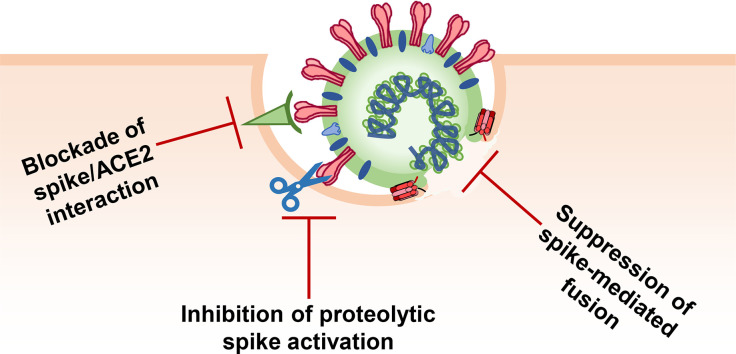
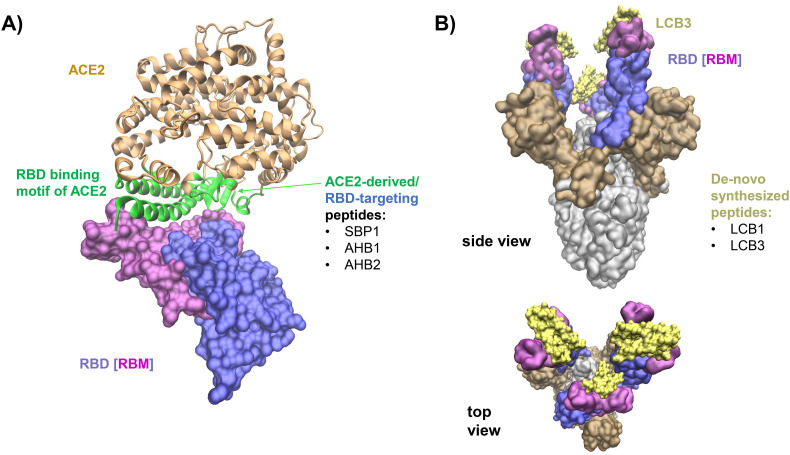
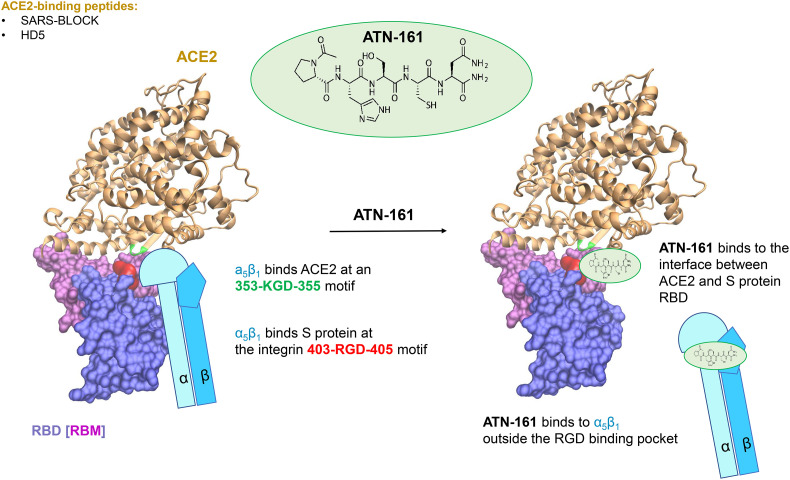
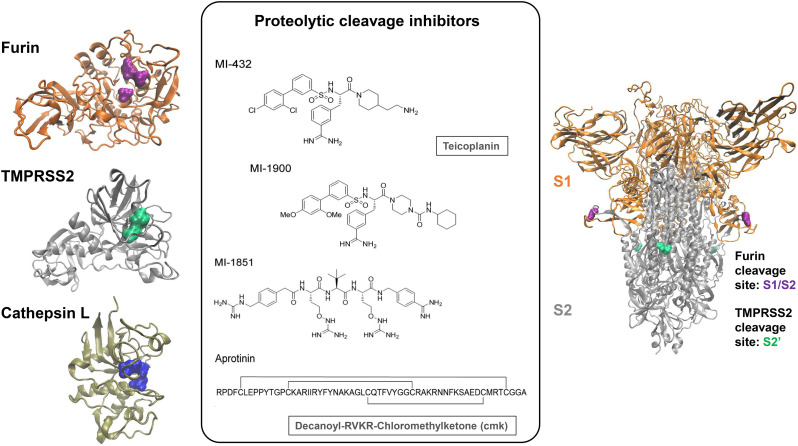
To date, no effective vaccines or therapies are available against the severe acute respiratory syndrome coronavirus 2 (SARS-CoV-2), the causative pandemic agent of the coronavirus disease 2019 (COVID-19). Due to their safety, efficacy and specificity, peptide inhibitors hold great promise for the treatment of newly emerging viral pathogens. Based on the known structures of viral proteins and their cellular targets, antiviral peptides can be rationally designed and optimized. The resulting peptides may be highly specific for their respective targets and particular viral pathogens or exert broad antiviral activity. Here, we summarize the current status of peptides inhibiting SARS-CoV-2 entry and outline the strategies used to design peptides targeting the ACE2 receptor or the viral spike protein and its activating proteases furin, transmembrane serine protease 2 (TMPRSS2), or cathepsin L. In addition, we present approaches used against related viruses such as SARS-CoV-1 that might be implemented for inhibition of SARS-CoV-2 infection.
迄今为止,尚无针对严重急性呼吸综合征冠状病毒 2(SARS-CoV-2)的有效疫苗或疗法,SARS-CoV-2 是导致 2019 年冠状病毒病(COVID-19)的病原体。由于其安全性、有效性和特异性,肽抑制剂在治疗新出现的病毒病原体方面具有广阔的应用前景。基于已知的病毒蛋白结构及其细胞靶标,可以合理设计和优化抗病毒肽。由此产生的肽可能对其各自的靶标和特定的病毒病原体具有高度特异性,或者具有广泛的抗病毒活性。在这里,我们总结了抑制 SARS-CoV-2 进入的肽的现状,并概述了设计针对 ACE2 受体或病毒刺突蛋白及其激活蛋白酶弗林、跨膜丝氨酸蛋白酶 2(TMPRSS2)或组织蛋白酶 L 的肽的策略。此外,我们还介绍了针对 SARS-CoV-1 等相关病毒的方法,这些方法可能被用于抑制 SARS-CoV-2 的感染。