Faculty of Sports and Nutrition, Center of Expertise Urban Vitality, Amsterdam University of Applied Sciences, Amsterdam, The Netherlands.
Amsterdam Public Health Research Institute, Amsterdam, The Netherlands.
J Hum Nutr Diet. 2021 Apr;34(2):384-394. doi: 10.1111/jhn.12838. Epub 2020 Nov 15.
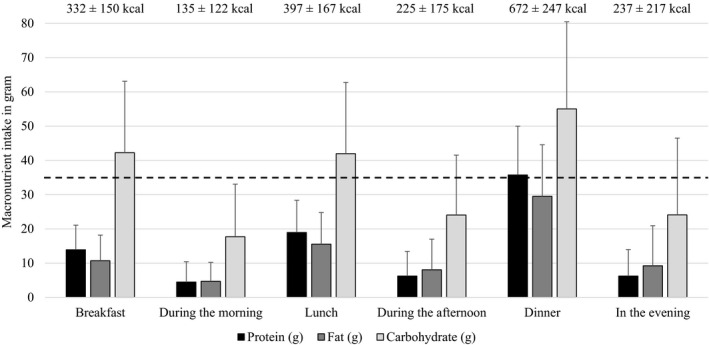
A protein intake of 30-40 g per meal is suggested to maximally stimulate muscle protein synthesis in older adults and could therefore contribute to the prevention of sarcopenia. Protein intake at breakfast and lunch is often low and offers a great opportunity to improve daily protein intake. Protein, however, is known for its satiating effects. Therefore, we explored the association between the amount of protein intake at breakfast and lunch and total daily protein intake in older adults.
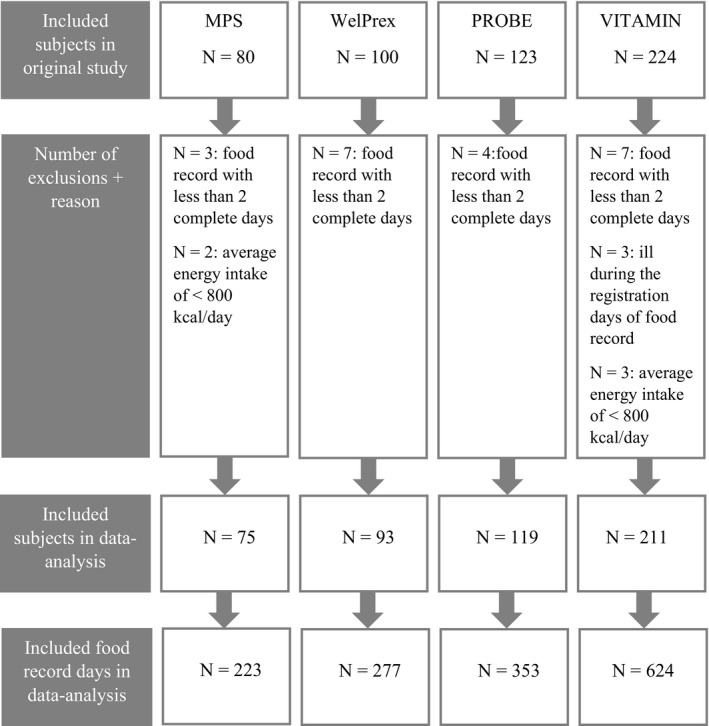
Protein intake was assessed by a 3-day food record in 498 community dwelling older adults (≥55 years) participating different lifestyle interventions. Linear mixed model analysis was used to examine the association between protein intake at breakfast or lunch and total daily protein intake, adjusted for sex, age, body mass index, smoking status, study and total energy intake.
After adjustment for potential confounders, a 10 g higher protein intake at breakfast was associated with a 3.2 g higher total daily protein intake (P = 0.008) for males and a 4.9 g (P < 0.001) higher total daily protein intake for females. A 10 g higher protein intake at lunch was associated with a 3.7 g higher total daily protein intake (P < 0.001) for males, and a 5.8 g higher total daily protein intake (P < 0.001) for females.
A higher protein intake at breakfast and lunch is associated with a higher total daily protein intake in community dwelling older adults. Stimulating a higher protein intake at breakfast and lunch might represent a promising nutritional strategy to optimise the amount of protein per meal without compromising total daily protein intake.
建议每餐摄入 30-40 克蛋白质,以最大限度地刺激老年人的肌肉蛋白质合成,从而有助于预防肌肉减少症。早餐和午餐的蛋白质摄入量通常较低,因此提供了改善日常蛋白质摄入量的绝佳机会。然而,蛋白质以其饱腹感而闻名。因此,我们探讨了早餐和午餐时蛋白质摄入量与老年人每日总蛋白质摄入量之间的关系。
通过对 498 名参与不同生活方式干预的社区居住老年人(≥55 岁)进行 3 天的食物记录来评估蛋白质摄入量。线性混合模型分析用于检查早餐或午餐时蛋白质摄入量与总每日蛋白质摄入量之间的关联,调整了性别、年龄、体重指数、吸烟状况、研究和总能量摄入。
在校正潜在混杂因素后,早餐时蛋白质摄入量增加 10 克与男性总每日蛋白质摄入量增加 3.2 克(P=0.008)和女性总每日蛋白质摄入量增加 4.9 克(P<0.001)相关。午餐时蛋白质摄入量增加 10 克与男性总每日蛋白质摄入量增加 3.7 克(P<0.001)和女性总每日蛋白质摄入量增加 5.8 克(P<0.001)相关。
早餐和午餐时蛋白质摄入量较高与社区居住的老年人每日总蛋白质摄入量较高相关。刺激早餐和午餐时摄入更多的蛋白质可能是一种很有前途的营养策略,可以优化每餐的蛋白质摄入量,而不会影响每日总蛋白质摄入量。