Department of Immunology, Leiden University Medical Center, Leiden, Netherlands.
Institute for Immunity, Transplantation and Infection, Stanford University School of Medicine, Stanford, CA, United States.
Front Immunol. 2020 Oct 26;11:571300. doi: 10.3389/fimmu.2020.571300. eCollection 2020.
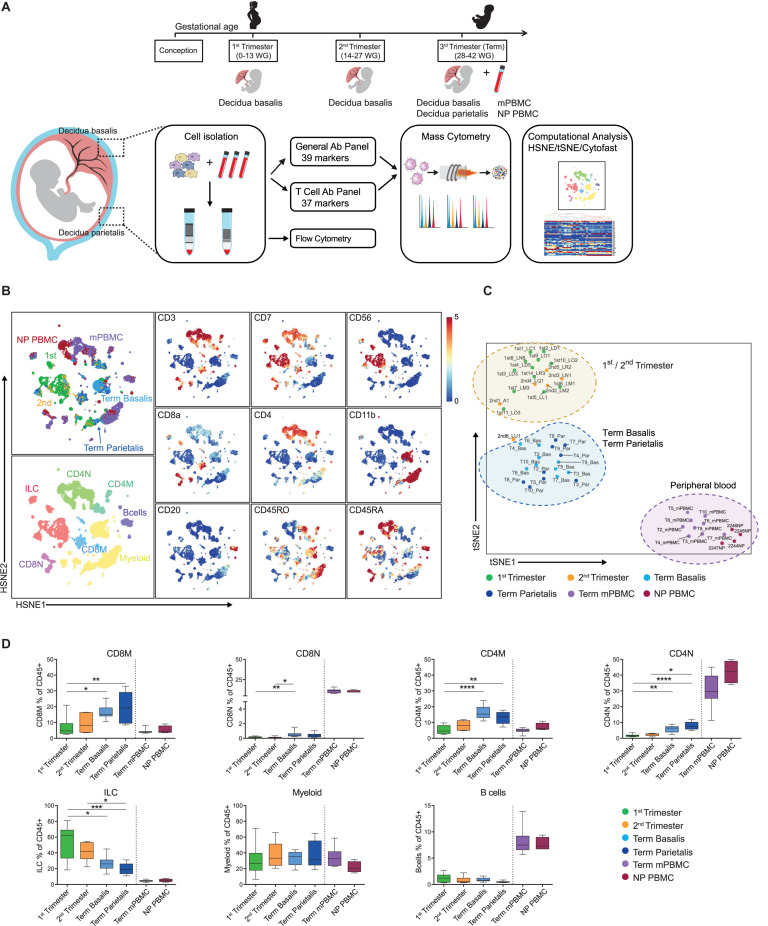
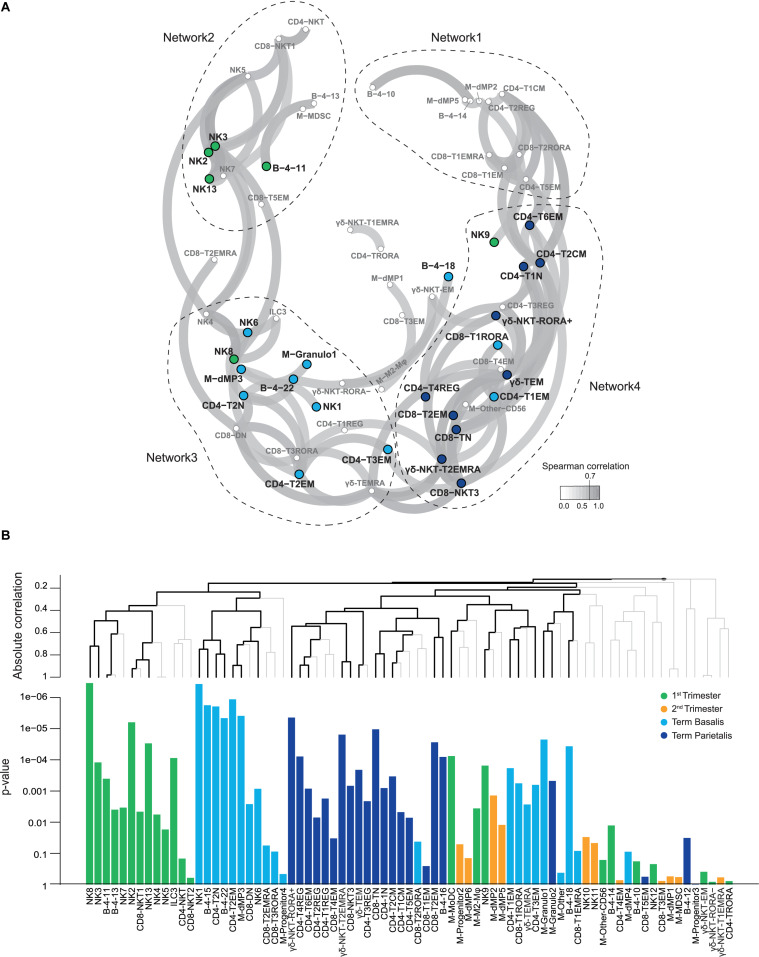
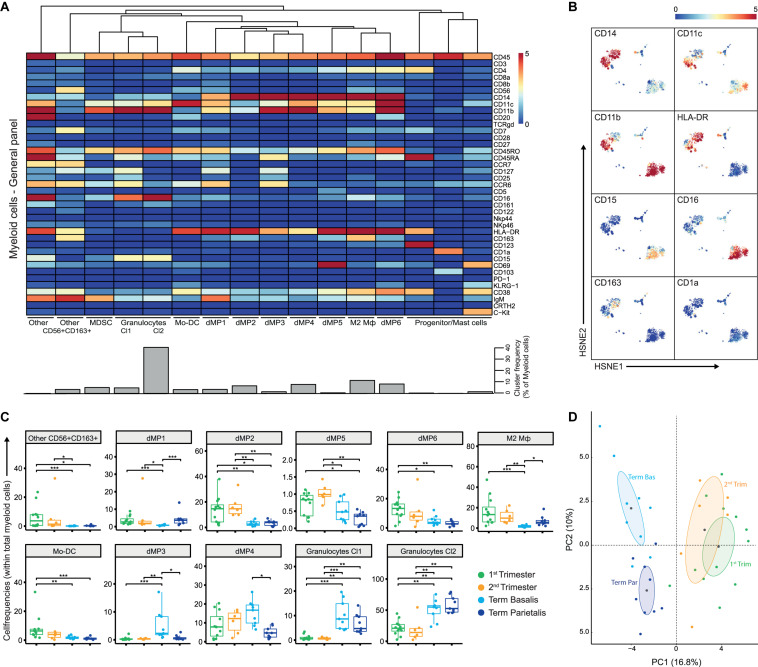
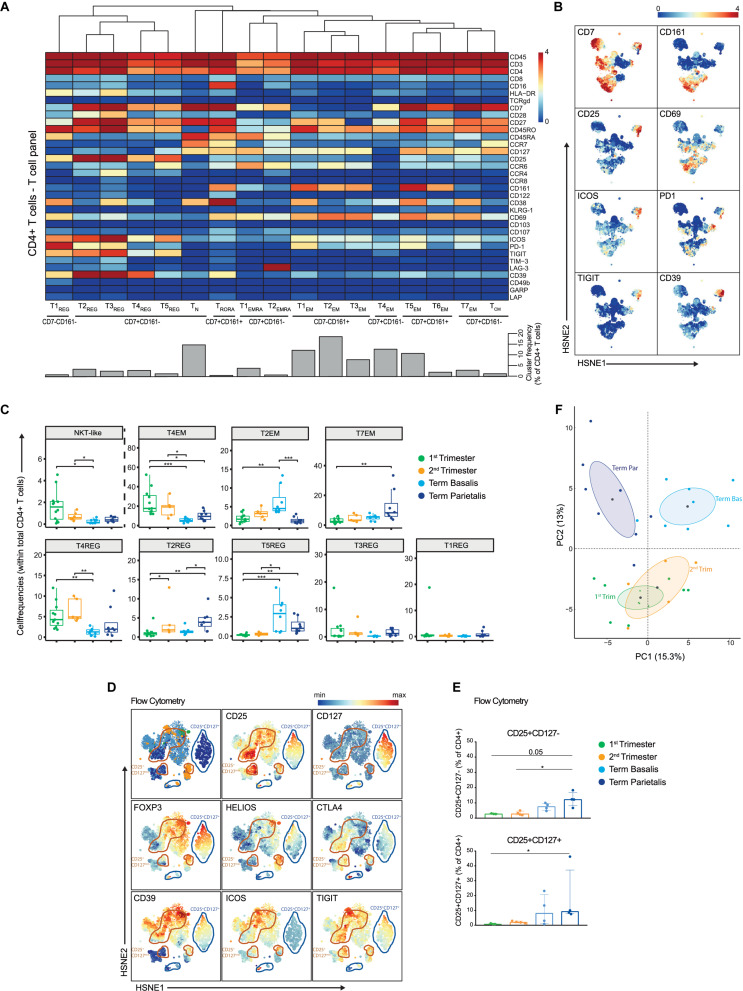
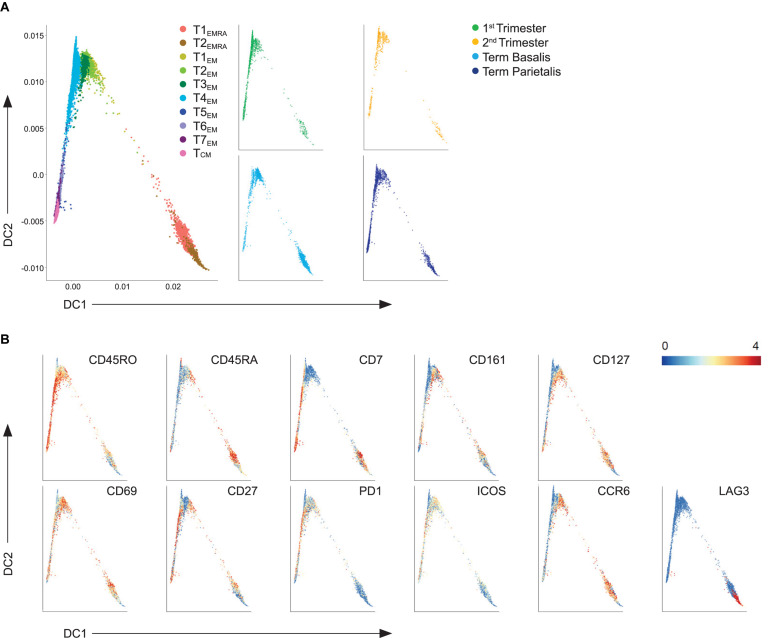
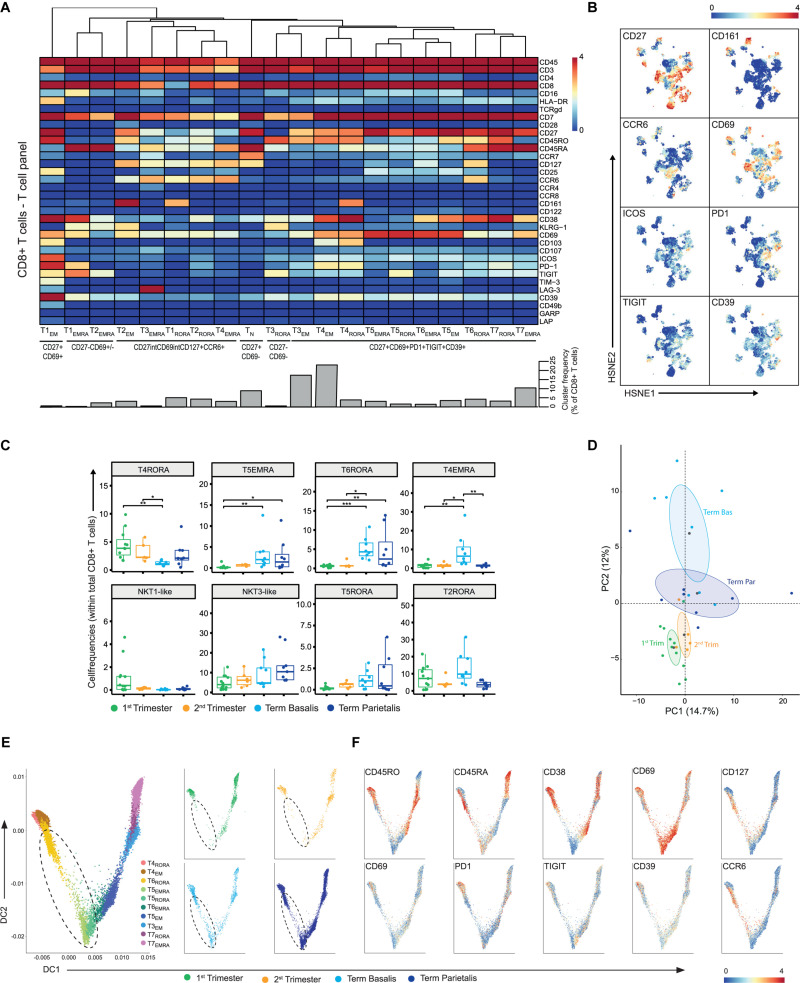
During healthy pregnancy, a balanced microenvironment at the maternal-fetal interface with coordinated interaction between various immune cells is necessary to maintain immunological tolerance. While specific decidual immune cell subsets have been investigated, a system-wide unbiased approach is lacking. Here, mass cytometry was applied for data-driven, in-depth immune profiling of the total leukocyte population isolated from first, second, and third trimester decidua, as well as maternal peripheral blood at time of delivery. The maternal-fetal interface showed a unique composition of immune cells, different from peripheral blood, with significant differences between early and term pregnancy samples. Profiling revealed substantial heterogeneity in the decidual lymphoid and myeloid cell lineages that shape gestational-specific immune networks and putative differentiation trajectories over time during gestation. Uncovering the overall complexity at the maternal-fetal interface throughout pregnancy resulted in a human atlas that may serve as a foundation upon which comprehension of the immune microenvironment and alterations thereof in pregnancy complications can be built.
在健康妊娠期间,母体-胎儿界面需要有一个平衡的微环境,各种免疫细胞之间需要协调互动,以维持免疫耐受。虽然已经研究了特定的蜕膜免疫细胞亚群,但缺乏系统的、无偏倚的方法。在这里,我们应用质谱流式细胞术对从第一、二、三孕期蜕膜以及分娩时产妇外周血中分离出的总白细胞群体进行了数据驱动的深入免疫分析。母体-胎儿界面显示出独特的免疫细胞组成,与外周血不同,早期妊娠和足月妊娠样本之间存在显著差异。分析显示,在妊娠期间,随着时间的推移,胎盘淋巴和髓样细胞谱系存在显著的异质性,从而形成妊娠特异性的免疫网络和潜在的分化轨迹。揭示整个妊娠期间母体-胎儿界面的整体复杂性,产生了一个人类图谱,它可以作为理解妊娠并发症中免疫微环境及其变化的基础。