Center of Allergy and Environment (ZAUM), Technical University of Munich, School of Medicine and Helmholtz Center Munich, German Research Center for Environmental Health, Member of the German Center of Lung Research (DZL), Munich, Germany.
Department of Infection and Immunity, Luxembourg Institute of Health (LIH), Esch-sur-Alzette, Luxembourg.
Front Immunol. 2020 Oct 22;11:579409. doi: 10.3389/fimmu.2020.579409. eCollection 2020.
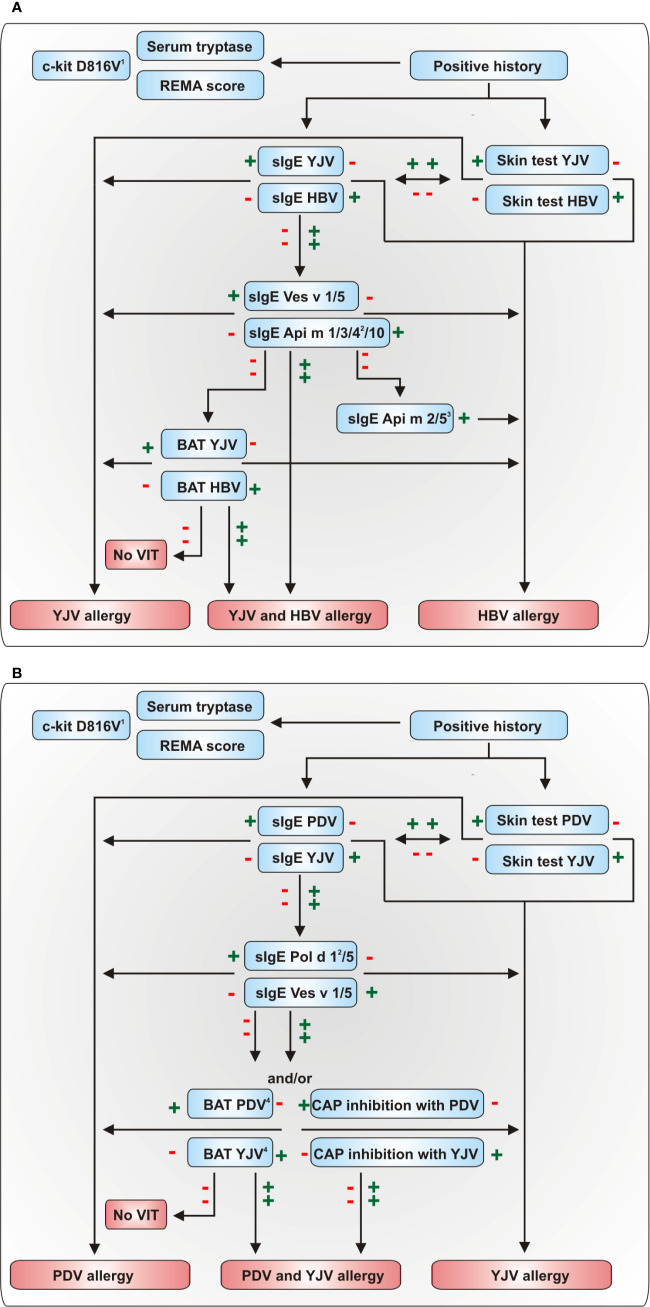
Allergic reactions to stings of Hymenoptera species may be severe and are potentially fatal deviations of the immunological response observed in healthy individuals. However, venom-specific immunotherapy (VIT) is an immunomodulatory approach able to cure venom allergy in the majority of affected patients. An appropriate therapeutic intervention and the efficacy of VIT not only depend on a conclusive diagnosis, but might also be influenced by the patient-specific manifestation of the disease. As with other diseases, it should be borne in mind that there are different endotypes and phenotypes of venom allergy, each of which require a patient-tailored disease management and treatment scheme. Reviewed here are different endotypes of sting reactions such as IgE-mediated allergy, asymptomatic sensitization or a simultaneous presence of venom allergy and mast cell disorders including particular considerations for diagnosis and therapy. Additionally, phenotypical manifestations of venom allergy, as e.g. differences in age of onset and disease severity, multiple sensitization or patients unsusceptible to therapy, are described. Moreover, biomarkers and diagnostic strategies that might reflect the immunological status of the patient and their value for therapeutic guidance are discussed. Taken together, the increasing knowledge of different disease manifestations in venom hypersensitivity and the growing availability of diagnostic tools open new options for the classification of venom allergy and, hence, for personalized medical approaches and precision medicine in Hymenoptera venom allergy.
膜翅目昆虫蜇伤引起的过敏反应可能很严重,是健康个体中观察到的免疫反应的潜在致命偏差。然而,毒液特异性免疫治疗(VIT)是一种免疫调节方法,能够治愈大多数受影响患者的毒液过敏。适当的治疗干预和 VIT 的疗效不仅取决于明确的诊断,还可能受到疾病在患者个体中的表现的影响。与其他疾病一样,应该记住,毒液过敏有不同的表型和表型,每种表型都需要针对患者的疾病管理和治疗方案。本文综述了不同的蜇伤反应表型,如 IgE 介导的过敏、无症状致敏或毒液过敏和肥大细胞疾病同时存在等,包括诊断和治疗的特殊考虑。此外,还描述了毒液过敏的表型表现,如发病年龄和疾病严重程度的差异、多重致敏或对治疗不敏感的患者。此外,还讨论了可能反映患者免疫状态及其对治疗指导价值的生物标志物和诊断策略。总之,对毒液过敏中不同疾病表现的认识不断增加,以及诊断工具的日益普及,为毒液过敏的分类开辟了新的选择,从而为膜翅目昆虫毒液过敏的个体化医学方法和精准医学提供了可能。