Pei Jianying, Li Yan, Su Tianxiong, Zhang Qiaomei, He Xin, Tao Dan, Wang Yanyun, Yuan Manqiu, Li Yanping
Department of Clinical Laboratory, The First Clinical Medical College of Lanzhou University, Lanzhou, China.
Institute of Clinical Medicine, Gansu Province Maternal and Child-Care Hospital, Lanzhou, China.
Front Genet. 2020 Sep 16;11:912. doi: 10.3389/fgene.2020.00912. eCollection 2020.
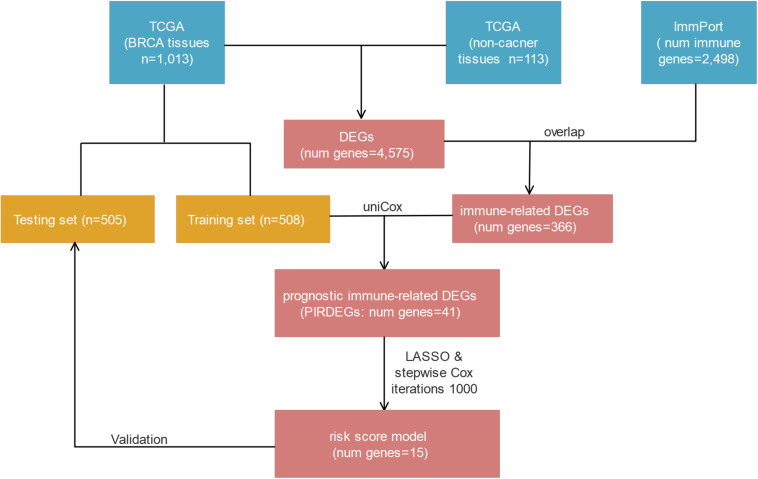
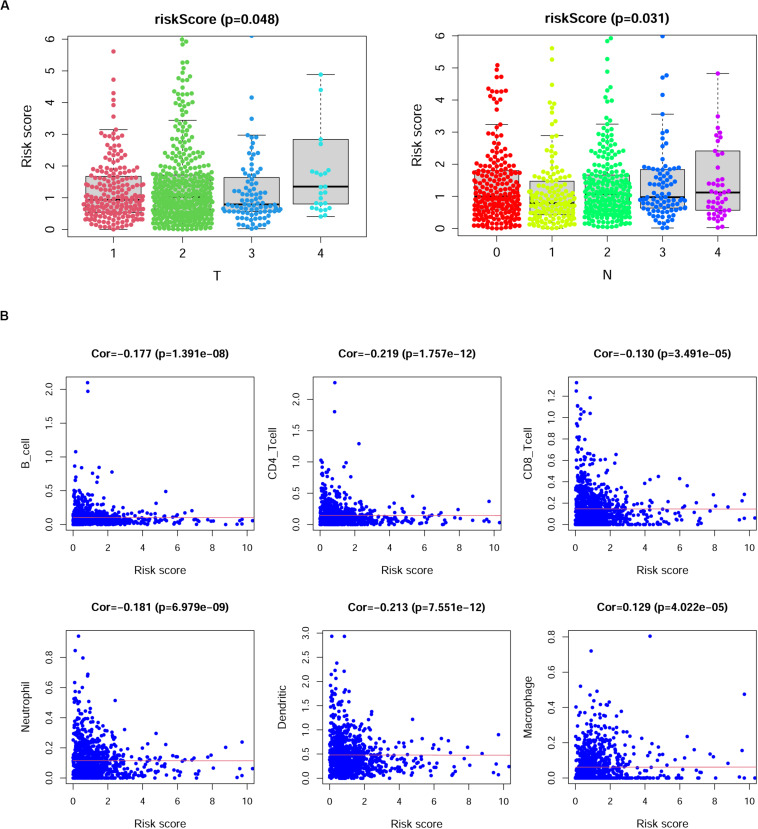
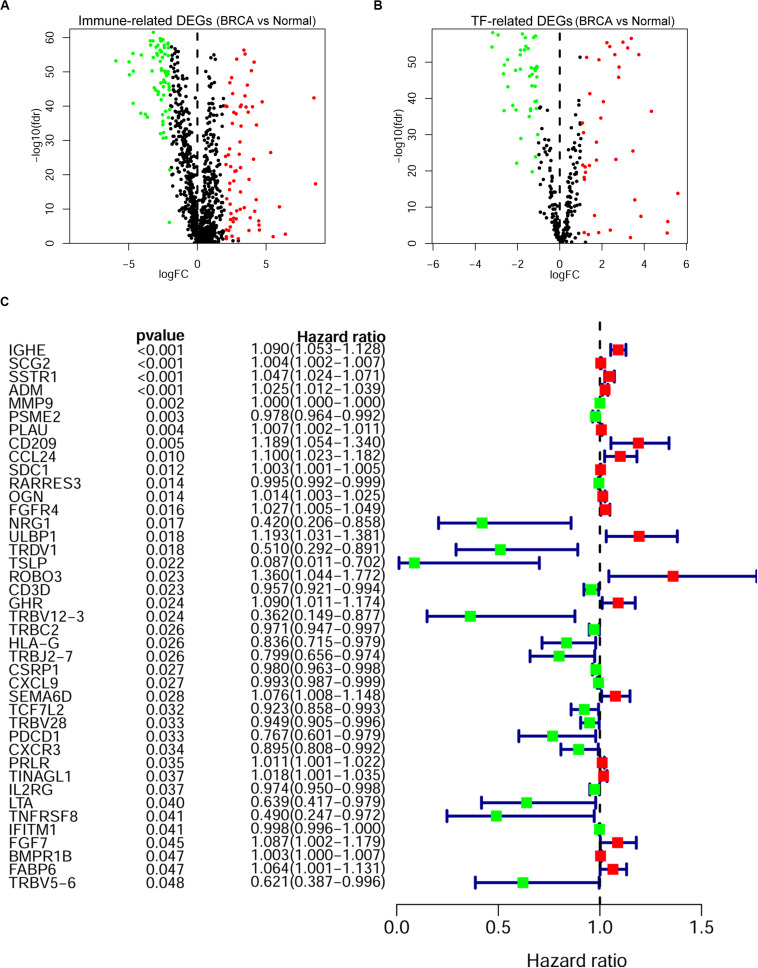
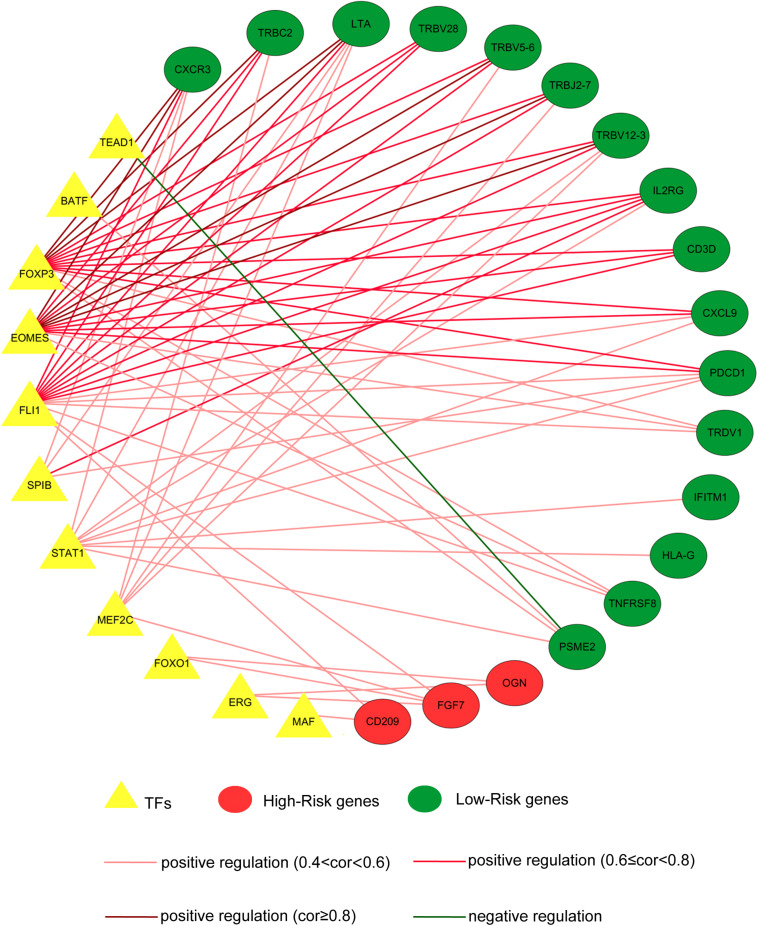
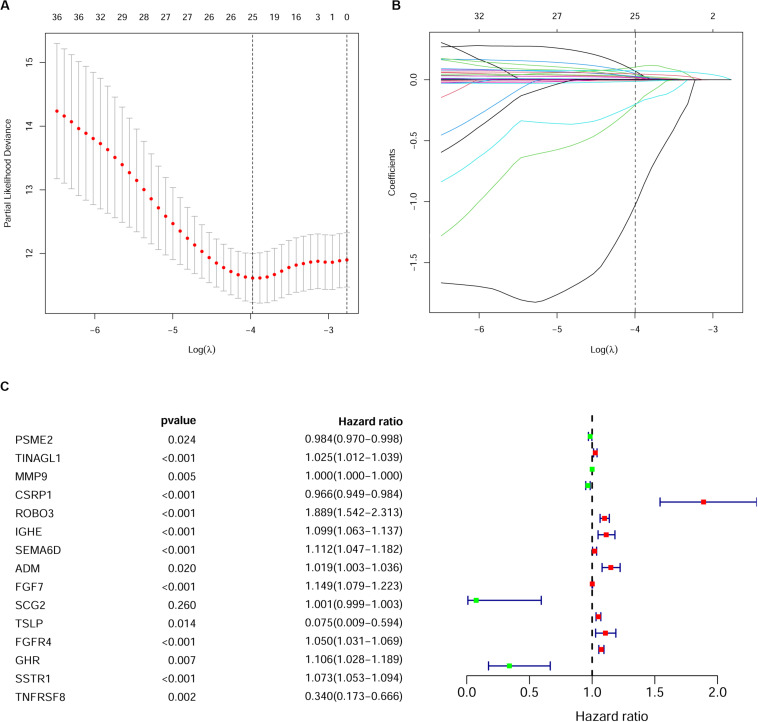
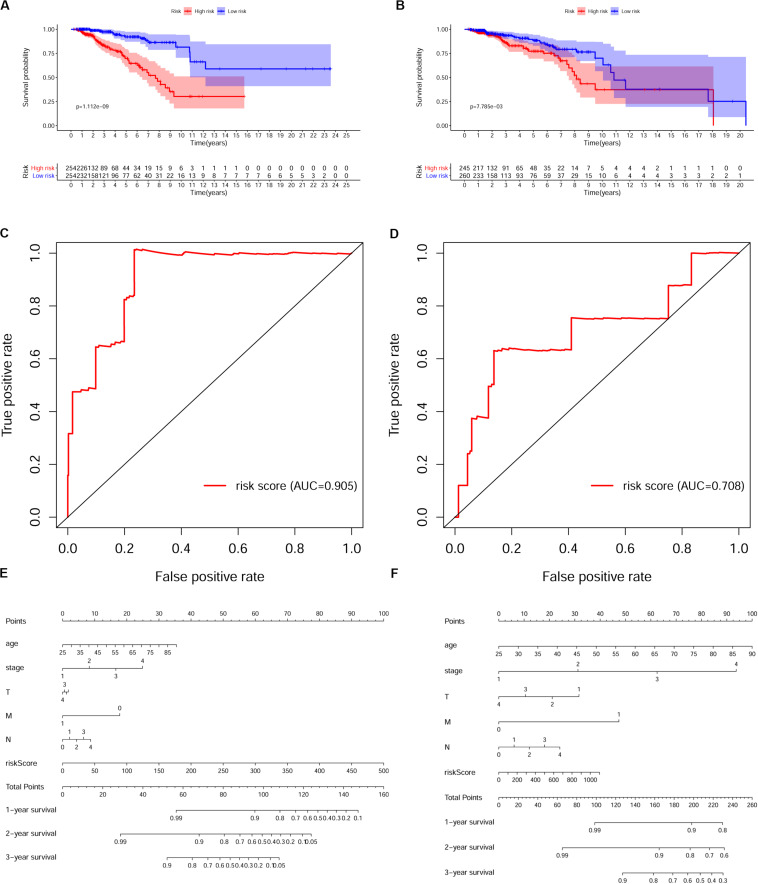
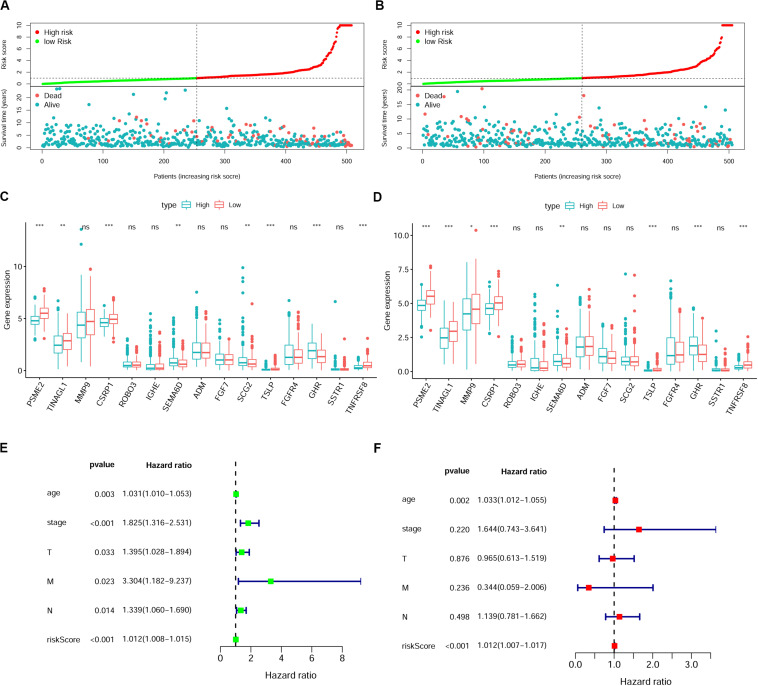
Emerging evidence suggests that the immune system plays a crucial role in the regulation of the response to therapy and long-term outcomes of patients with breast cancer (BRCA). In this study, we aimed to identify a significant signature based on immune-related genes to predict the prognosis of BRCA patients. The expression data were downloaded from The Cancer Genome Atlas (TCGA). The immune-related gene list, the transcription factor (TF) gene list, and the immune infiltrate scores of samples in the TCGA database were acquired from the ImmPort database, the Cistrome Cancer database, and the TIMER database, respectively. Univariate Cox regression analysis was utilized to identify prognostic immune-related differentially expressed genes (DEGs) (PIRDEGs) in BRCA. A prognostic immune signature containing 15 PIRDEGs in BRCA was established using the least absolute shrinkage and selection operator (LASSO) model with 1,000 iterations followed by a stepwise Cox proportional hazards model with a training set of 508 samples in TCGA. An independent assessment of the prognostic prediction ability of the signature was conducted using Kaplan-Meier survival analysis with a testing set of 505 samples in TCGA. We identified 466 PIRDEGs and 80 TFs among the DEGs. A gene signature containing 15 PIRDEGs was constructed. Risk scores of BRCA patients were calculated using this model, which showed a high accuracy of prognosis prediction in both the training set and testing set and could be an independent prognostic factor of BRCA patients. Our study revealed that a PIRDEG signature could be a candidate prognostic biomarker for predicting the overall survival (OS) of patients with BRCA.
新出现的证据表明,免疫系统在乳腺癌(BRCA)患者的治疗反应调节和长期预后中起着关键作用。在本研究中,我们旨在基于免疫相关基因确定一个显著特征,以预测BRCA患者的预后。表达数据从癌症基因组图谱(TCGA)下载。TCGA数据库中样本的免疫相关基因列表、转录因子(TF)基因列表和免疫浸润评分分别从ImmPort数据库、Cistrome癌症数据库和TIMER数据库获取。采用单变量Cox回归分析来识别BRCA中与预后相关的免疫差异表达基因(PIRDEG)。使用最小绝对收缩和选择算子(LASSO)模型进行1000次迭代,随后采用逐步Cox比例风险模型,以TCGA中508个样本的训练集建立了一个包含15个BRCA中PIRDEG的预后免疫特征。使用TCGA中505个样本的测试集,通过Kaplan-Meier生存分析对该特征的预后预测能力进行独立评估。我们在差异表达基因中鉴定出466个PIRDEG和80个TF。构建了一个包含15个PIRDEG的基因特征。使用该模型计算BRCA患者的风险评分,其在训练集和测试集中均显示出较高的预后预测准确性,并且可能是BRCA患者的一个独立预后因素。我们的研究表明,PIRDEG特征可能是预测BRCA患者总生存期(OS)的候选预后生物标志物。