Ma Xujing, Lu Fengmei, Chen Heng, Hu Caihong, Wang Jiao, Zhang Sheng, Zhang Shuqin, Yang Guiran, Zhang Jiuquan
Department of Medical Technology, Cangzhou Medical College, Cangzhou, China.
The Clinical Hospital of Chengdu Brain Science Institute, Chengdu, China.
PeerJ. 2020 Nov 2;8:e10052. doi: 10.7717/peerj.10052. eCollection 2020.
Static changes in local brain activity in patients suffering from amyotrophic lateral sclerosis (ALS) have been studied. However, the dynamic characteristics of local brain activity are poorly understood. Whether dynamic alterations could differentiate patients with ALS from healthy controls (HCs) remains unclear.
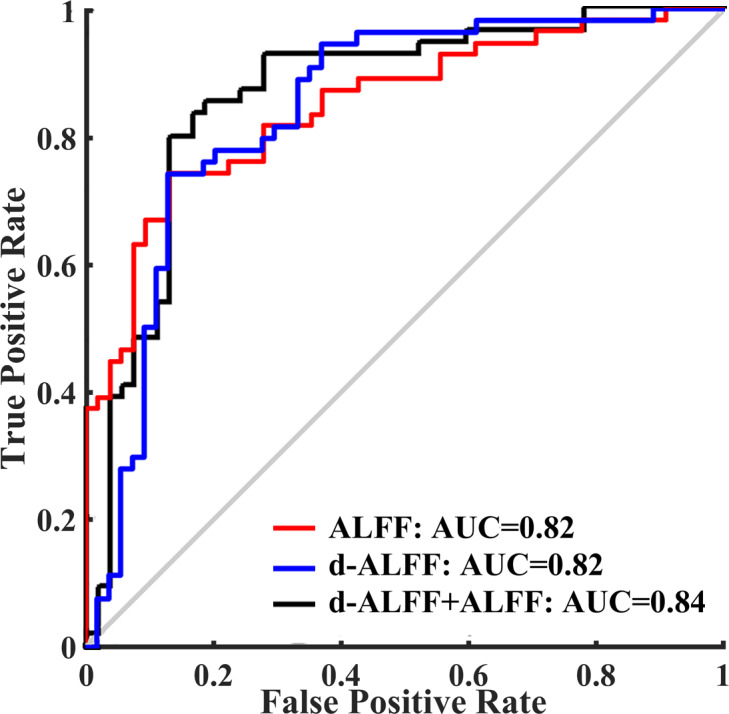
A total of 54 patients with ALS (mean age = 48.71 years, male/female = 36/18) and 54 (mean age = 48.30 years, male/female = 36/18) HCs underwent magnetic resonance imaging scans. To depict static alterations in cortical activity, amplitude of low-frequency fluctuations (ALFF) which measures the total power of regional activity was computed. Dynamic ALFF (d-ALFF) from all subjects was calculated using a sliding-window approach. Statistical differences in ALFF and d-ALFF between both groups were used as features to explore whether they could differentiate ALS from HC through support vector machine method.
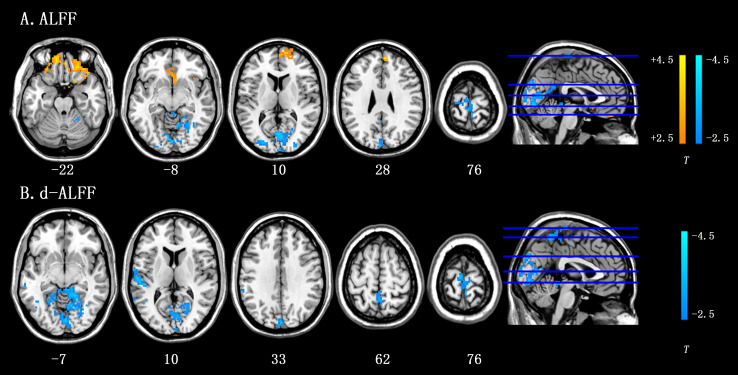
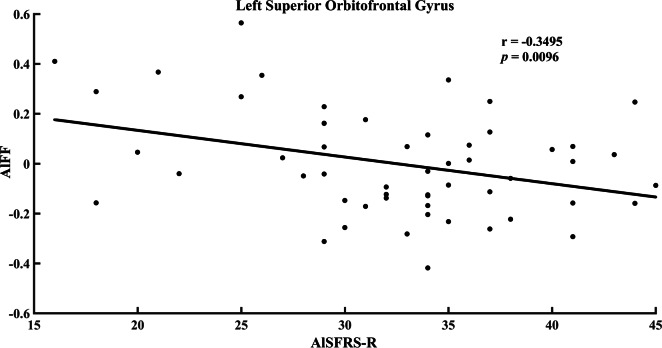
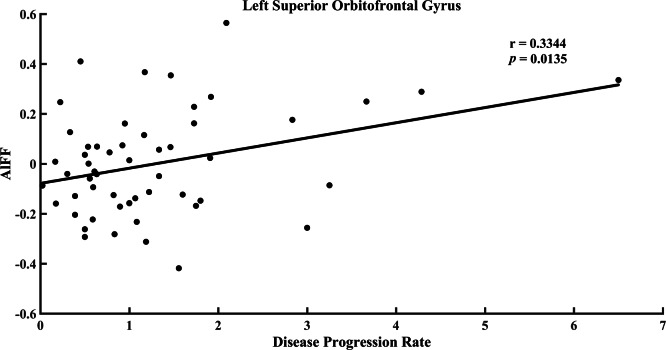
In contrast with HCs, patients with ALS displayed increased ALFF in the right inferior temporal gyrus and bilateral frontal gyrus and decreased ALFF in the left middle occipital gyrus and left precentral gyrus. Furthermore, patients with ALS demonstrated lower d-ALFF in widespread regions, including the right lingual gyrus, left superior temporal gyrus, bilateral precentral gyrus, and left paracentral lobule by comparison with HCs. In addition, the ALFF in the left superior orbitofrontal gyrus had a tendency of correlation with ALSFRS-R score and disease progression rate. The classification performance in distinguishing ALS was higher with both features of ALFF and d-ALFF than that with a single approach.
Decreased dynamic brain activity in the precentral gyrus, paracentral gyrus, lingual gyrus, and temporal regions was found in the ALS group. The combined ALFF and d-ALFF could distinguish ALS from HCs with a higher accuracy than ALFF and d-ALFF alone. These findings may provide important evidence for understanding the neuropathology underlying ALS.
已对肌萎缩侧索硬化症(ALS)患者局部脑活动的静态变化进行了研究。然而,对局部脑活动的动态特征了解甚少。动态改变是否能将ALS患者与健康对照者(HCs)区分开来仍不清楚。
共54例ALS患者(平均年龄 = 48.71岁,男/女 = 36/18)和54例HCs(平均年龄 = 48.30岁,男/女 = 36/18)接受了磁共振成像扫描。为描绘皮质活动的静态改变,计算了测量区域活动总功率的低频波动幅度(ALFF)。使用滑动窗口方法计算了所有受试者的动态ALFF(d-ALFF)。两组之间ALFF和d-ALFF的统计差异用作特征,以通过支持向量机方法探索它们是否能将ALS与HC区分开来。
与HCs相比,ALS患者右侧颞下回和双侧额回的ALFF增加,左侧枕中回和左侧中央前回的ALFF降低。此外,与HCs相比,ALS患者在包括右侧舌回、左侧颞上回、双侧中央前回和左侧中央旁小叶在内的广泛区域表现出较低的d-ALFF。此外,左侧眶额上回的ALFF与ALSFRS-R评分和疾病进展率有相关性趋势。使用ALFF和d-ALFF这两个特征区分ALS的分类性能高于单一方法。
在ALS组中发现中央前回、中央旁回、舌回和颞区的动态脑活动降低。联合使用ALFF和d-ALFF比单独使用ALFF和d-ALFF能更准确地区分ALS与HCs。这些发现可能为理解ALS潜在的神经病理学提供重要证据。