Abdulla Sara, Hussain Azhar, Azim Dua, Abduallah Enas H, Elawamy Hayam, Nasim Sundus, Kumar Sohail, Naveed Hassan
Biochemistry, University of Benghazi, Benghazi, LBY.
Healthcare Administration, Franklin University, Columbus, USA.
Cureus. 2020 Oct 13;12(10):e10923. doi: 10.7759/cureus.10923.
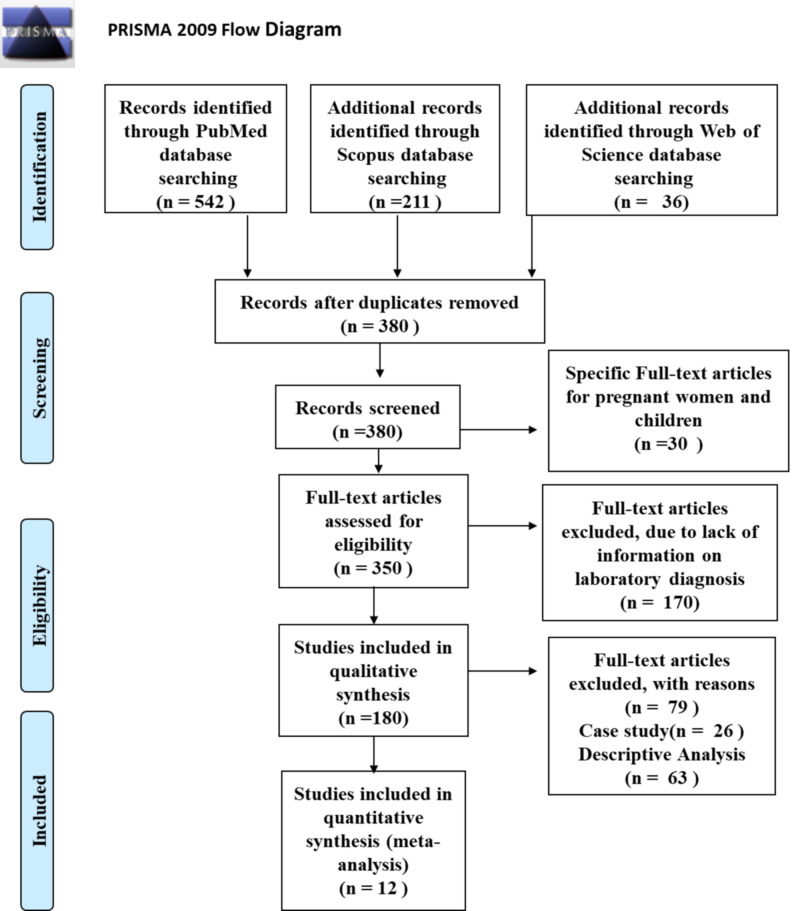
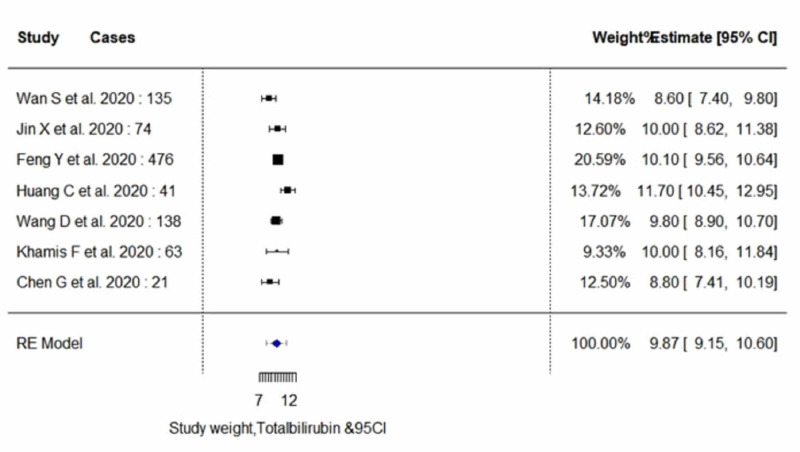
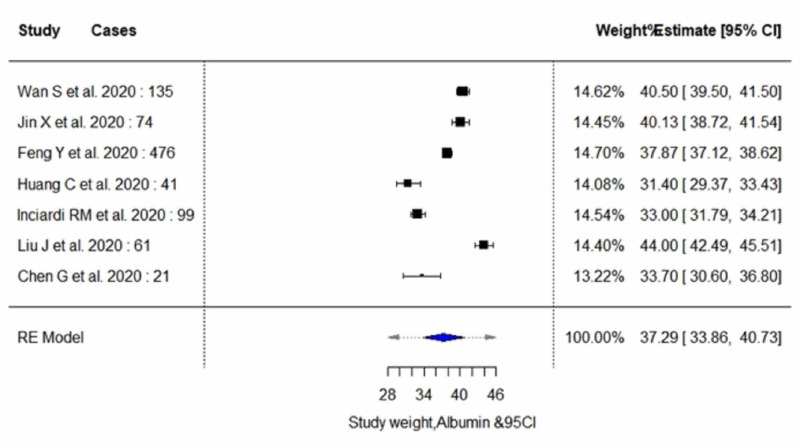
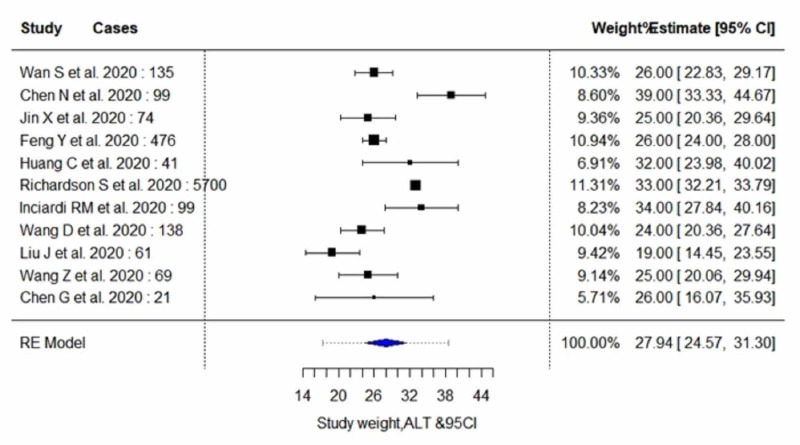
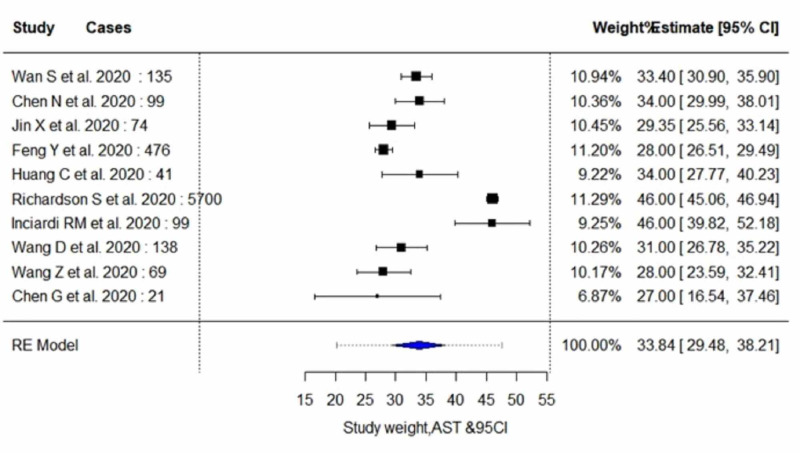
Background The current pandemic of the novel coronavirus disease (COVID-19) is a global health challenge. Pulmonary dysfunction is the main outcome of COVID-19 infection. In critically ill patients, however, liver complications have also been reported. Thus, we conducted a systematic review and meta-analysis to draw generalized conclusions regarding impaired liver biochemistry and its potential relationship with COVID-19 disease severity. Materials and Methods We searched the PubMed, Scopus, and Web of Science databases for all the related literature published up to June 20, 2020. The data were analyzed using R statistical software. A random-effects model was employed for pooling the data. The risk of bias and quality of included studies was assessed using the modified Newcastle-Ottawa Scale (NOS) for cohort studies. Results The present meta-analysis comprises 10 retrospective and two prospective studies (6,976 COVID-19 patients). The serum analysis revealed significantly higher levels of alanine aminotransferases and aspartate aminotransferases and significantly lower albumin levels. Moreover, insignificant increases in serum levels of total bilirubin were observed. Upon subgroup analysis of six studies (severe cases, n=131; non-severe cases, n=334) stratified on the basis of disease severity, we found that these abnormalities were relatively higher in severe cases of COVID-19 (albumin [weighted mean difference (WMD), 34.03 g/L; 95% CI, 27.42 to 40.63; p<0.0001; I=96.83%); alanine transaminase (ALT) [WMD, 31.66 U/L; 95% CI, 25.07 to 38.25; p<0.0001; I=55.64%]; aspartate aminotransferase (AST) [WMD, 41.79 U/L; 95% CI, 32.85 to 50.72; p<0.0001; I=51.43%]; total bilirubin [WMD, 9.97 μmol/L; 95% CI, 8.46 to 11.48; p<0.0001; I=98%]) than in non-severe cases. Conclusion Deranged liver enzymes serve as prognostic factors to assess the severity of COVID-19. Liver markers should, therefore, be observed and monitored continuously.
背景 新型冠状病毒病(COVID-19)当前的大流行是一项全球性健康挑战。肺功能障碍是COVID-19感染的主要后果。然而,在危重症患者中,也有肝脏并发症的报道。因此,我们进行了一项系统评价和荟萃分析,以得出关于肝脏生化指标受损及其与COVID-19疾病严重程度潜在关系的一般性结论。
材料与方法 我们在PubMed、Scopus和Web of Science数据库中检索了截至2020年6月20日发表的所有相关文献。使用R统计软件对数据进行分析。采用随机效应模型汇总数据。使用针对队列研究的改良纽卡斯尔-渥太华量表(NOS)评估纳入研究的偏倚风险和质量。
结果 本荟萃分析包括10项回顾性研究和2项前瞻性研究(共6976例COVID-19患者)。血清分析显示,丙氨酸转氨酶和天冬氨酸转氨酶水平显著升高,白蛋白水平显著降低。此外,血清总胆红素水平有不显著升高。在根据疾病严重程度分层的6项研究(重症病例,n = 131;非重症病例,n = 334)的亚组分析中,我们发现这些异常在COVID-19重症病例中相对更高(白蛋白[加权平均差(WMD),34.03 g/L;95%置信区间,27.42至40.63;p < 0.0001;I² = 96.83%];丙氨酸转氨酶(ALT)[WMD,31.66 U/L;95%置信区间,25.07至38.25;p < 0.0001;I² = 55.64%];天冬氨酸转氨酶(AST)[WMD,41.79 U/L;95%置信区间,32.85至50.72;p < 0.0001;I² = 51.43%];总胆红素[WMD,9.97 μmol/L;95%置信区间,8.46至11.48;p < 0.0001;I² = 98%]),高于非重症病例。
结论 肝功能紊乱的酶类可作为评估COVID-19严重程度的预后因素。因此,应持续观察和监测肝脏标志物。