Ding Xiaoyan, Sun Wei, Chen Jinglong, Li Wei, Shen Yanjun, Guo Xiaodi, Teng Ying, Liu Xiaomin, Sun Shasha, Wei Jianying, Li Wendong, Chen Hui, Liu Bozhi
Department of Cancer Center, Beijing Ditan Hospital, Capital Medical University, Beijing, China.
School of Biomedical Engineering, Capital Medical University, Beijing, China.
Front Oncol. 2020 Oct 23;10:578633. doi: 10.3389/fonc.2020.578633. eCollection 2020.
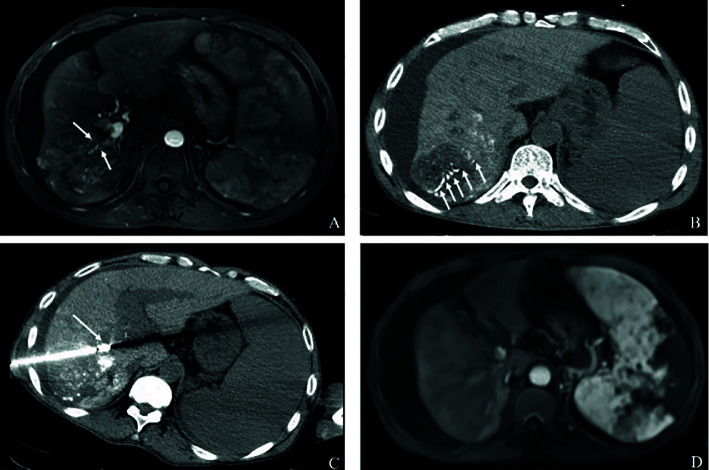
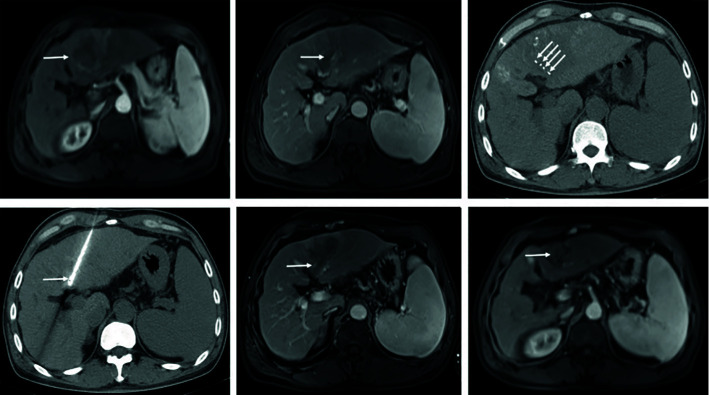
Hepatocellular carcinoma (HCC) with portal vein tumor thrombosis (PVTT) portends a worse prognosis. The objective of this study was to compare the efficacy of percutaneous radiofrequency ablation (RFA) combined with transarterial chemoembolization (TACE) plus sorafenib to that of the most commonly utilized regimen of TACE plus sorafenib in large HCCs with type I/II PVTT.
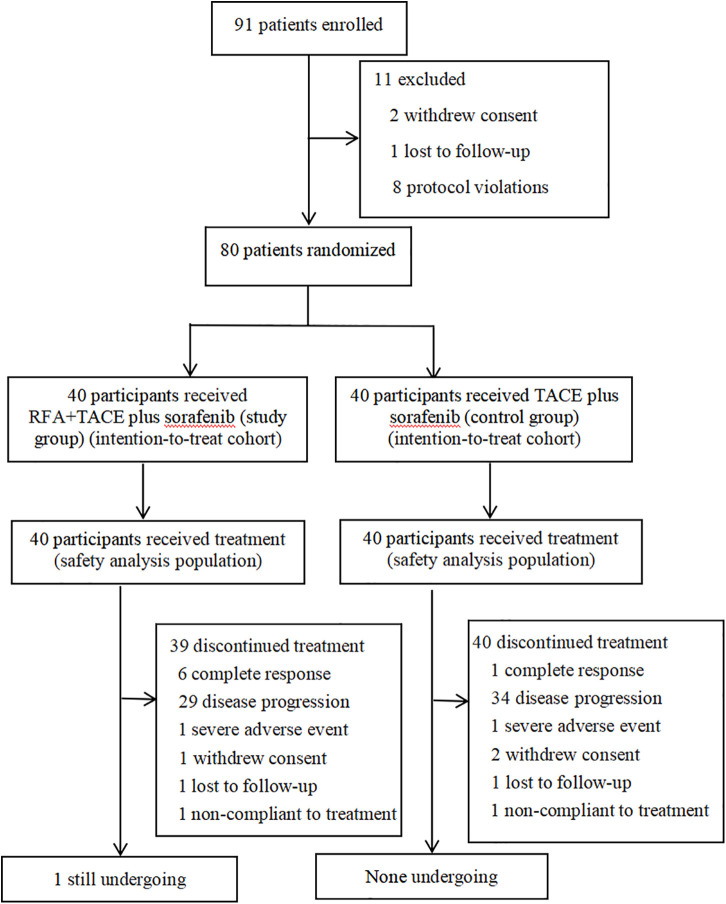
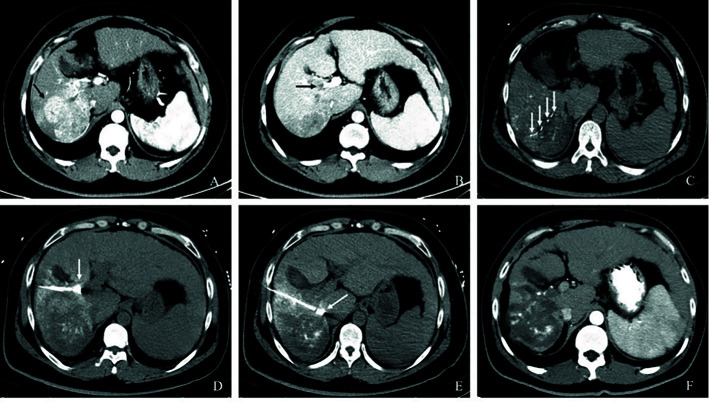
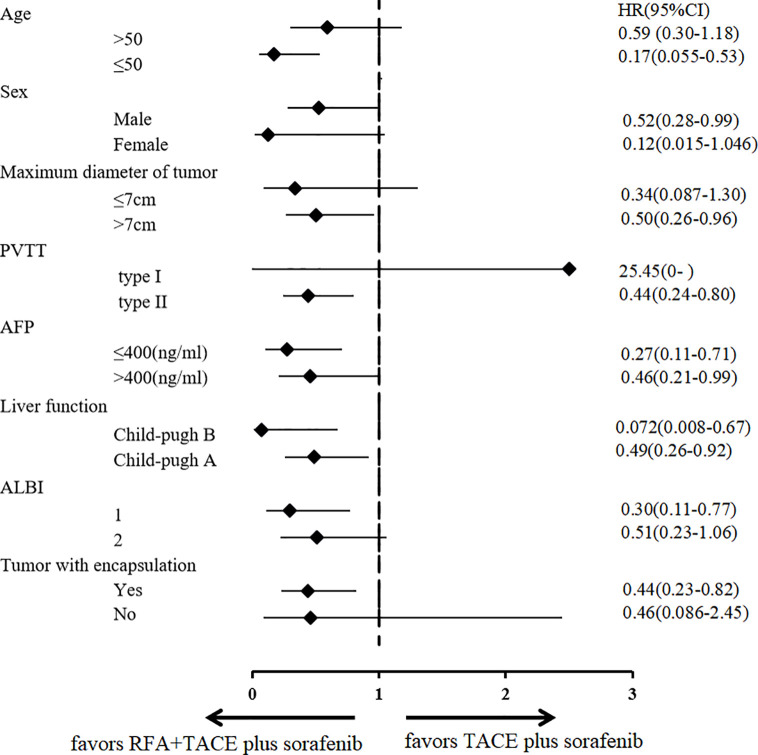
An open-label, single-center, prospective, randomized trial of participants with tumors ≥5 cm and type I/II PVTT was performed. Participants with previously untreated HCCs were divided into two groups: RFA + cTACE + sorafenib (study group, n = 40) and cTACE + sorafenib (control group, n = 40). The primary endpoint was the objective response rate (ORR), the secondary endpoints included the overall survival (OS); time to progression (TTP); and toxicity. Prognostic factors were analyzed using cox-regression analysis.
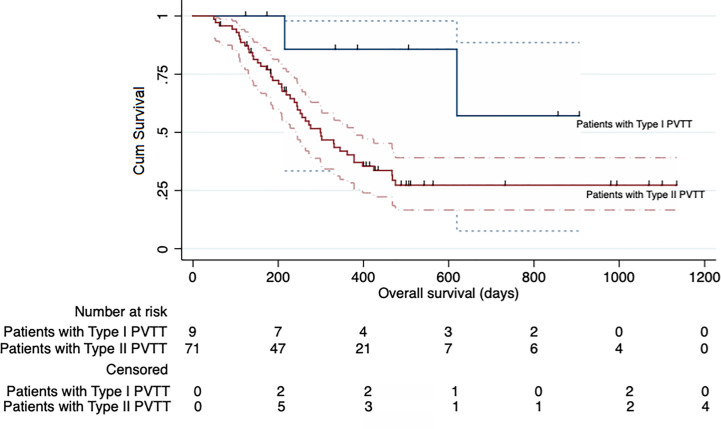
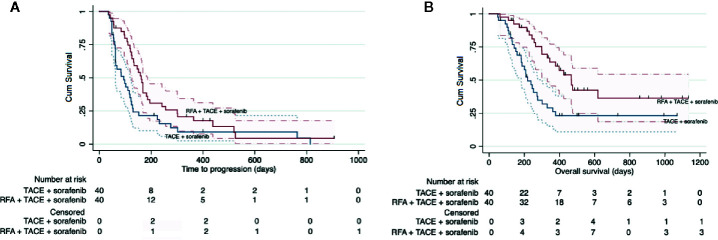
80 patients were enrolled into this study with integrated clinical data. Under a median follow-up of 506 days, the median age was 57.5 years (range: 28-80 years). The ORR of study group was higher than control group (70% vs 22.5%, <0.001). Furthermore, the median OS of study group was superior to that of control group (468 days vs 219 days, HR: 0.44 [95% CI: 0.25-0.78], P = 0.005). Adverse events occurred with 100% probability in both groups (p>0.99), but no treatment-related deaths were recorded. Tumor encapsulation and attaining treatment response predict favorable OS in a multivariate Cox model. The rates of adverse events in both groups were 100% (p>0.99). There were no treatment-related deaths.
RFA combined with TACE plus sorafenib is a safe, well-tolerated three-modality treatment for large HCCs with types I/II PVTT, and it demonstrated better efficacy than TACE plus sorafenib alone.
伴有门静脉癌栓(PVTT)的肝细胞癌(HCC)预后较差。本研究的目的是比较经皮射频消融(RFA)联合经动脉化疗栓塞(TACE)加索拉非尼与TACE加索拉非尼这种最常用方案在伴有I/II型PVTT的大肝癌中的疗效。
对肿瘤≥5 cm且为I/II型PVTT的参与者进行了一项开放标签、单中心、前瞻性随机试验。既往未治疗的HCC参与者分为两组:RFA + cTACE + 索拉非尼(研究组,n = 40)和cTACE + 索拉非尼(对照组,n = 40)。主要终点是客观缓解率(ORR),次要终点包括总生存期(OS)、疾病进展时间(TTP)和毒性。使用Cox回归分析对预后因素进行分析。
80例患者纳入本研究并获得完整临床数据。中位随访506天,中位年龄为57.5岁(范围:28 - 80岁)。研究组的ORR高于对照组(70%对22.5%,<0.001)。此外,研究组的中位OS优于对照组(468天对219天,HR:0.44 [95% CI:0.25 - 0.78],P = 0.005)。两组不良事件发生率均为100%(p>0.99),但未记录到与治疗相关的死亡病例。在多变量Cox模型中,肿瘤包膜形成和获得治疗反应预示着良好的OS。两组不良事件发生率均为100%(p>0.99)。无治疗相关死亡病例。
RFA联合TACE加索拉非尼是一种安全、耐受性良好的三联疗法,用于治疗伴有I/II型PVTT的大肝癌,且其疗效优于单纯TACE加索拉非尼。