Milazzo Valentina, Cosentino Nicola, Campodonico Jeness, Lucci Claudia, Cardinale Daniela, Cipolla Carlo M, Marenzi Giancarlo
Centro Cardiologico Monzino IRCCS, 20138 Milan, Italy.
Cardioncology Unit, European Institute of Oncology, IRCCS, 20141 Milan, Italy.
J Clin Med. 2020 Nov 12;9(11):3642. doi: 10.3390/jcm9113642.
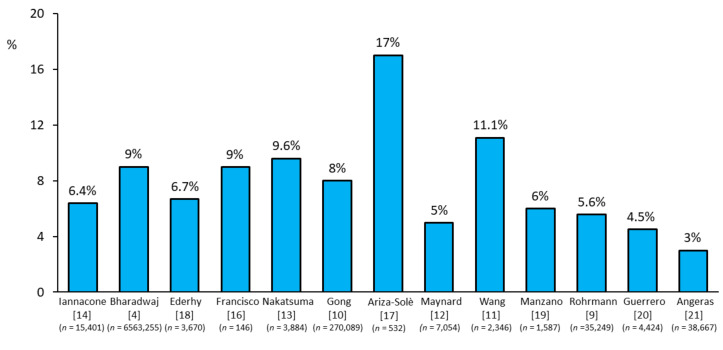
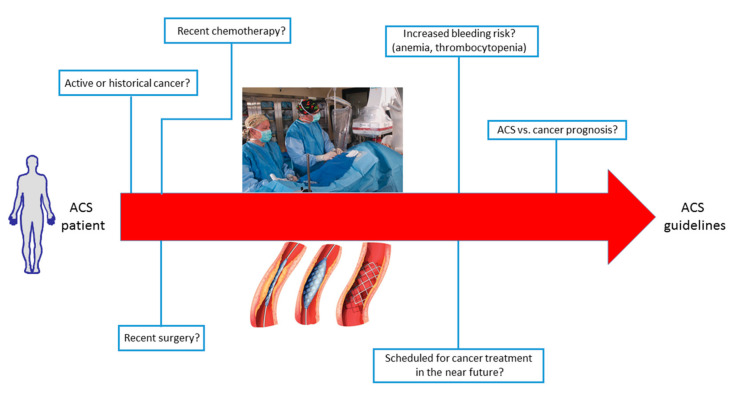
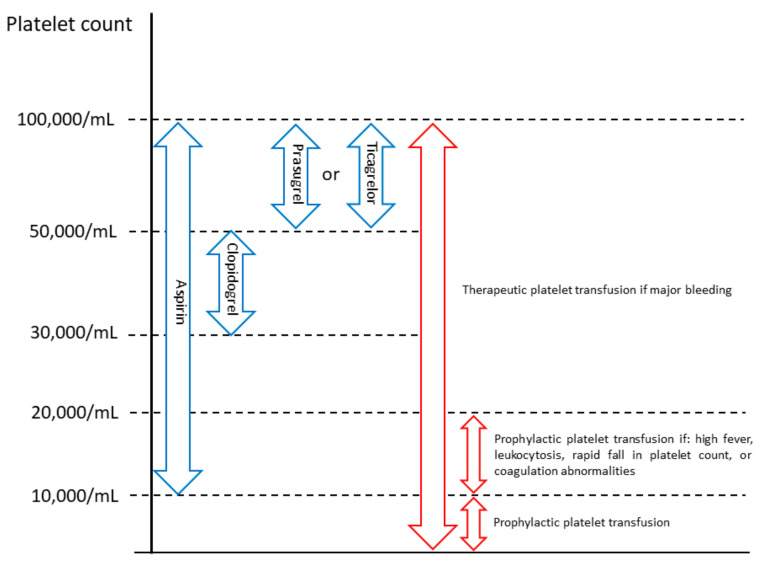
Patients with cancer are at increased risk of cardiovascular disease, with a reported prevalence of acute coronary syndrome (ACS) ranging from 3% to 17%. The increased risk of ACS in these patients seems to be due to the complex interaction of shared cardiovascular risk factors, cancer type and stage, and chemotherapeutic and radiotherapy regimens. The management of ACS in patients with cancer is a clinical challenge, particularly due to cancer's unique pathophysiology, which makes it difficult to balance thrombotic and bleeding risks in this specific patient population. In addition, patients with cancer have largely been excluded from ACS trials. Hence, an evidence-based treatment for ACS in this group of patients is unknown and only a limited proportion of them is treated with antiplatelets or invasive revascularization, despite initial reports suggesting their beneficial prognostic effects in cancer patients. Finally, cancer patients experiencing ACS are also at higher risk of in-hospital and long-term mortality as compared to non-cancer patients. In this review, we will provide an overview on the available evidence of the relationship between ACS and cancer, in terms of clinical manifestations, possible underlying mechanisms, and therapeutic and prognostic implications.
癌症患者患心血管疾病的风险增加,据报道急性冠状动脉综合征(ACS)的患病率在3%至17%之间。这些患者中ACS风险增加似乎是由于共同的心血管危险因素、癌症类型和分期以及化疗和放疗方案之间的复杂相互作用。癌症患者中ACS的管理是一项临床挑战,特别是由于癌症独特的病理生理学,使得在这一特定患者群体中难以平衡血栓形成和出血风险。此外,癌症患者在很大程度上被排除在ACS试验之外。因此,针对这组患者的基于证据的ACS治疗方法尚不清楚,尽管初步报告表明抗血小板药物或侵入性血运重建对癌症患者有有益的预后影响,但只有有限比例的患者接受此类治疗。最后,与非癌症患者相比,发生ACS的癌症患者在住院和长期死亡方面的风险也更高。在本综述中,我们将从临床表现、可能的潜在机制以及治疗和预后意义方面,概述关于ACS与癌症之间关系的现有证据。