Department of Mathematical Sciences, Norwegian University of Science and Technology, Trondheim, Norway.
The Roslin Institute and Royal (Dick) School of Veterinary Studies, University of Edinburgh, Edinburgh, UK.
Genet Sel Evol. 2020 Nov 16;52(1):69. doi: 10.1186/s12711-020-00588-w.
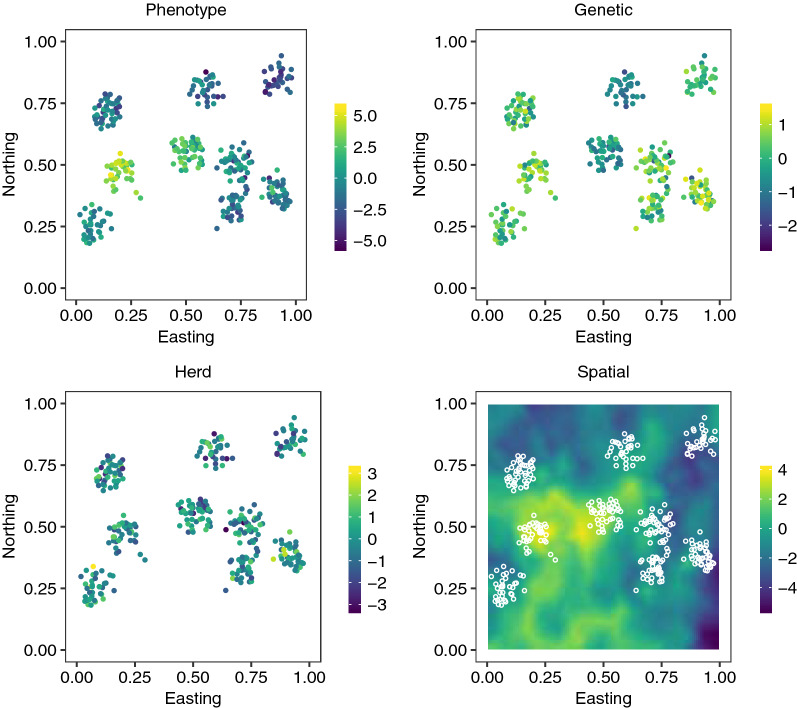
Breeders and geneticists use statistical models to separate genetic and environmental effects on phenotype. A common way to separate these effects is to model a descriptor of an environment, a contemporary group or herd, and account for genetic relationship between animals across environments. However, separating the genetic and environmental effects in smallholder systems is challenging due to small herd sizes and weak genetic connectedness across herds. We hypothesised that accounting for spatial relationships between nearby herds can improve genetic evaluation in smallholder systems. Furthermore, geographically referenced environmental covariates are increasingly available and could model underlying sources of spatial relationships. The objective of this study was therefore, to evaluate the potential of spatial modelling to improve genetic evaluation in dairy cattle smallholder systems.
We performed simulations and real dairy cattle data analysis to test our hypothesis. We modelled environmental variation by estimating herd and spatial effects. Herd effects were considered independent, whereas spatial effects had distance-based covariance between herds. We compared these models using pedigree or genomic data.
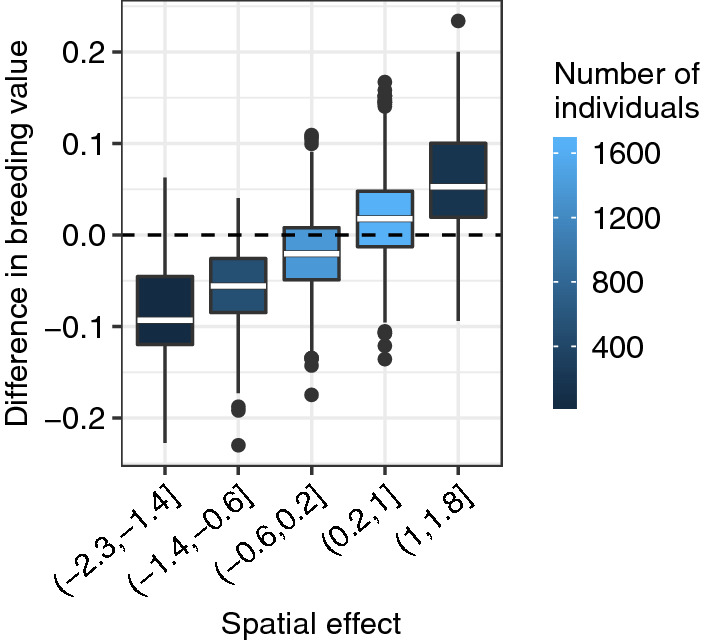
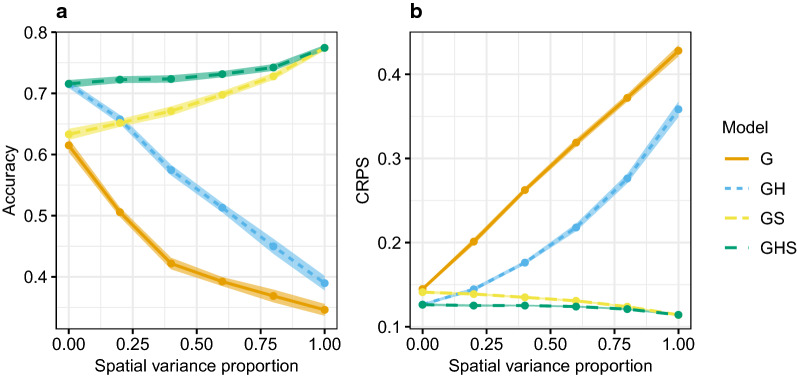
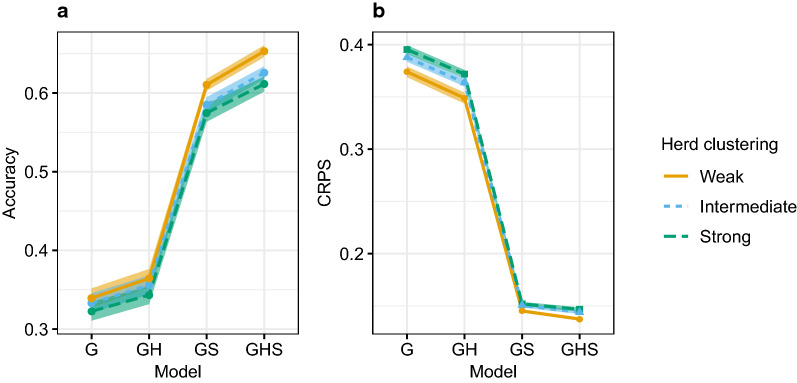
The results show that in smallholder systems (i) standard models do not separate genetic and environmental effects accurately, (ii) spatial modelling increases the accuracy of genetic evaluation for phenotyped and non-phenotyped animals, (iii) environmental covariates do not substantially improve the accuracy of genetic evaluation beyond simple distance-based relationships between herds, (iv) the benefit of spatial modelling was largest when separating the genetic and environmental effects was challenging, and (v) spatial modelling was beneficial when using either pedigree or genomic data.
We have demonstrated the potential of spatial modelling to improve genetic evaluation in smallholder systems. This improvement is driven by establishing environmental connectedness between herds, which enhances separation of genetic and environmental effects. We suggest routine spatial modelling in genetic evaluations, particularly for smallholder systems. Spatial modelling could also have a major impact in studies of human and wild populations.
饲养员和遗传学家使用统计模型来分离表型的遗传和环境效应。一种常见的分离这些效应的方法是对环境描述符进行建模,对当代群体或畜群进行建模,并考虑跨环境的动物之间的遗传关系。然而,由于畜群规模较小且畜群之间的遗传联系较弱,因此在小农系统中分离遗传和环境效应具有挑战性。我们假设,考虑附近畜群之间的空间关系可以改善小农系统中的遗传评估。此外,越来越多的具有地理位置参考的环境协变量可用于对潜在的空间关系进行建模。因此,本研究的目的是评估空间建模在提高奶牛小农系统遗传评估中的潜力。
我们进行了模拟和真实的奶牛数据分析来检验我们的假设。我们通过估计畜群和空间效应来模拟环境变化。畜群效应被认为是独立的,而空间效应在畜群之间具有基于距离的协方差。我们使用系谱或基因组数据比较了这些模型。
结果表明,在小农系统中:(i)标准模型不能准确分离遗传和环境效应;(ii)空间建模提高了对表型和非表型动物遗传评估的准确性;(iii)环境协变量除了畜群之间简单的基于距离的关系之外,不会极大地提高遗传评估的准确性;(iv)当分离遗传和环境效应具有挑战性时,空间建模的好处最大;(v)使用系谱或基因组数据时,空间建模都具有优势。
我们已经证明了空间建模在小农系统中提高遗传评估的潜力。这种改进是通过在畜群之间建立环境连接来实现的,这增强了遗传和环境效应的分离。我们建议在遗传评估中常规进行空间建模,特别是对于小农系统。空间建模还可能对人类和野生动物种群的研究产生重大影响。