
改善新型冠状病毒肺炎住院患者的管理:实施与评估的算法及工具
Improving management of hospitalised patients with COVID-19: algorithms and tools for implementation and measurement.
作者信息
Salem Ahmed, Elamir Hossam, Alfoudri Huda, Shamsah Mohammed, Abdelraheem Shams, Abdo Ibtissam, Galal Mohammad, Ali Lamiaa
机构信息
Anaesthesia and Intensive Care Department, Sabah Al Ahmad Urology Centre, Ministry of Health, Sabah, Kuwait.
Anaesthesia and Intensive Care Department, Faculty of Medicine, Banha University, Benha, Egypt.
出版信息
BMJ Open Qual. 2020 Nov;9(4). doi: 10.1136/bmjoq-2020-001130.
BACKGROUND
The COVID-19 pandemic represents an unprecedented challenge to healthcare systems and nations across the world. Particularly challenging are the lack of agreed-upon management guidelines and variations in practice. Our hospital is a large, secondary-care government hospital in Kuwait, which has increased its capacity by approximately 28% to manage the care of patients with COVID-19. The surge in capacity has necessitated the redeployment of staff who are not well-trained to manage such conditions. There was a great need to develop a tool to help redeployed staff in decision-making for patients with COVID-19, a tool which could also be used for training.
METHODS
Based on the best available clinical knowledge and best practices, an eight member multidisciplinary group of clinical and quality experts undertook the development of a clinical algorithm-based toolkit to guide training and practice for the management of patients with COVID-19. The team followed Horabin and Lewis' seven-step approach in developing the algorithms and a five-step method in writing them. Moreover, we applied Rosenfeld 's five points to each algorithm.
RESULTS
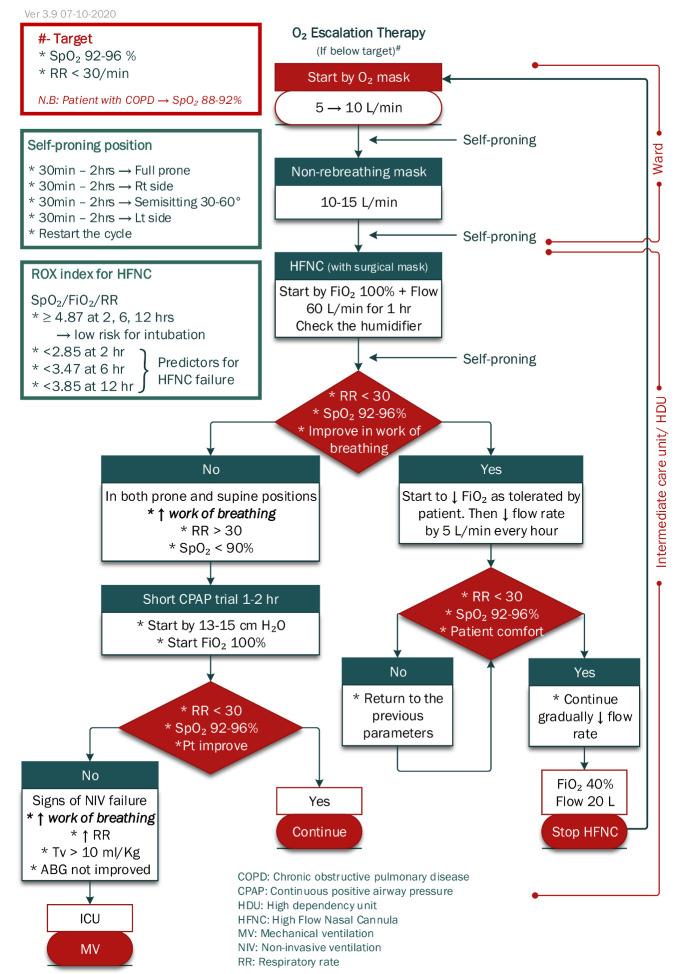
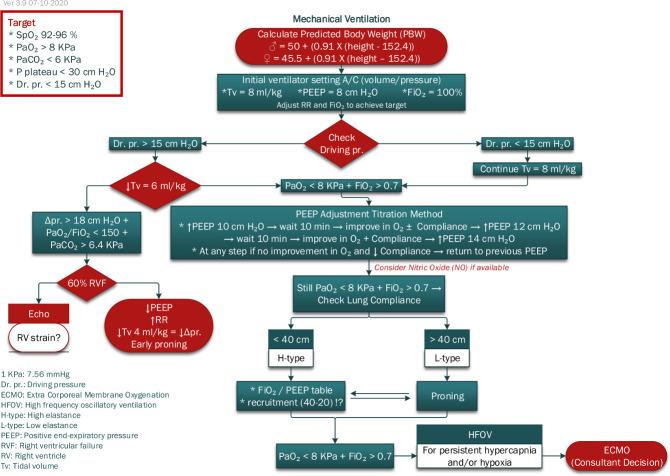
A set of seven clinical algorithms and one illustrative layout diagram were developed. The algorithms were augmented with documentation forms, data-collection online forms and spreadsheets and an indicators' reference sheet to guide implementation and performance measurement. The final version underwent several revisions and amendments prior to approval.
CONCLUSIONS
A large volume of published literature on the topic of COVID-19 pandemic was translated into a user-friendly, algorithm-based toolkit for the management of patients with COVID-19. This toolkit can be used for training and decision-making to improve the quality of care provided to patients with COVID-19.
背景
新冠疫情对全球医疗系统和各国来说是一项前所未有的挑战。尤其具有挑战性的是缺乏商定的管理指南以及实践中的差异。我们医院是科威特一家大型的二级护理政府医院,已将其床位容量增加了约28%,以管理新冠患者的护理。容量的激增使得重新部署未接受过此类情况管理培训的工作人员成为必要。迫切需要开发一种工具,以帮助重新部署的工作人员对新冠患者进行决策,该工具也可用于培训。
方法
基于现有的最佳临床知识和最佳实践,一个由八名临床和质量专家组成的多学科小组着手开发一个基于临床算法的工具包,以指导新冠患者管理的培训和实践。该团队在开发算法时遵循了霍拉宾和刘易斯的七步法,在编写算法时采用了五步法。此外,我们将罗森菲尔德的五点应用于每个算法。
结果
开发了一套七个临床算法和一个说明性布局图。算法还附带了文档表格、在线数据收集表格和电子表格以及一份指标参考表,以指导实施和绩效评估。最终版本在批准前经过了多次修订和修正。
结论
大量关于新冠疫情主题的已发表文献被转化为一个便于用户使用的、基于算法的新冠患者管理工具包。该工具包可用于培训和决策,以提高为新冠患者提供的护理质量。



 Zotero 插件