WHO Collaborating Centre for Infectious Disease Epidemiology and Control, School of Public Health, Li Ka Shing Faculty of Medicine, The University of Hong Kong, Hong Kong Special Administrative Region, China.
WHO Collaborating Centre for Infectious Disease Epidemiology and Control, School of Public Health, Li Ka Shing Faculty of Medicine, The University of Hong Kong, Hong Kong Special Administrative Region, China.
Lancet. 2020 Apr 25;395(10233):1382-1393. doi: 10.1016/S0140-6736(20)30746-7. Epub 2020 Apr 8.
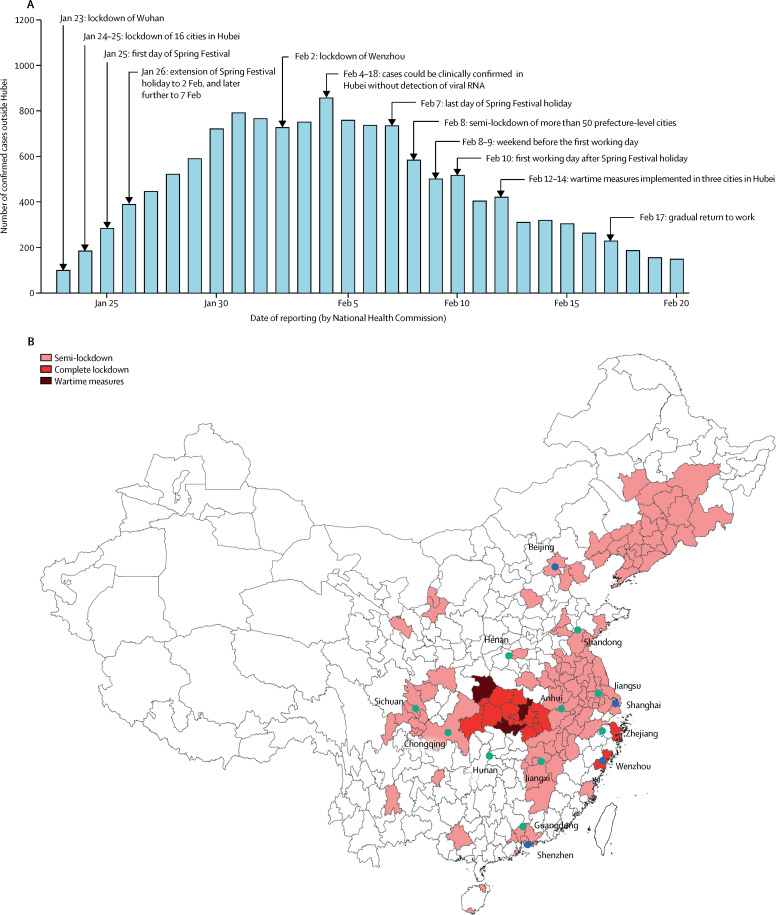
As of March 18, 2020, 13 415 confirmed cases and 120 deaths related to coronavirus disease 2019 (COVID-19) in mainland China, outside Hubei province-the epicentre of the outbreak-had been reported. Since late January, massive public health interventions have been implemented nationwide to contain the outbreak. We provide an impact assessment of the transmissibility and severity of COVID-19 during the first wave in mainland Chinese locations outside Hubei.
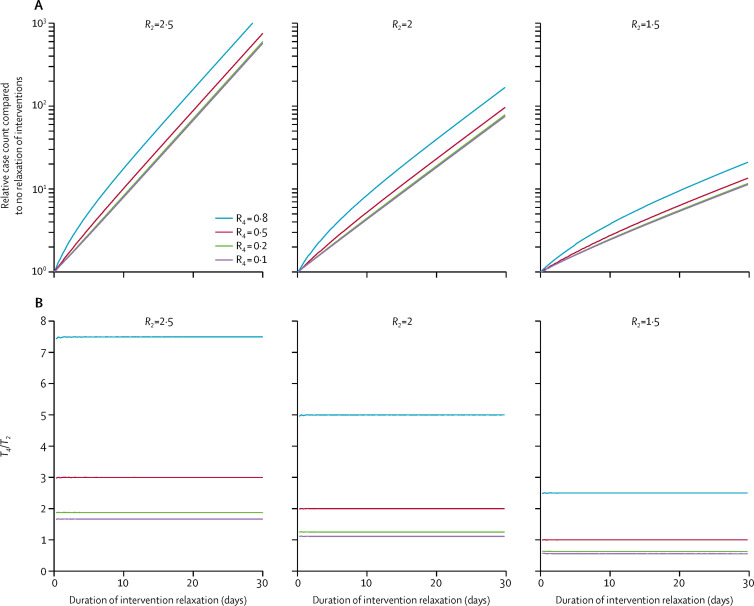
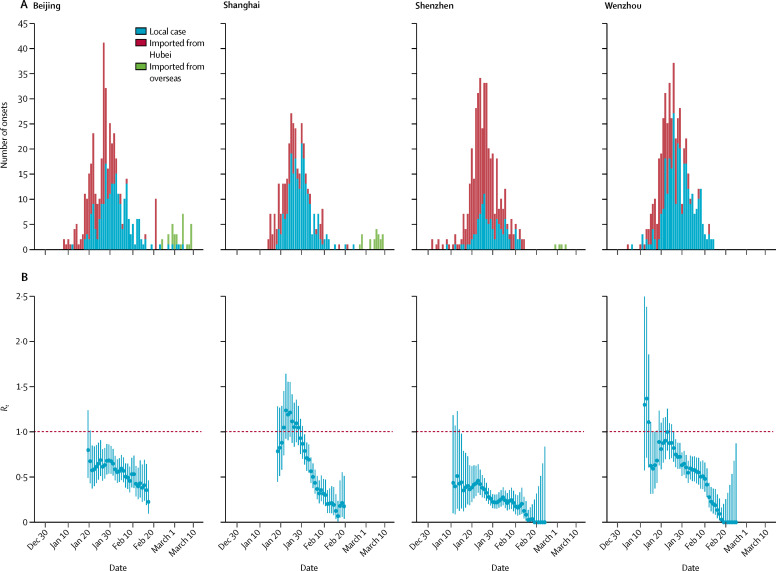
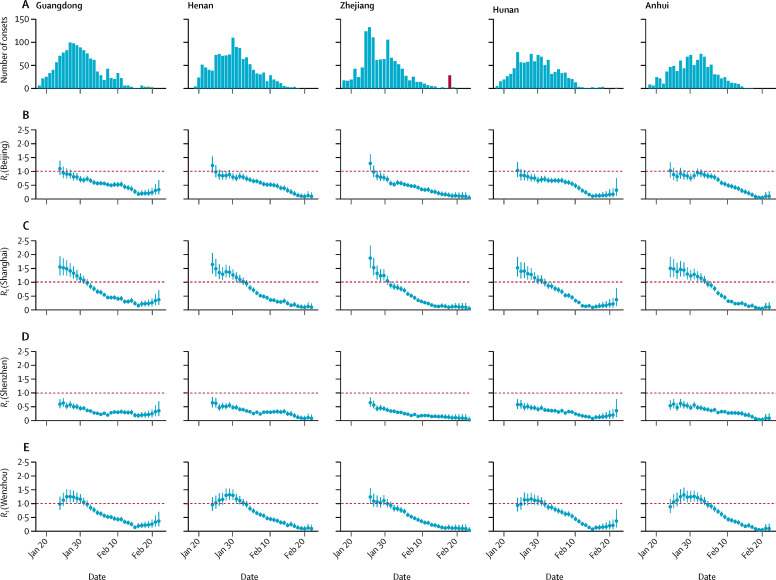
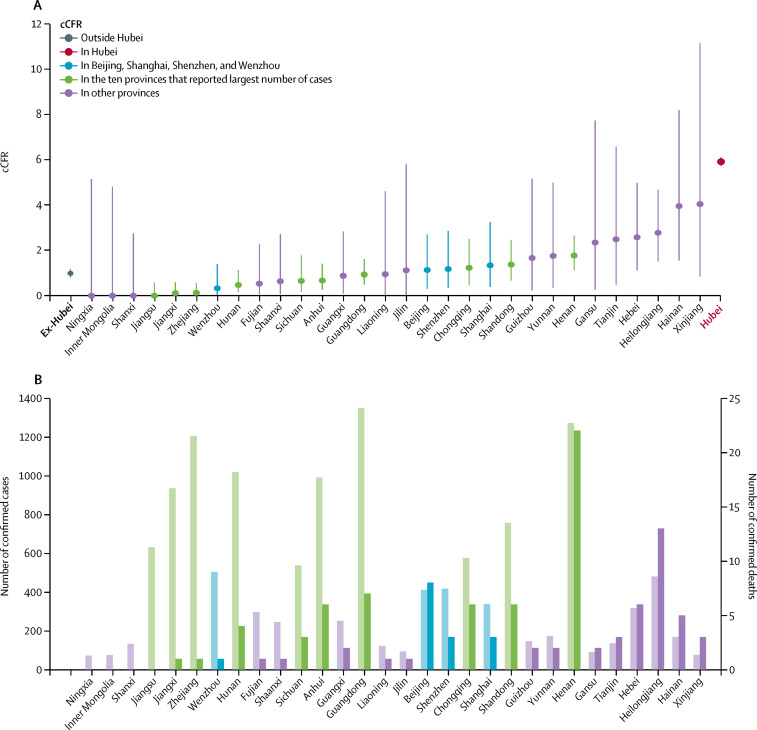
We estimated the instantaneous reproduction number (R) of COVID-19 in Beijing, Shanghai, Shenzhen, Wenzhou, and the ten Chinese provinces that had the highest number of confirmed COVID-19 cases; and the confirmed case-fatality risk (cCFR) in Beijing, Shanghai, Shenzhen, and Wenzhou, and all 31 Chinese provinces. We used a susceptible-infectious-recovered model to show the potential effects of relaxing containment measures after the first wave of infection, in anticipation of a possible second wave.
In all selected cities and provinces, the R decreased substantially since Jan 23, when control measures were implemented, and have since remained below 1. The cCFR outside Hubei was 0·98% (95% CI 0·82-1·16), which was almost five times lower than that in Hubei (5·91%, 5·73-6·09). Relaxing the interventions (resulting in R >1) when the epidemic size was still small would increase the cumulative case count exponentially as a function of relaxation duration, even if aggressive interventions could subsequently push disease prevalence back to the baseline level.
The first wave of COVID-19 outside of Hubei has abated because of aggressive non-pharmaceutical interventions. However, given the substantial risk of viral reintroduction, particularly from overseas importation, close monitoring of R and cCFR is needed to inform strategies against a potential second wave to achieve an optimal balance between health and economic protection.
Health and Medical Research Fund, Hong Kong, China.
截至 2020 年 3 月 18 日,中国大陆除湖北省(疫情爆发中心)以外地区已报告 13415 例确诊病例和 120 例与 2019 年冠状病毒病(COVID-19)相关的死亡病例。自 1 月下旬以来,全国范围内已采取大规模公共卫生干预措施以遏制疫情。我们提供了对中国大陆湖北省以外地区 COVID-19 第一波疫情传播力和严重程度的影响评估。
我们估计了 COVID-19 在北京市、上海市、深圳市、温州市和确诊病例数最高的十个中国省份的即时繁殖数(R);以及北京市、上海市、深圳市和温州市以及中国所有 31 个省份的确诊病例病死率(cCFR)。我们使用易感-感染-恢复模型展示了在第一波感染后放松控制措施的潜在效果,以应对可能的第二波疫情。
在所有选定的城市和省份,自 1 月 23 日实施控制措施以来,R 大幅下降,此后一直低于 1。湖北省以外地区的 cCFR 为 0.98%(95%CI 0.82-1.16),几乎是湖北省的五倍(5.91%,5.73-6.09)。在疫情规模仍然较小的情况下放松干预措施(导致 R>1),随着放松持续时间的延长,累积病例数将呈指数级增长,即使随后采取积极的干预措施将疾病流行率推回到基线水平。
湖北省以外地区的 COVID-19 第一波疫情由于采取了积极的非药物干预措施而得到控制。然而,鉴于病毒重新输入的风险很大,特别是来自海外的输入,需要密切监测 R 和 cCFR,以制定针对潜在第二波疫情的策略,在保护健康和经济之间实现最佳平衡。
中国香港卫生与医疗研究基金。