Department of General Practice and Elderly Care Medicine, Amsterdam Public Health Research Institute, Amsterdam University Medical Centres - VU University, Amsterdam, The Netherlands.
National Institute for Public Health and the Environment, Bilthoven, The Netherlands.
Health Soc Care Community. 2022 Feb;30(2):e469-e477. doi: 10.1111/hsc.13230. Epub 2020 Nov 17.
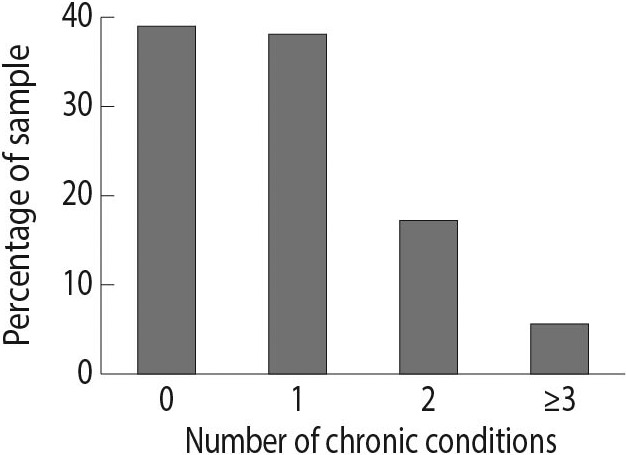
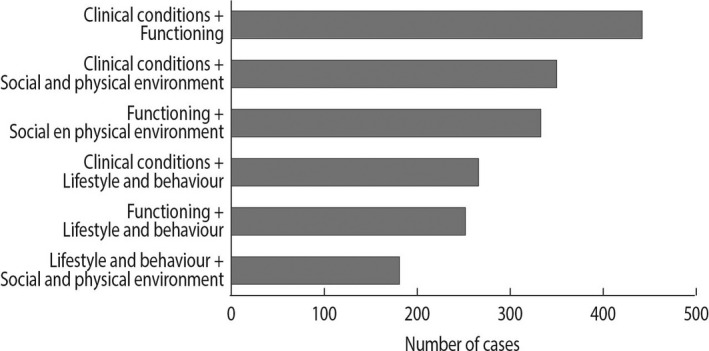
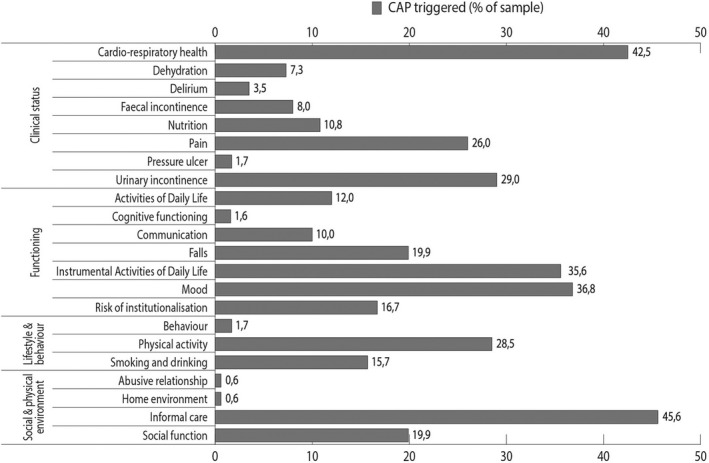
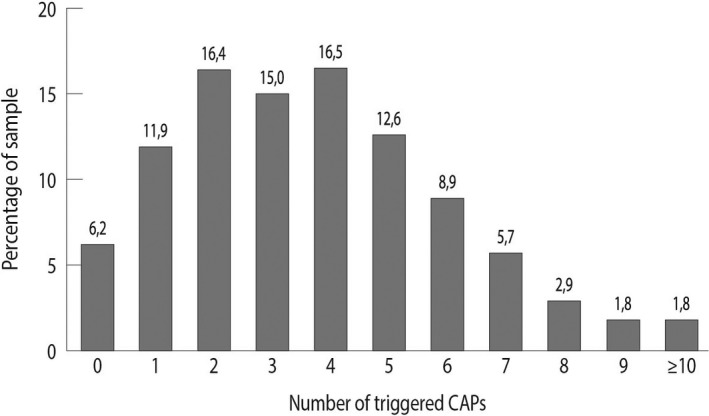
Frail older people face a range of problems and risks that could undermine their ability to live safely at home. A comprehensive overview of these risks, from a multidimensional perspective, is currently lacking. This study aims to examine the prevalence of risks in multiple domains of life among frail older people living at home. We used cross-sectional data from 824 people aged 65 years and older, who received a comprehensive geriatric assessment (the interRAI Home Care [interRAI-HC]) between 2014 and 2018, as part of routine care from 25 general practices in the region of West-Friesland, the Netherlands. The interRAI-HC identifies amenable risks related to people's clinical conditions, functioning, lifestyle and behaviour, and social and physical environment. Descriptive statistics were used to examine population characteristics (age, gender, marital status, living arrangements and presence of chronic conditions) and prevalence of risks. Most common risks were related to people's clinical conditions (i.e cardio-respiratory health, urinary incontinence, pain), functioning (i.e. limitations in instrumental activities of daily living and mood) and social environment (i.e. limitations in informal care and social functioning). More than 80% of frail older people faced multiple risks, and often on multiple domains of life simultaneously. People experiencing multiple risks per person, and on multiple domains simultaneously, were more often widowed and living alone. The multidimensional character of risks among frail older people living at home implies that an integrated approach to care, comprising both health and social care, is necessary. Insight in the prevalence of these risks can give direction to care allocation decisions.
虚弱的老年人面临着一系列可能削弱他们在家中安全生活能力的问题和风险。目前,从多维角度全面了解这些风险的情况还很缺乏。本研究旨在调查居住在家中的虚弱老年人在多个生活领域面临的风险的普遍程度。我们使用了 2014 年至 2018 年间来自荷兰西弗里斯兰地区 25 家全科诊所的 824 名 65 岁及以上的人群的横断面数据,这些人接受了全面老年评估(interRAI 家庭护理 [interRAI-HC]),作为常规护理的一部分。interRAI-HC 确定了与人们的临床状况、功能、生活方式和行为以及社会和物理环境相关的可处理风险。使用描述性统计数据来检查人口特征(年龄、性别、婚姻状况、居住安排和慢性疾病的存在)和风险的流行程度。最常见的风险与人们的临床状况(即心肺健康、尿失禁、疼痛)、功能(即日常生活活动和情绪方面的限制)和社会环境(即非正式护理和社会功能方面的限制)有关。超过 80%的虚弱老年人面临多种风险,而且往往同时涉及多个生活领域。每人身患多种风险,且同时涉及多个领域的人更多的是丧偶且独居。居住在家中的虚弱老年人面临的风险具有多维性,这意味着需要采取综合的医疗和社会保健方法。对这些风险的流行程度的了解可以为护理分配决策提供方向。