Department of Pharmacology, School of Pharmacy, Liaoning Key Laboratory of Molecular Targeted Anti-Tumor Drug Development and Evaluation, Liaoning Cancer Immune Peptide Drug Engineering Technology Research Center, Key Laboratory of Precision Diagnosis and Treatment of Gastrointestinal Tumors, Ministry of Education, China Medical University, Shenyang, Liaoning Province, China.
Department of Orthopedics, Shengjing Hospital of China Medical University, Shenyang, Liaoning Province, China.
Aging (Albany NY). 2020 Nov 16;12(22):23004-23016. doi: 10.18632/aging.104041.
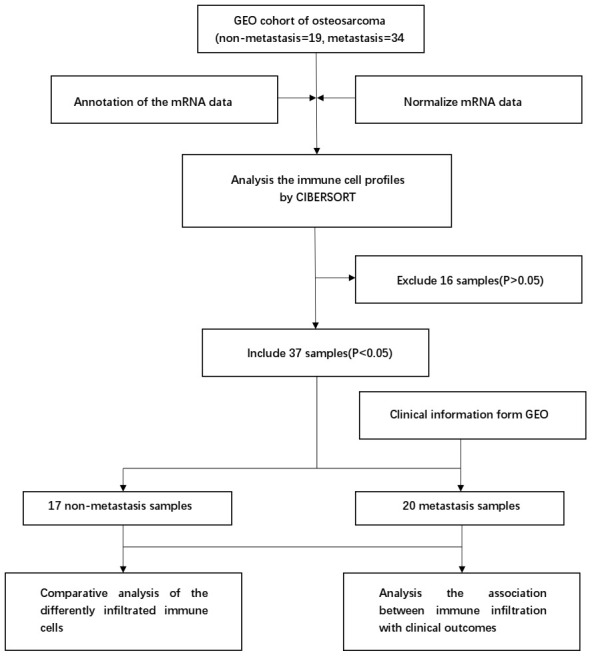
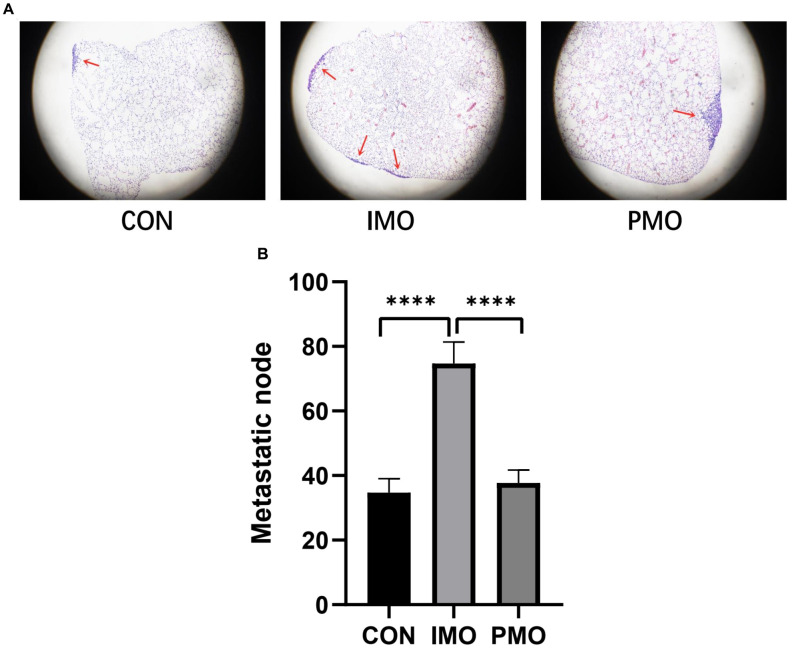
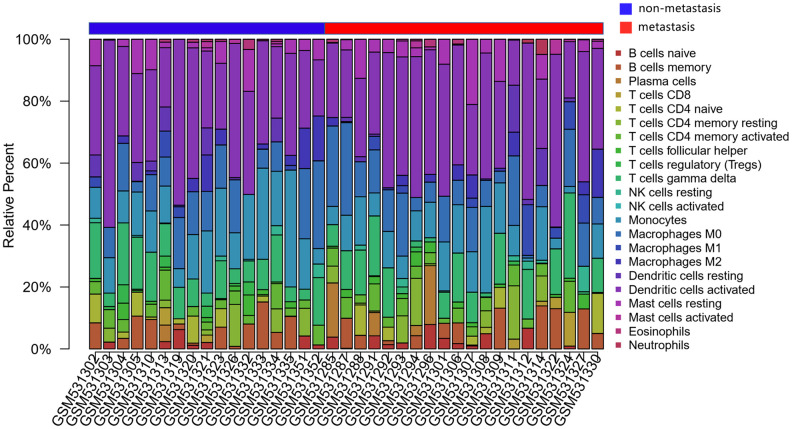
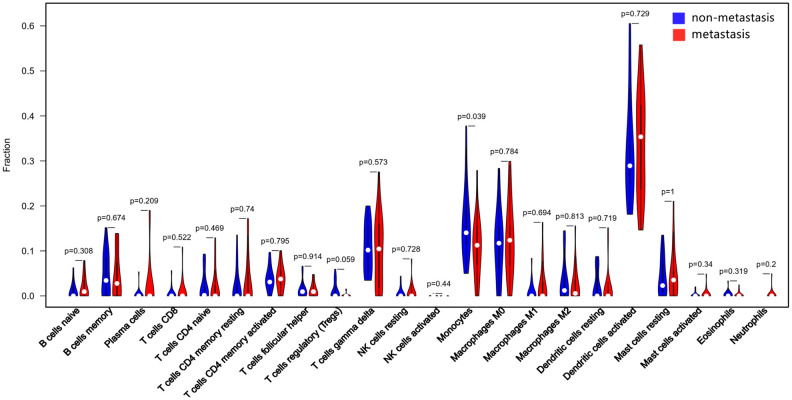
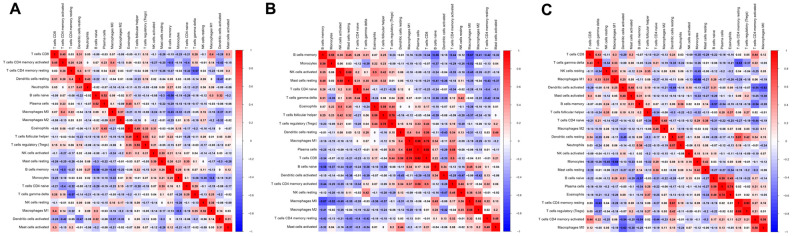
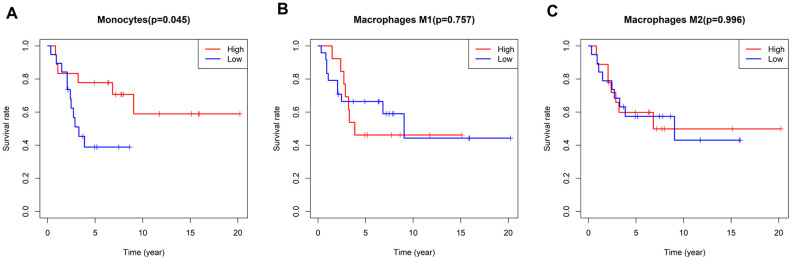
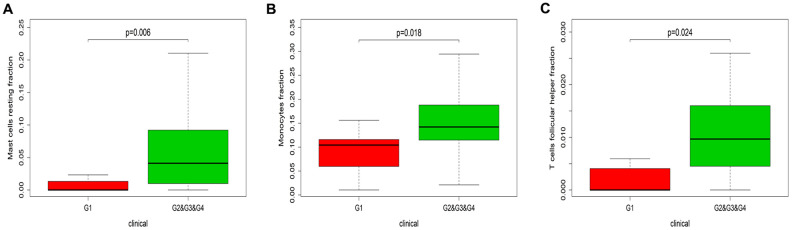
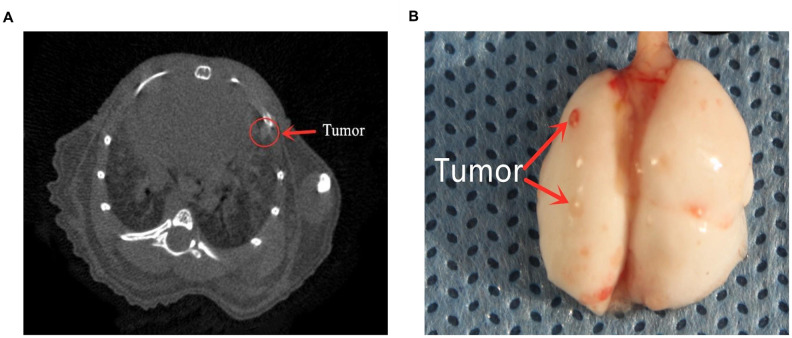
Immune infiltration is associated with osteosarcoma metastasis. However, previous studies have not accounted for the functional diversity of the cells involved in the immune response. We conducted a comprehensive comparative analysis of the tumor-infiltrating immune cells in metastatic and non-metastatic osteosarcoma tissues based on a deconvolution algorithm (CIBERSORT). Twenty-two immune cell subsets were evaluated for their association with the presence or absence of metastasis in osteosarcoma patients. A lack of monocytes was associated with osteosarcoma metastasis; however, the levels of M1 macrophages, M2 macrophages and other immune cell subsets did not differ between the metastatic and non-metastatic groups. Additionally, a higher proportion of monocytes was associated with a better prognosis in osteosarcoma patients. Animal experiments demonstrated that the number of metastatic nodules was higher in mice lacking patrolling monocytes than in control mice. Our data indicated that the cellular composition of the immune infiltrate may subtly differ among osteosarcoma patients, and that patrolling monocytes inhibit osteosarcoma metastasis to the lungs of mice. Thus, the composition of the immune infiltrate and the level of patrolling monocytes may be important determinants of whether metastasis occurs in osteosarcoma patients.
免疫浸润与骨肉瘤转移有关。然而,之前的研究并未考虑到免疫反应中涉及的细胞的功能多样性。我们基于去卷积算法(CIBERSORT)对转移性和非转移性骨肉瘤组织中的肿瘤浸润免疫细胞进行了全面的比较分析。评估了 22 种免疫细胞亚群与骨肉瘤患者是否存在转移之间的关系。单核细胞的缺乏与骨肉瘤转移有关;然而,转移性和非转移性组之间的 M1 巨噬细胞、M2 巨噬细胞和其他免疫细胞亚群的水平没有差异。此外,单核细胞比例较高与骨肉瘤患者的预后较好相关。动物实验表明,缺乏巡逻单核细胞的小鼠肺部转移结节数量高于对照组小鼠。我们的数据表明,免疫浸润的细胞组成在骨肉瘤患者之间可能存在细微差异,并且巡逻单核细胞抑制了骨肉瘤向小鼠肺部的转移。因此,免疫浸润的组成和巡逻单核细胞的水平可能是骨肉瘤患者是否发生转移的重要决定因素。