Department of Health Chemistry, Showa Pharmaceutical University, Machida 194-8543, Tokyo, Japan.
Faculty of Life and Environmental Sciences, University of Yamanashi, Kofu 400-8510, Yamanashi, Japan.
Int J Mol Sci. 2022 Apr 25;23(9):4726. doi: 10.3390/ijms23094726.
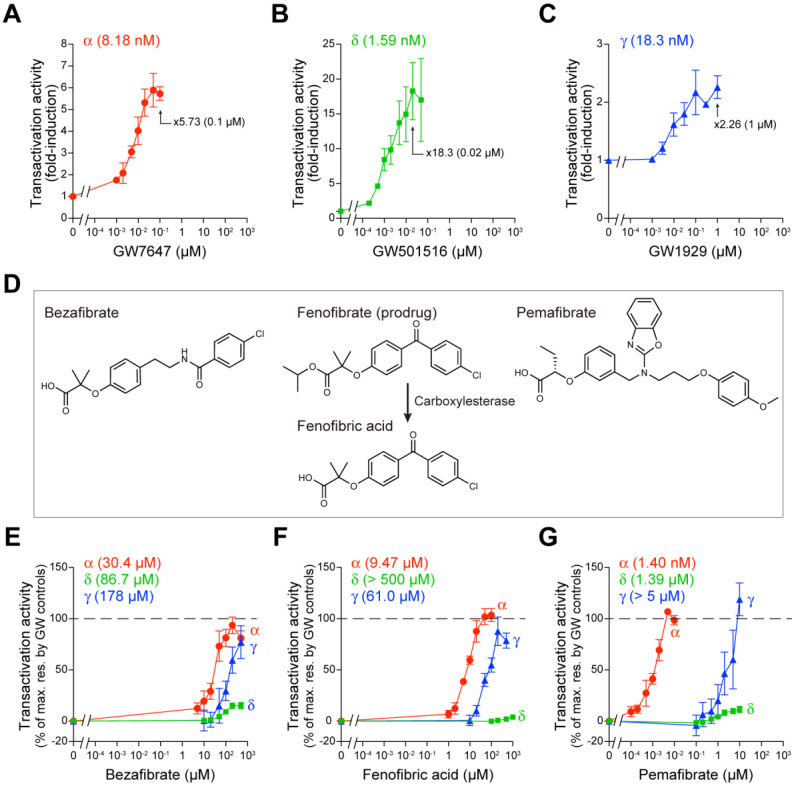
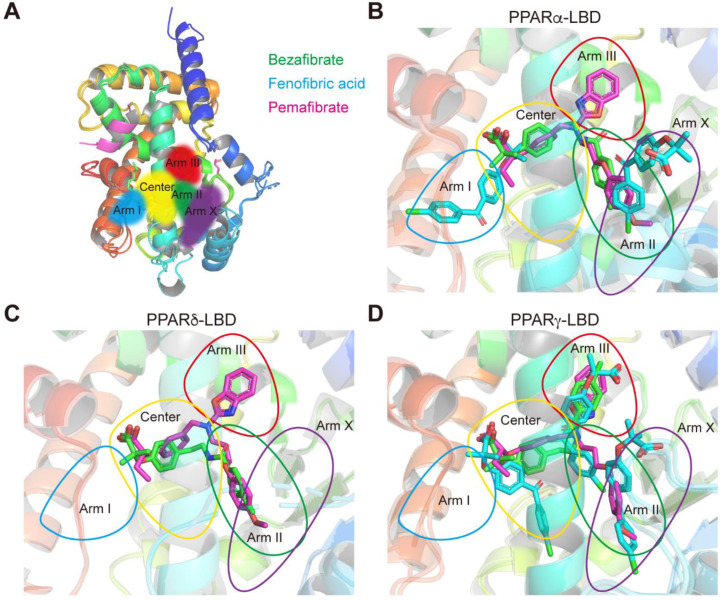
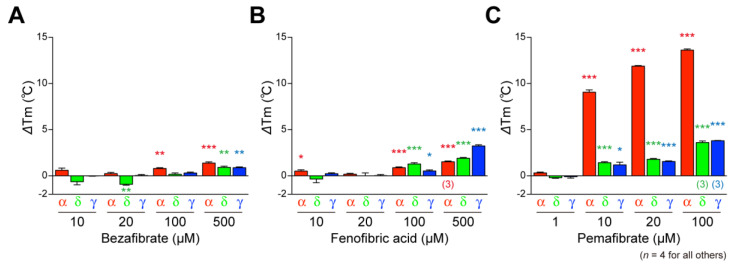
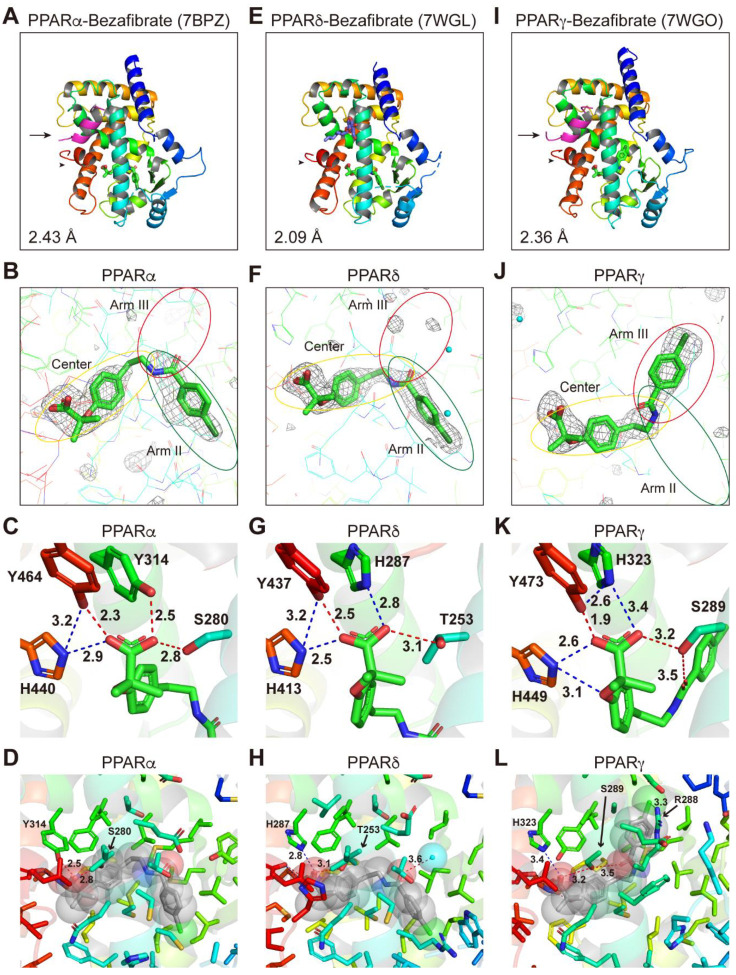
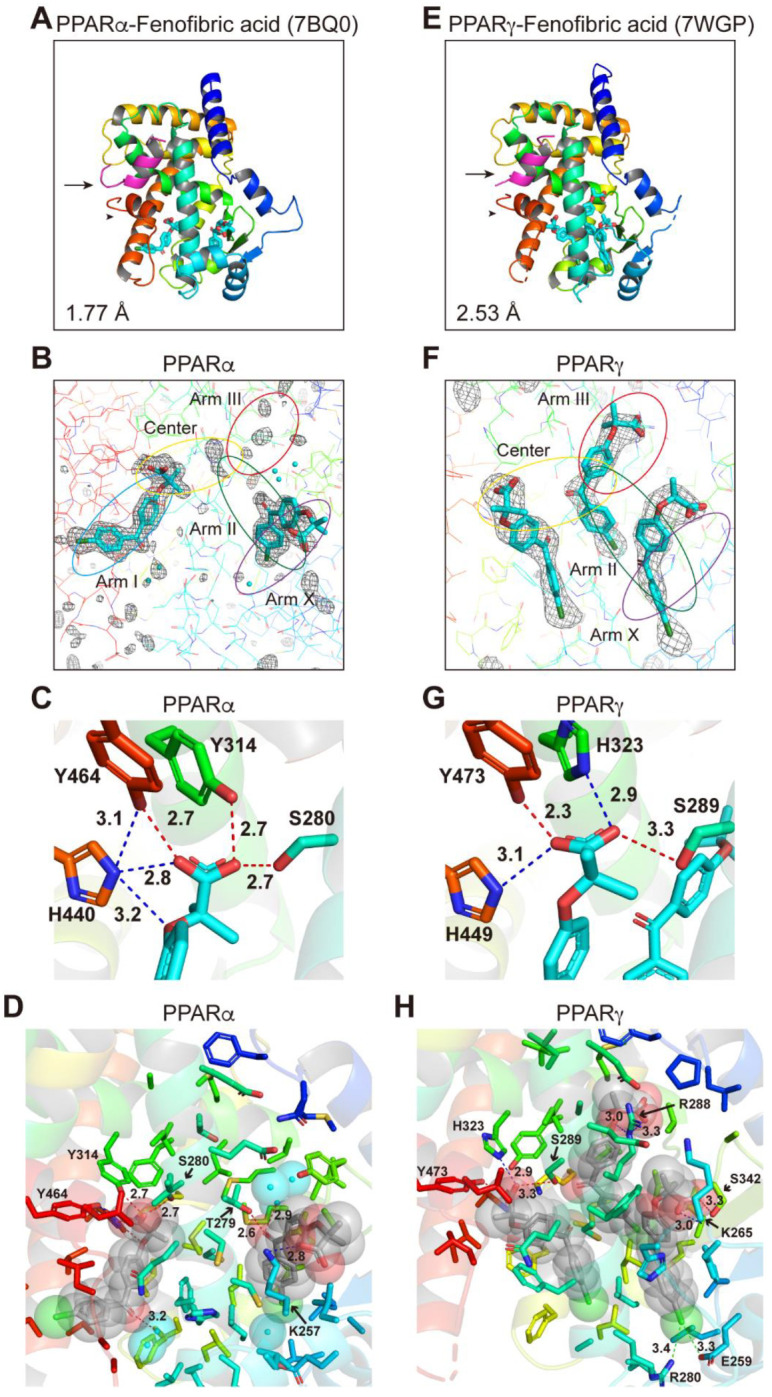
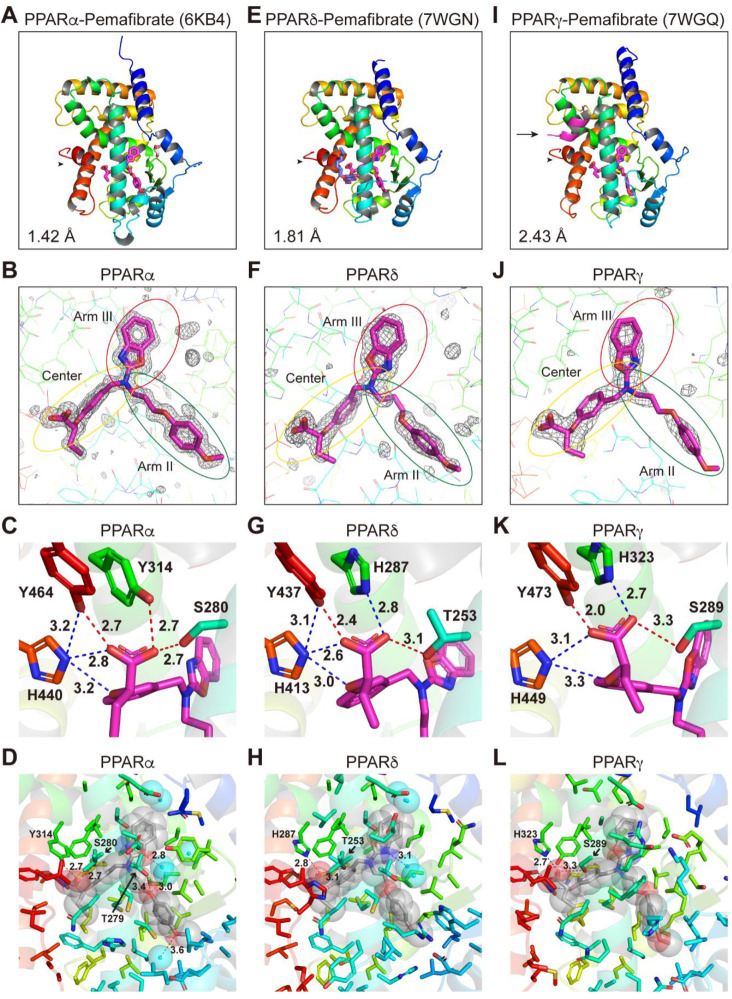
Among the agonists against three peroxisome proliferator-activated receptor (PPAR) subtypes, those against PPARα (fibrates) and PPARγ (glitazones) are currently used to treat dyslipidemia and type 2 diabetes, respectively, whereas PPARδ agonists are expected to be the next-generation metabolic disease drug. In addition, some dual/pan PPAR agonists are currently being investigated via clinical trials as one of the first curative drugs against nonalcoholic fatty liver disease (NAFLD). Because PPARα/δ/γ share considerable amino acid identity and three-dimensional structures, especially in ligand-binding domains (LBDs), clinically approved fibrates, such as bezafibrate, fenofibric acid, and pemafibrate, could also act on PPARδ/γ when used as anti-NAFLD drugs. Therefore, this study examined their PPARα/δ/γ selectivity using three independent assays-a dual luciferase-based GAL4 transactivation assay for COS-7 cells, time-resolved fluorescence resonance energy transfer-based coactivator recruitment assay, and circular dichroism spectroscopy-based thermostability assay. Although the efficacy and efficiency highly varied between agonists, assay types, and PPAR subtypes, the three fibrates, except fenofibric acid that did not affect PPARδ-mediated transactivation and coactivator recruitment, activated all PPAR subtypes in those assays. Furthermore, we aimed to obtain cocrystal structures of PPARδ/γ-LBD and the three fibrates via X-ray diffraction and versatile crystallization methods, which we recently used to obtain 34 structures of PPARα-LBD cocrystallized with 17 ligands, including the fibrates. We herein reveal five novel high-resolution structures of PPARδ/γ-bezafibrate, PPARγ-fenofibric acid, and PPARδ/γ-pemafibrate, thereby providing the molecular basis for their application beyond dyslipidemia treatment.
在三种过氧化物酶体增殖物激活受体 (PPAR) 亚型的激动剂中,针对 PPARα(贝特类)和 PPARγ(噻唑烷二酮类)的激动剂分别用于治疗血脂异常和 2 型糖尿病,而 PPARδ 激动剂有望成为下一代代谢疾病药物。此外,一些双重/泛 PPAR 激动剂目前正在临床试验中作为治疗非酒精性脂肪性肝病 (NAFLD) 的第一种有希望的治愈药物之一进行研究。由于 PPARα/δ/γ 共享相当大的氨基酸同一性和三维结构,尤其是在配体结合域 (LBD) 中,因此临床上已批准的贝特类药物,如非诺贝特、苯扎贝特和帕马溴,也可作为抗 NAFLD 药物作用于 PPARδ/γ。因此,本研究使用三种独立的测定法(基于双荧光素酶的 COS-7 细胞 GAL4 转激活测定法、基于时间分辨荧光共振能量转移的共激活因子募集测定法和基于圆二色性的热稳定性测定法)来检测它们对 PPARα/δ/γ 的选择性。尽管激动剂、测定法和 PPAR 亚型之间的疗效和效率差异很大,但除了不影响 PPARδ 介导的转激活和共激活因子募集的非诺贝特酸外,三种贝特类药物均在这些测定法中激活了所有 PPAR 亚型。此外,我们旨在通过 X 射线衍射和多功能结晶方法获得 PPARδ/γ-LBD 与三种贝特类药物的共晶结构,我们最近使用这些方法获得了 34 个 PPARα-LBD 与 17 种配体(包括贝特类药物)的共晶结构。在此,我们揭示了五个新的 PPARδ/γ-非诺贝特、PPARγ-非诺贝特酸和 PPARδ/γ-帕马溴的高分辨率结构,从而为它们在治疗血脂异常之外的应用提供了分子基础。