Dipartimento di Scienze AgroAlimentari, Ambientali e Animali, Università degli Studi di Udine, Udine, Italy.
Dipartimento di Agraria, Laboratorio di Entomologia "E. Tremblay", Università degli Studi di Napoli "Federico II", Portici, Napoli, Italy.
Nat Commun. 2020 Nov 18;11(1):5887. doi: 10.1038/s41467-020-19715-8.
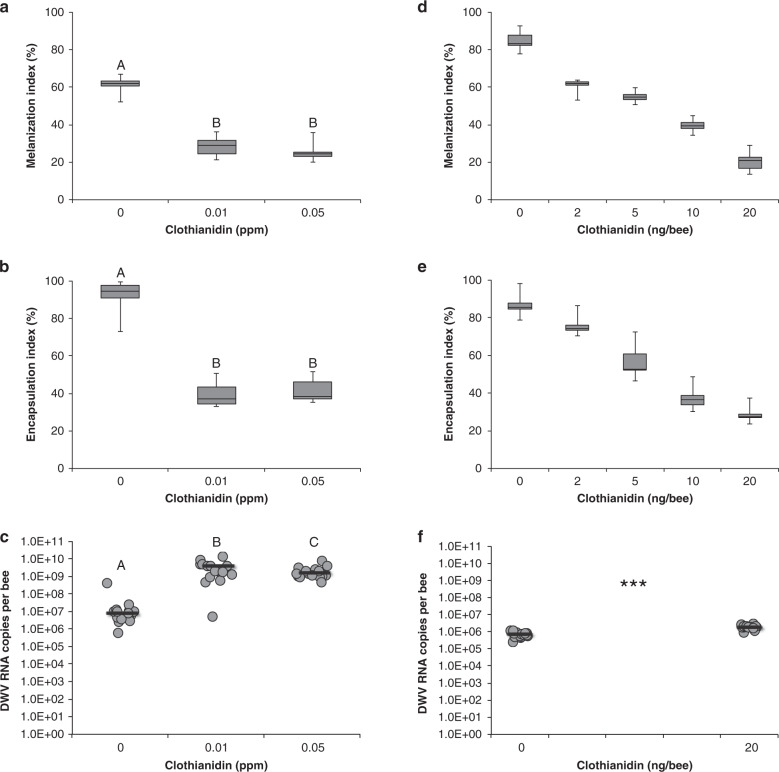
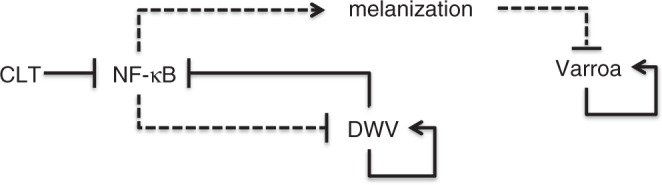
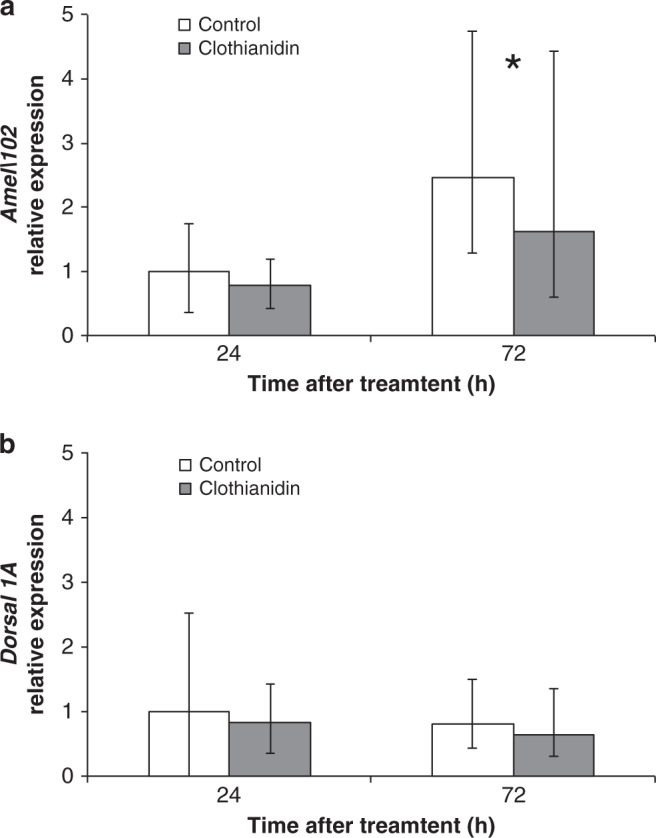
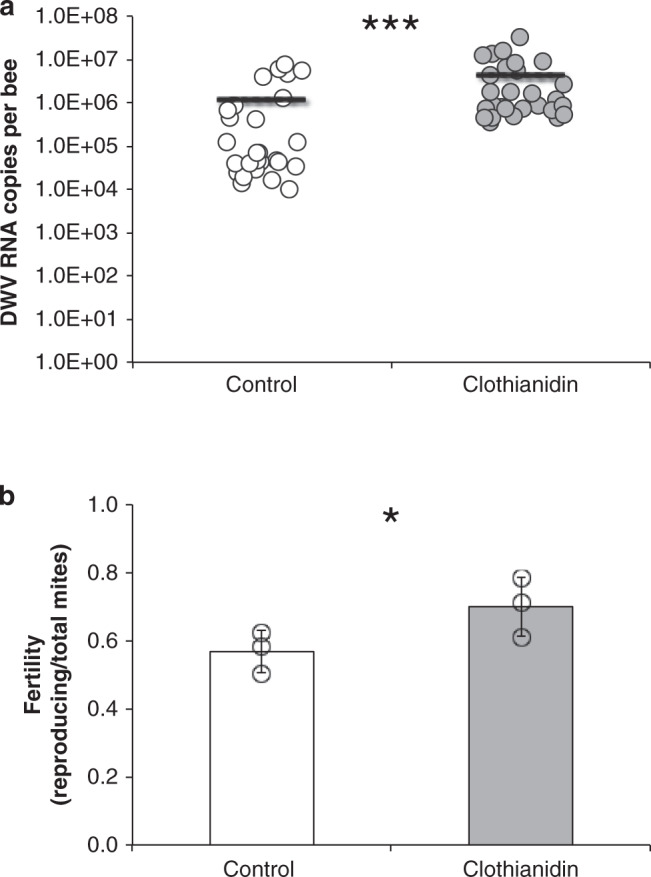
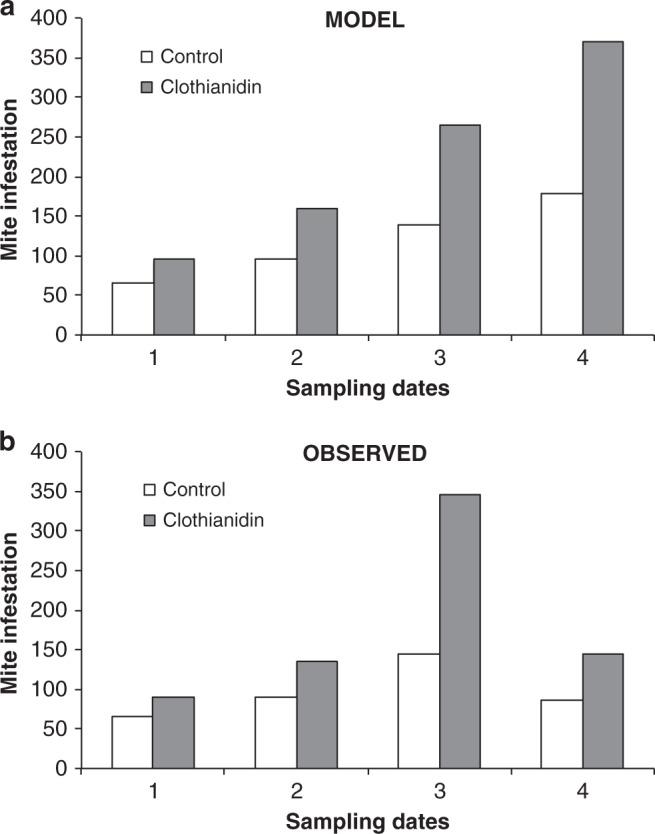
The neonicotinoid Clothianidin has a negative impact on NF-κB signaling and on immune responses controlled by this transcription factor, which can boost the proliferation of honey bee parasites and pathogens. This effect has been well documented for the replication of deformed wing virus (DWV) induced by Clothianidin in honey bees bearing an asymptomatic infection. Here, we conduct infestation experiments of treated bees to show that the immune-suppression exerted by Clothianidin is associated with an enhanced fertility of the parasitic mite Varroa destructor, as a possible consequence of a higher feeding efficiency. A conceptual model is proposed to describe the synergistic interactions among different stress agents acting on honey bees.
新烟碱类杀虫剂噻虫嗪会对 NF-κB 信号通路和受该转录因子调控的免疫反应产生负面影响,从而促进蜜蜂寄生虫和病原体的增殖。噻虫嗪诱导的变形翅膀病毒(DWV)在无症状感染的蜜蜂中复制时,这种作用已经得到了很好的证明。在这里,我们进行了受处理蜜蜂的侵扰实验,结果表明,噻虫嗪的免疫抑制作用与寄生螨瓦螨的繁殖力增强有关,这可能是由于其更高的取食效率所致。提出了一个概念模型来描述作用于蜜蜂的不同应激因子之间的协同相互作用。