Habtemikael Lidia, Russom Mulugeta, Bahta Iyassu, Mihreteab Selam, Berhane Araia, Mårtensson Andreas, Gil Jose Pedro
Department of Women's and Children's Health, International Maternal and Child Health (IMCH), Uppsala University, Uppsala, Sweden.
National Medicines and Food Administration, Ministry of Health, Asmara, Eritrea.
Pharmgenomics Pers Med. 2020 Nov 12;13:571-575. doi: 10.2147/PGPM.S276215. eCollection 2020.
In Eritrea, artesunate-amodiaquine is the first-line treatment against uncomplicated malaria. Amodiaquine, which is mainly bio-transformed by CYP2C8, is known to be associated with adverse events of different severity. Extrapyramidal events are among the less common but have been reported with non-negligible frequency in Eritrea. This study was conducted to investigate the allele frequencies of and , both associated with decreased amodiaquine metabolism, among the Eritrean population.
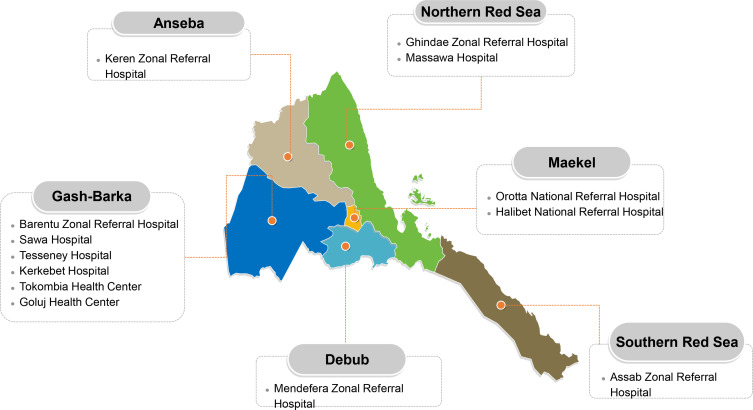
During September-November 2018, dried blood samples from 380 participants and 17 patients who previously had experienced extrapyramidal symptoms following treatment of artesunate-amodiaquine were collected and PCR-RFLP genotyped for and .
The allele frequencies of and were determined as 5.9% (95% CI: 4.4-7.8) and 4.6% (95% CI: 3.2-6.3), respectively. Four out of the 17 patients with extrapyramidal reactions showed to be carriers of the alleles.
and frequencies among Eritreans were found to be intermediate between the documented for Caucasian and African populations. These findings, along with the alleles not being decisive for the occurrence of extrapyramidal events, might be of importance regarding the amodiaquine-containing malaria treatment in Eritrea. Furthermore, it suggests a significant proportion of slow amodiaquine metabolizers in the Sahel region, information of potential interest in the context of amodiaquine-involving seasonal malaria chemoprevention.
在厄立特里亚,青蒿琥酯-阿莫地喹是治疗非复杂性疟疾的一线药物。阿莫地喹主要通过CYP2C8进行生物转化,已知与不同严重程度的不良事件有关。锥体外系事件虽不常见,但在厄立特里亚有不可忽视的报告频率。本研究旨在调查厄立特里亚人群中与阿莫地喹代谢降低相关的 和 的等位基因频率。
2018年9月至11月期间,收集了380名参与者以及17名曾在接受青蒿琥酯-阿莫地喹治疗后出现锥体外系症状的患者的干血样本,并对 和 进行PCR-RFLP基因分型。
和 的等位基因频率分别确定为5.9%(95%CI:4.4 - 7.8)和4.6%(95%CI:3.2 - 6.3)。17名有锥体外系反应的患者中有4名显示为这些等位基因的携带者。
发现厄立特里亚人群中 和 的频率介于白种人和非洲人群记录的频率之间。这些发现,连同这些等位基因对锥体外系事件的发生并非决定性因素,可能对厄立特里亚含阿莫地喹的疟疾治疗具有重要意义。此外,这表明萨赫勒地区有相当比例的阿莫地喹代谢缓慢者,这一信息在涉及阿莫地喹的季节性疟疾化学预防方面可能具有潜在意义。