Delannoy Yann, Plu Isabelle, Sec Isabelle, Delabarde Tania, Taccoen Marc, Tracqui Antoine, Ludes Bertrand
Institut Médico-Légal de Paris, Paris, France.
CHU de LILLE, Lille, France.
Forensic Sci Res. 2020 Jul 1;5(3):208-213. doi: 10.1080/20961790.2020.1771859.
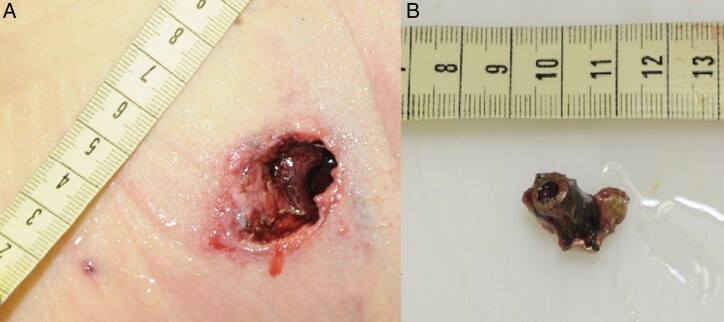
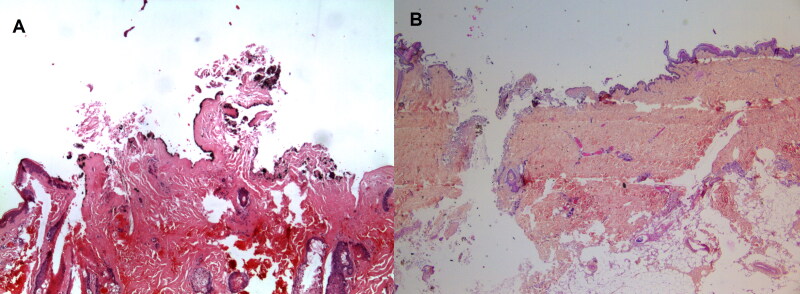
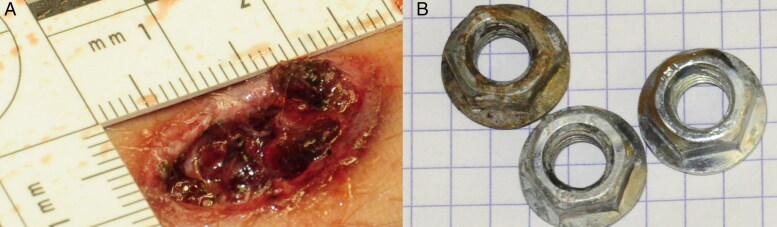
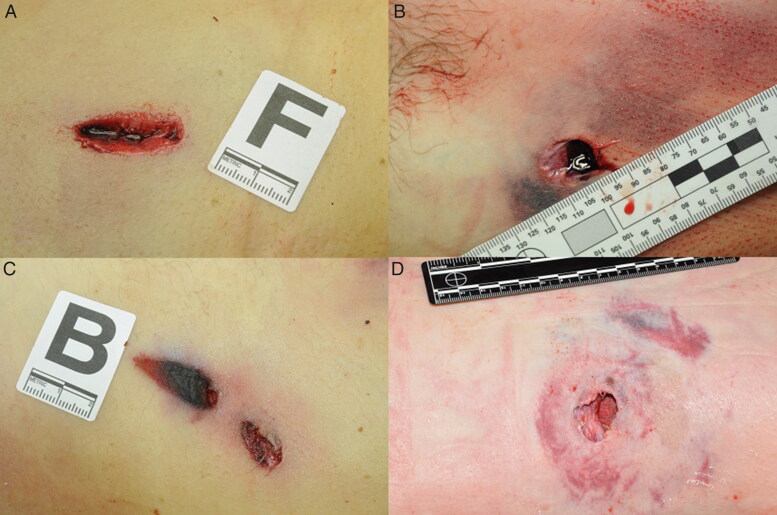
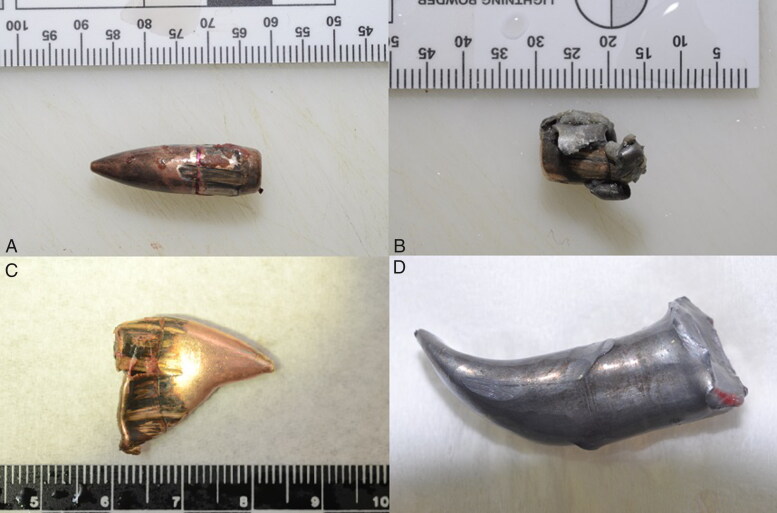
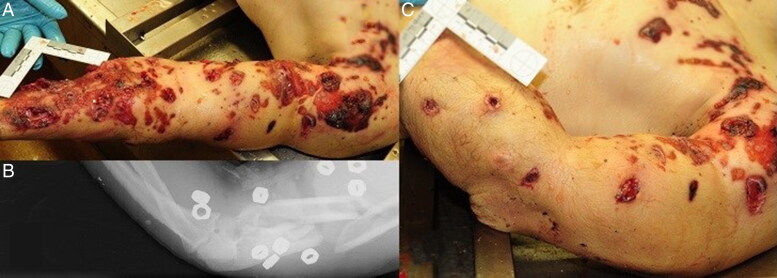
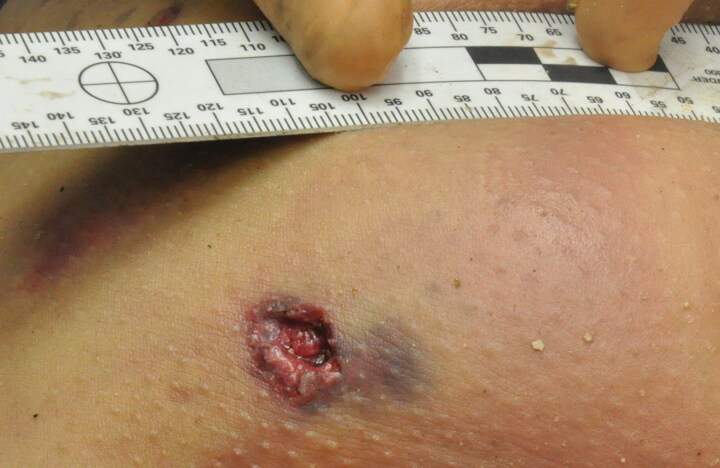
Terrorist attacks have been on the rise. During the recent terrorist attacks in France, terrorists perpetrated their acts using weapons of war, as well as explosive charges. These two modes of action, when combined, can create skin lesions with similar macroscopic appearances, which can sometimes go unnoticed because of body fragmentation. A total of 68 autopsies, 83 external examinations, 140 standard radiographic examinations, and 49 computed tomography (CT) scans were performed over 7 days during the 2015 terrorist attacks in France. Bodies were injured by firearms and shrapnel-like projectiles. We analysed the clinical findings for the secondary blast cutaneous lesions from the explosive devices and compared these lesions with ballistic-related lesions to highlight that patterns can be macroscopically similar on external examination. Secondary blast injuries are characterised by penetrating trauma associated with materials added to explosive systems that are propelled by explosive air movement. These injuries are caused most often by small, shrapnel-like metallic objects, such as nails and bolts. Propulsion causes ballistic-type injuries that must be recognised and distinguished from those caused by firearm projectiles. Differentiating between these lesions is very difficult when using conventional criteria (size, shape, number and distribution on the body) with only external examination of corpses. This is why the particularities of these lesions must be further illustrated and then confirmed by complete autopsies and radiological and anatomopathological examinations.Key pointsWhen occurring simultaneously in terrorist attacks, injuries caused by secondary blasts appear as cutaneous wound patterns that can be macroscopically very similar to those caused by firearm projectiles.The criteria usually found in the literature for distinguishing these two types of projectiles may be difficult to use.It is important in these difficult situations to benefit from systematic postmortem imaging.Systematic autopsy and then anatomopathological analyses of the orifices also help determine the cause of the wounds.
恐怖袭击事件呈上升趋势。在法国近期发生的恐怖袭击中,恐怖分子使用战争武器以及炸药实施犯罪行为。这两种作案方式相结合时,会造成外观上相似的皮肤损伤,有时由于尸体残缺不全,这些损伤可能未被注意到。在2015年法国恐怖袭击事件的7天时间里,共进行了68次尸体解剖、83次外部检查、140次标准X线检查以及49次计算机断层扫描(CT)。尸体受到枪支和弹片样投射物的伤害。我们分析了爆炸装置造成的继发性爆炸皮肤损伤的临床发现,并将这些损伤与弹道相关损伤进行比较,以强调在外部检查中这些损伤模式在宏观上可能相似。继发性爆炸伤的特征是与添加到爆炸系统中的物质相关的穿透性创伤,这些物质由爆炸气流推动。这些损伤最常由小的、弹片样金属物体,如钉子和螺栓造成。推进导致弹道型损伤,必须识别并将其与枪支投射物造成的损伤区分开来。仅通过对尸体进行外部检查,使用传统标准(大小、形状、数量和身体分布)来区分这些损伤非常困难。这就是为什么必须进一步说明这些损伤的特殊性,然后通过完整的尸体解剖、放射学和解剖病理学检查加以证实。要点在恐怖袭击中同时发生时,继发性爆炸造成的损伤表现为皮肤伤口模式,在宏观上可能与枪支投射物造成的伤口非常相似。文献中通常用于区分这两种投射物的标准可能难以应用。在这些困难情况下,受益于系统的死后成像非常重要。系统的尸体解剖以及随后对孔口的解剖病理学分析也有助于确定伤口的原因。