De Lucia Maria, Cotugno Gabriella, Bignone Veronica, Garzia Irene, Nocchi Linda, Langone Francesca, Petrovic Biljana, Sasso Emanuele, Pepe Simona, Froechlich Guendalina, Gentile Chiara, Zambrano Nicola, Campadelli-Fiume Gabriella, Nicosia Alfredo, Scarselli Elisa, D'Alise Anna Morena
Nouscom S.r.l., Via Castel Romano 100, 00128 Rome, Italy.
Department of Experimental, Diagnostic and Specialty Medicine, University of Bologna, 40126 Bologna, Italy.
Mol Ther Oncolytics. 2020 Oct 14;19:253-264. doi: 10.1016/j.omto.2020.10.006. eCollection 2020 Dec 16.
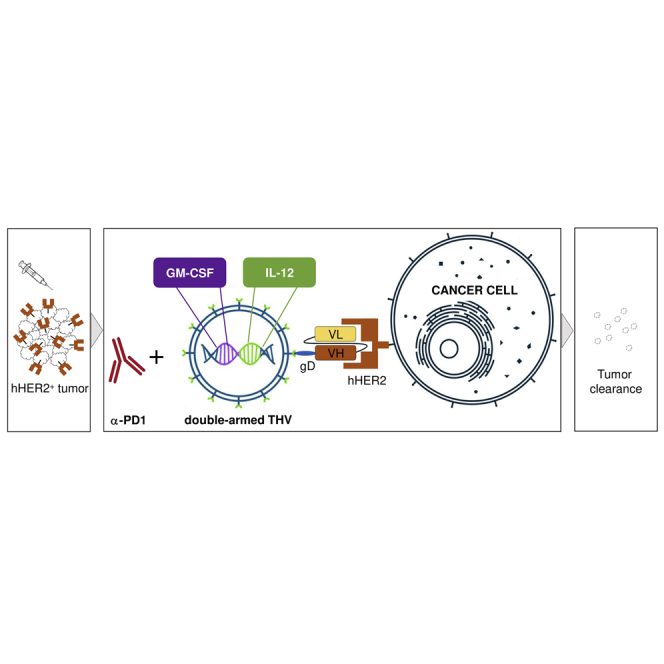
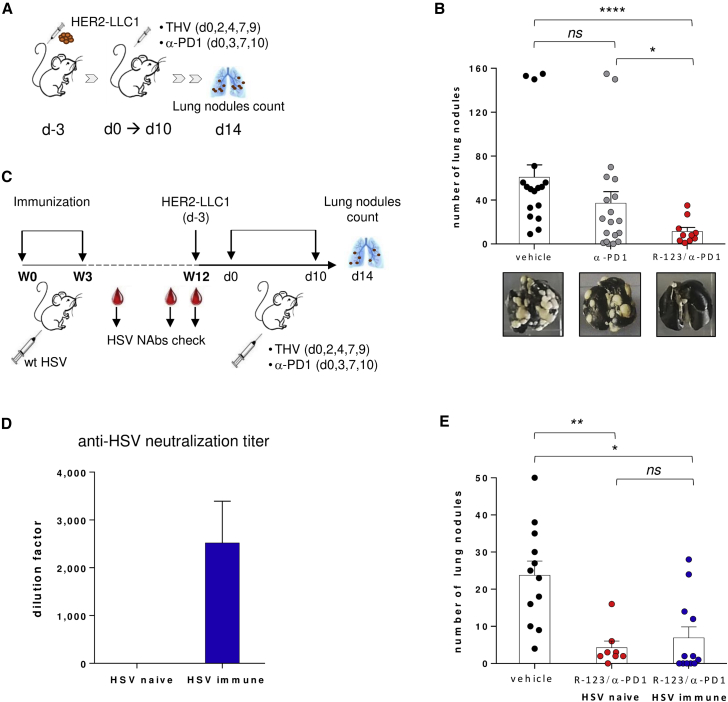
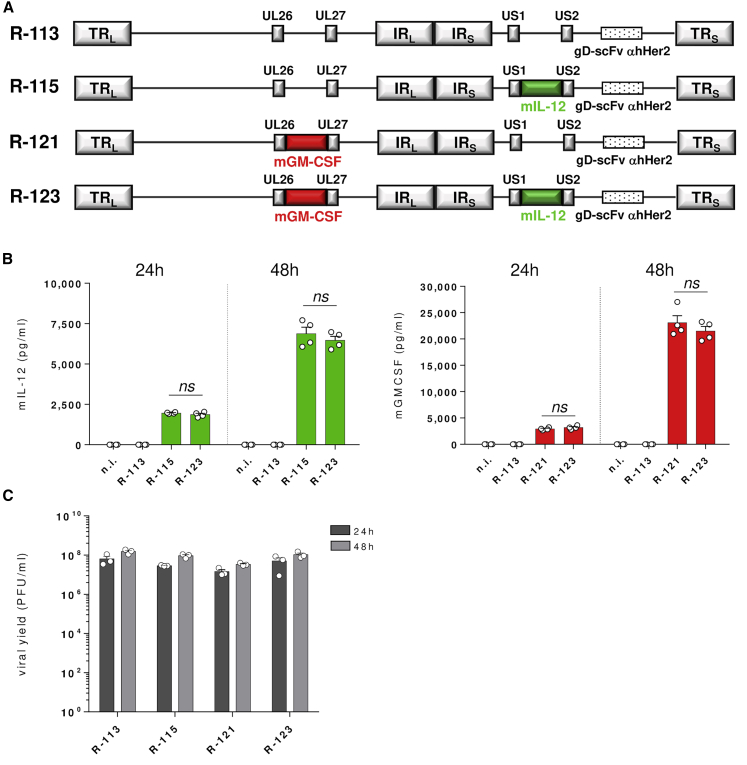
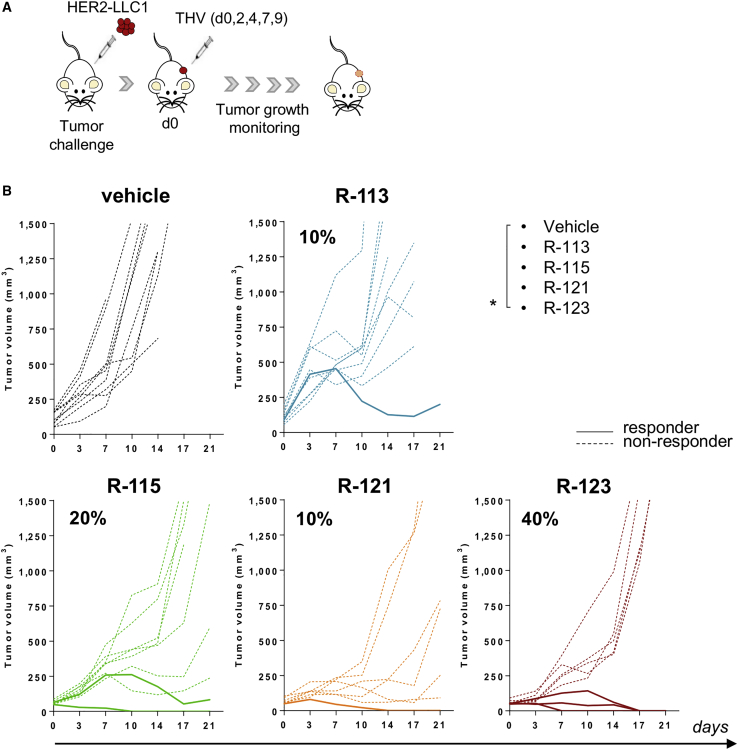
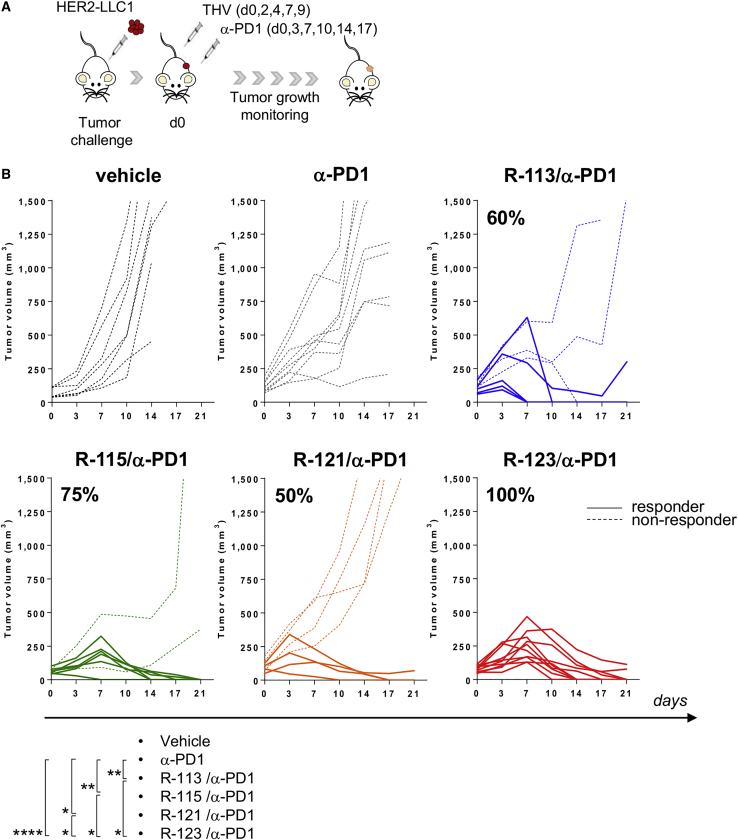
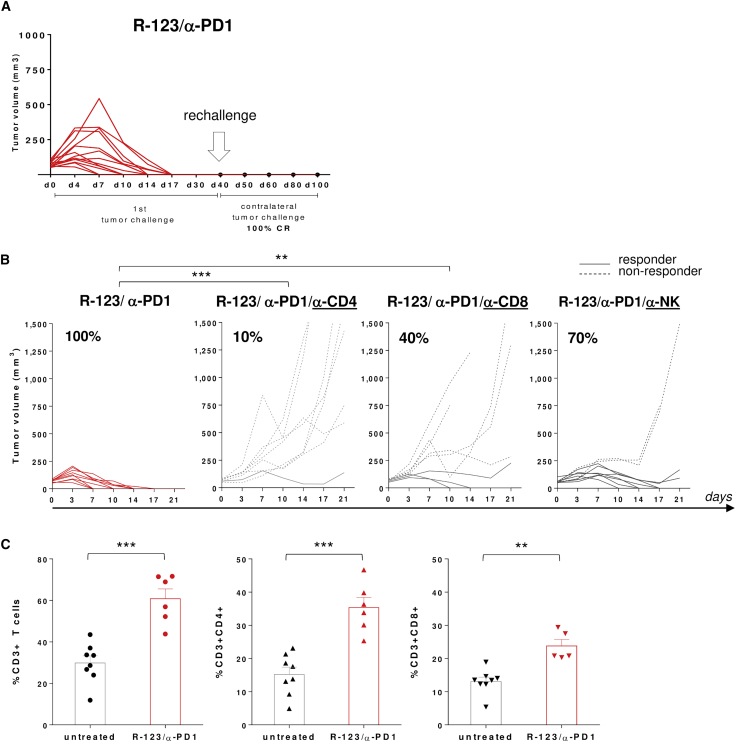
Oncolytic viruses (OVs) are novel anti-tumor agents with the ability to selectively infect and kill tumor cells while sparing normal tissue. Beyond tumor cytolysis, OVs are capable of priming an anti-tumor immune response via lysis and cross-presentation of locally expressed endogenous tumor antigens, acting as an "endovaccine." The effectiveness of OVs, similar to other immunotherapies, can be hampered by an immunosuppressive tumor microenvironment. In this study, we modified a previously generated oncolytic herpes simplex virus (oHSV) retargeted to the human HER2 (hHER2) tumor molecule and encoding murine interleukin-12 (mIL-12), by insertion of a second immunomodulatory molecule, murine granulocyte-macrophage colony-stimulating factor (mGM-CSF), to maximize therapeutic efficacy. We assessed the efficacy of this double-armed virus (R-123) compared to singly expressing GM-CSF and IL-12 oHSVs in tumor-bearing mice. While monotherapies were poorly effective, combination with α-PD1 enhanced the anti-tumor response, with the highest efficacy of 100% response rate achieved by the combination of R-123 and α-PD1. Efficacy was T cell-dependent, and the induced immunity was long lasting and able to reject a second contralateral tumor. Importantly, systemic delivery of R-123 combined with α-PD1 was effective in inhibiting the development of tumor metastasis. As such, this approach could have a significant therapeutic impact paving the way for further development of this platform in cancer immunotherapy.
溶瘤病毒(OVs)是新型抗肿瘤药物,能够选择性地感染并杀死肿瘤细胞,同时不损伤正常组织。除肿瘤细胞溶解作用外,溶瘤病毒还能够通过对局部表达的内源性肿瘤抗原进行溶解和交叉呈递来启动抗肿瘤免疫反应,起到“内源性疫苗”的作用。与其他免疫疗法类似,溶瘤病毒的有效性可能会受到免疫抑制性肿瘤微环境的阻碍。在本研究中,我们通过插入第二种免疫调节分子——小鼠粒细胞-巨噬细胞集落刺激因子(mGM-CSF),对先前构建的靶向人HER2(hHER2)肿瘤分子并编码小鼠白细胞介素-12(mIL-12)的溶瘤单纯疱疹病毒(oHSV)进行了改造,以最大化治疗效果。我们评估了这种双臂病毒(R-123)与单独表达GM-CSF和IL-12的oHSV在荷瘤小鼠中的疗效。虽然单一疗法效果不佳,但与α-PD1联合使用可增强抗肿瘤反应,R-123与α-PD1联合使用时达到了最高100%的反应率。疗效依赖于T细胞,诱导的免疫反应持久,能够排斥对侧的第二个肿瘤。重要的是,R-123与α-PD1的全身给药有效抑制了肿瘤转移的发生。因此,这种方法可能具有重大的治疗意义,为该平台在癌症免疫治疗中的进一步发展铺平了道路。