Department of Molecular and Cellular Medicine, Texas A&M University Health Science Center, 469 Joe H. Reynolds Medical Sciences Building, 1114 TAMU, College Station, TX 77843, USA.
Department of Neurology and Neurotherapeutics, University of Texas Southwestern Medical Center, 5323 Harry Hines Boulevard, Dallas, TX 75390, USA.
Mol Ther. 2021 Mar 3;29(3):1312-1323. doi: 10.1016/j.ymthe.2020.11.017. Epub 2020 Nov 17.
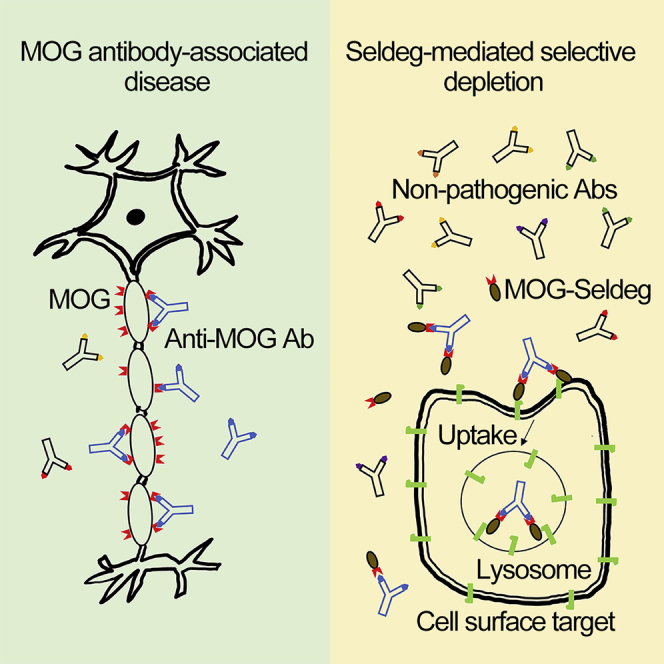
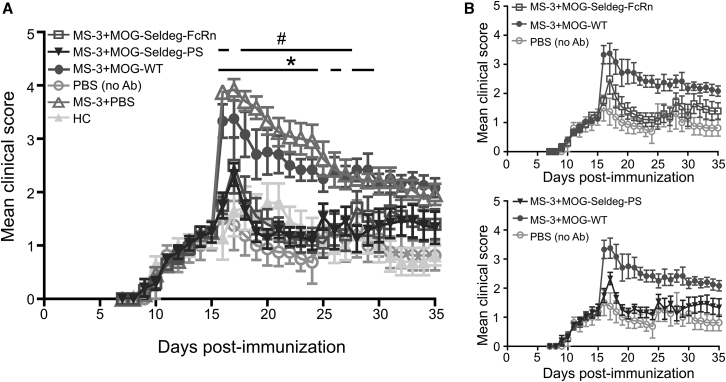
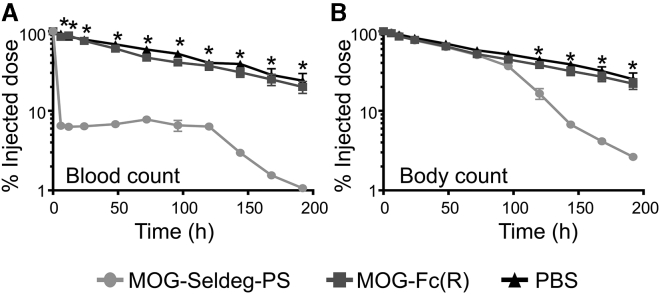
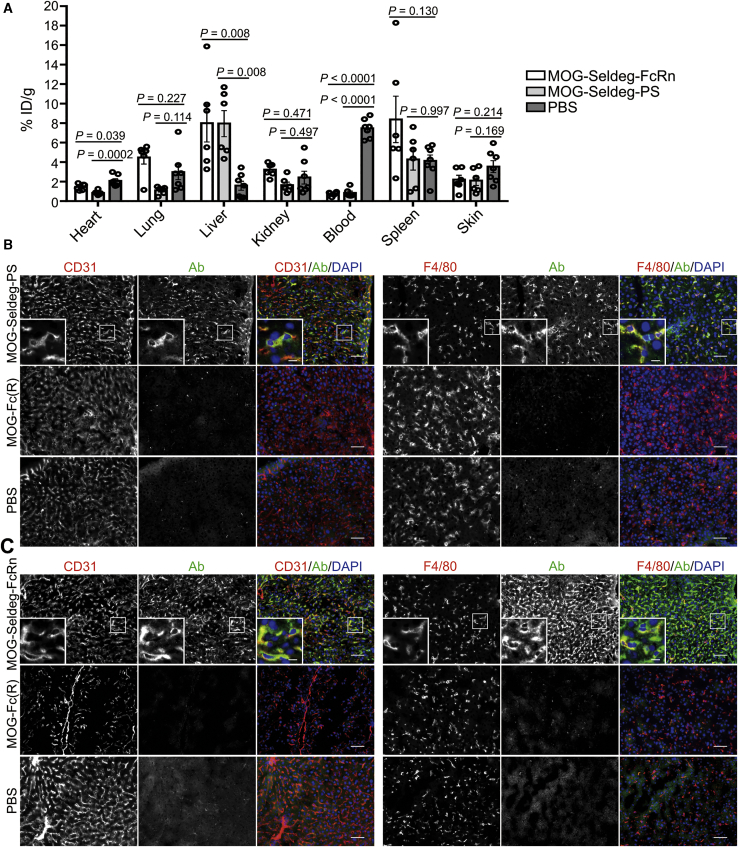
Current treatments for antibody-mediated autoimmunity are associated with lack of specificity, leading to immunosuppressive effects. To overcome this limitation, we have developed a class of antibody-based therapeutics for the treatment of autoimmunity involving antibodies that recognize the autoantigen, myelin oligodendrocyte glycoprotein (MOG). These agents ("Seldegs," for selective degradation) selectively eliminate antigen (MOG)-specific antibodies without affecting the levels of antibodies of other specificities. Seldeg treatment of mice during antibody-mediated exacerbation of experimental autoimmune encephalomyelitis by patient-derived MOG-specific antibodies results in disease amelioration. Consistent with their therapeutic effects, Seldegs deliver their targeted antibodies to Kupffer and liver sinusoidal endothelial cells that are known to have tolerogenic effects. Our results show that Seldegs can ameliorate disease mediated by MOG-specific antibodies and indicate that this approach also has the potential to treat other autoimmune diseases where the specific clearance of antibodies is required.
目前针对抗体介导的自身免疫的治疗方法存在缺乏特异性的问题,导致免疫抑制作用。为了克服这一局限性,我们开发了一类基于抗体的治疗自身免疫的方法,涉及识别自身抗原髓鞘少突胶质细胞糖蛋白(MOG)的抗体。这些药物(选择性降解的“Seldegs”)可选择性地消除抗原(MOG)特异性抗体,而不影响其他特异性抗体的水平。在实验性自身免疫性脑脊髓炎中,用患者来源的 MOG 特异性抗体介导的抗体介导的加剧期间,用 Seldeg 治疗小鼠会导致疾病改善。与它们的治疗效果一致,Seldegs 将其靶向抗体递送至已知具有耐受作用的库普弗细胞和肝窦内皮细胞。我们的结果表明 Seldegs 可以改善 MOG 特异性抗体介导的疾病,并表明这种方法也有可能治疗其他需要特异性清除抗体的自身免疫性疾病。