Chen Xi, Cubillos-Ruiz Juan R
Department of Molecular and Cellular Biology, Baylor College of Medicine, Houston, TX, USA.
Lester and Sue Smith Breast Center, Baylor College of Medicine, Houston, TX, USA.
Nat Rev Cancer. 2021 Feb;21(2):71-88. doi: 10.1038/s41568-020-00312-2. Epub 2020 Nov 19.
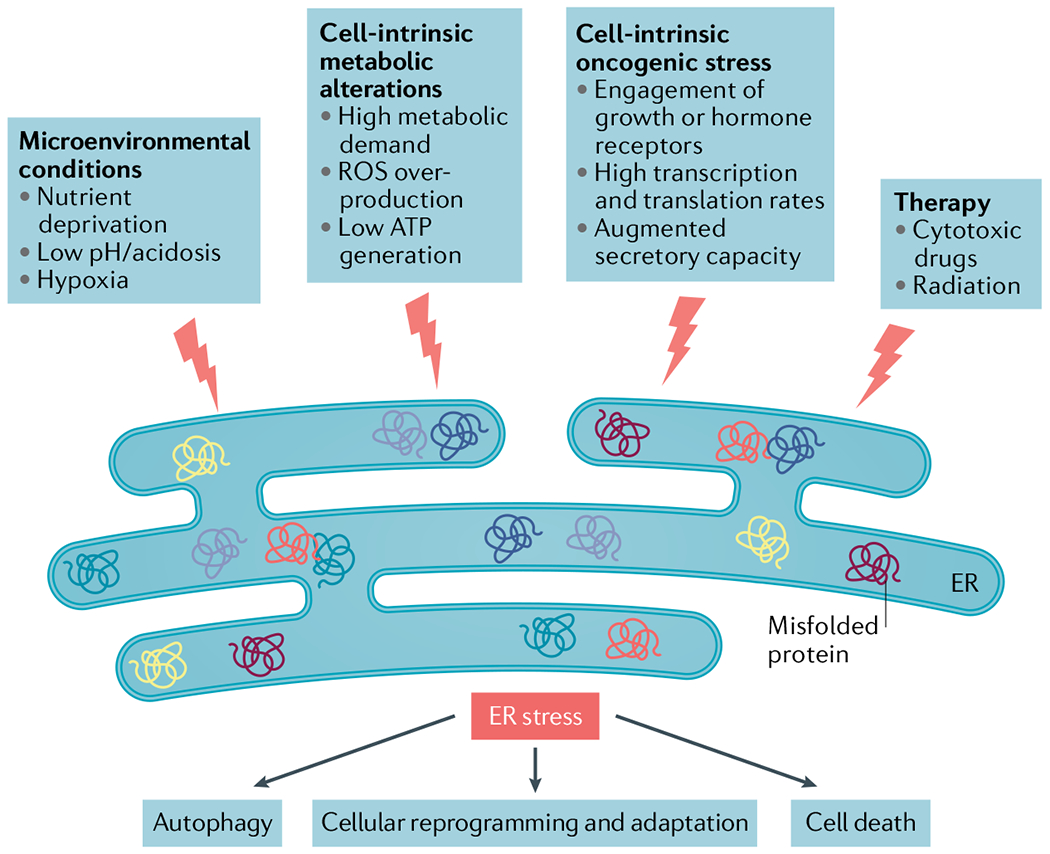
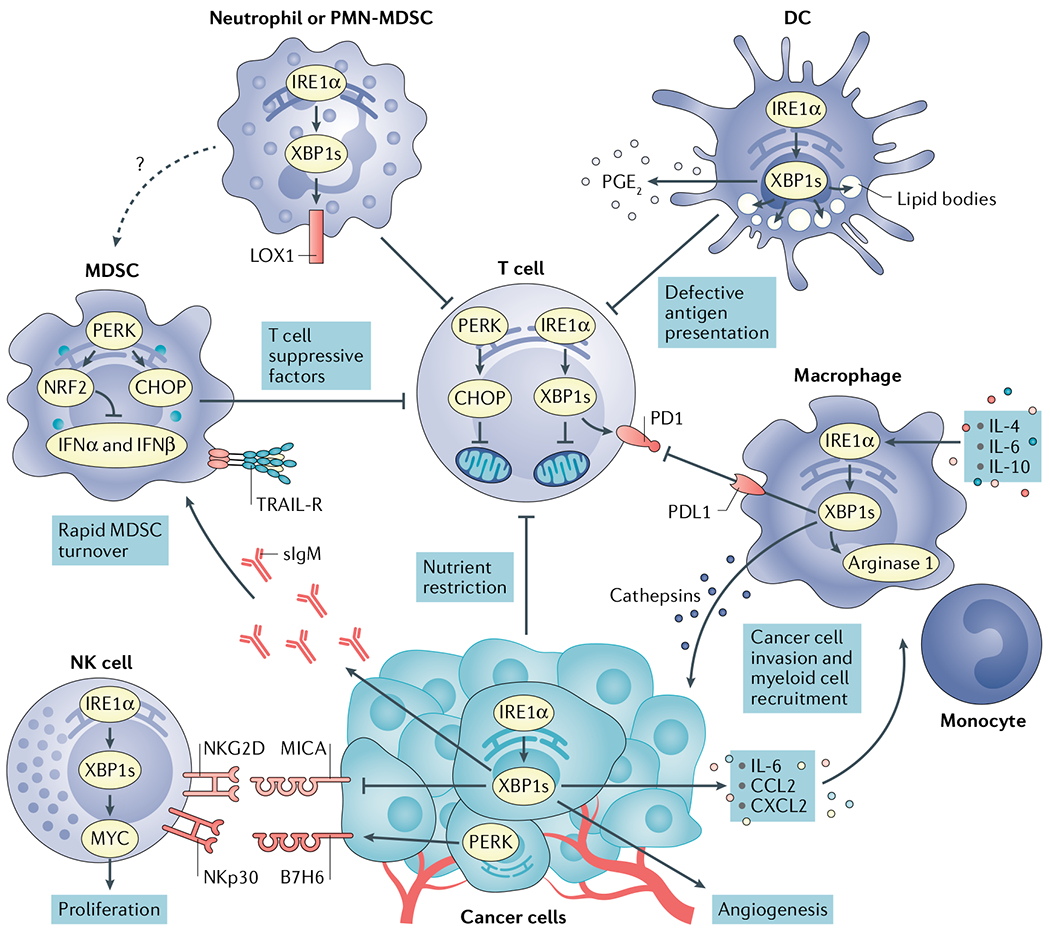
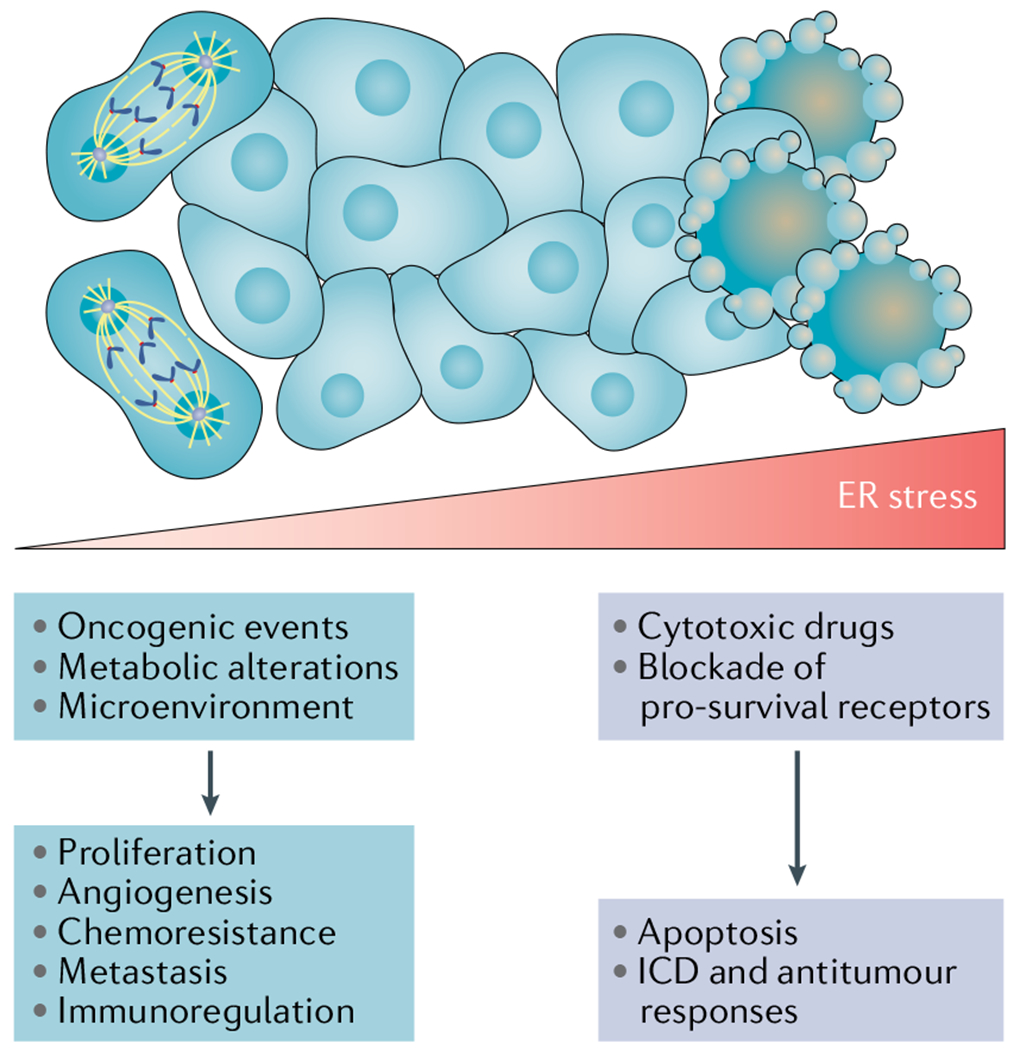
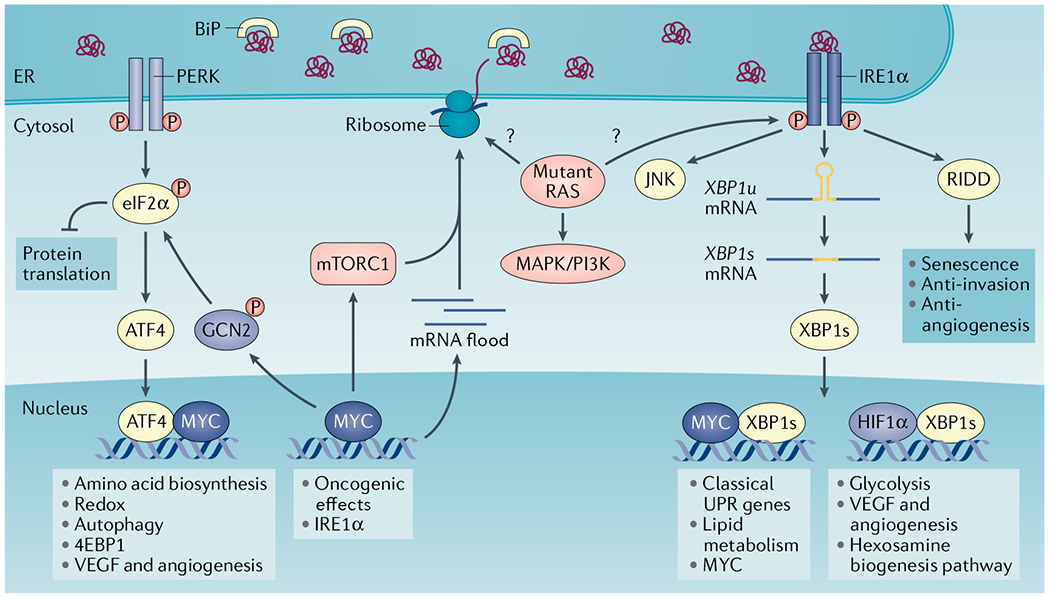
Protein handling, modification and folding in the endoplasmic reticulum (ER) are tightly regulated processes that determine cell function, fate and survival. In several tumour types, diverse oncogenic, transcriptional and metabolic abnormalities cooperate to generate hostile microenvironments that disrupt ER homeostasis in malignant and stromal cells, as well as infiltrating leukocytes. These changes provoke a state of persistent ER stress that has been demonstrated to govern multiple pro-tumoural attributes in the cancer cell while dynamically reprogramming the function of innate and adaptive immune cells. Aberrant activation of ER stress sensors and their downstream signalling pathways have therefore emerged as key regulators of tumour growth and metastasis as well as response to chemotherapy, targeted therapies and immunotherapy. In this Review, we discuss the physiological inducers of ER stress in the tumour milieu, the interplay between oncogenic signalling and ER stress response pathways in the cancer cell and the profound immunomodulatory effects of sustained ER stress responses in tumours.
内质网(ER)中的蛋白质处理、修饰和折叠是严格调控的过程,这些过程决定了细胞的功能、命运和存活。在几种肿瘤类型中,多种致癌、转录和代谢异常相互协作,产生恶劣的微环境,破坏恶性细胞、基质细胞以及浸润白细胞中的内质网稳态。这些变化引发了持续的内质网应激状态,已证明这种状态在癌细胞中控制多种促肿瘤特性,同时动态地重新编程先天免疫细胞和适应性免疫细胞的功能。因此,内质网应激传感器及其下游信号通路的异常激活已成为肿瘤生长、转移以及对化疗、靶向治疗和免疫治疗反应的关键调节因子。在本综述中,我们讨论了肿瘤微环境中内质网应激的生理诱导因素、癌细胞中致癌信号与内质网应激反应途径之间的相互作用,以及肿瘤中持续内质网应激反应的深远免疫调节作用。