Department of Industrial Engineering, Urmia University of Technology (UUT), P.O. Box 57166-419, Urmia, Iran.
Department of Mechanical Engineering, Urmia University of Technology (UUT), P.O. Box 57166-419, Urmia, Iran.
Environ Sci Pollut Res Int. 2021 Mar;28(12):14521-14529. doi: 10.1007/s11356-020-11644-9. Epub 2020 Nov 19.
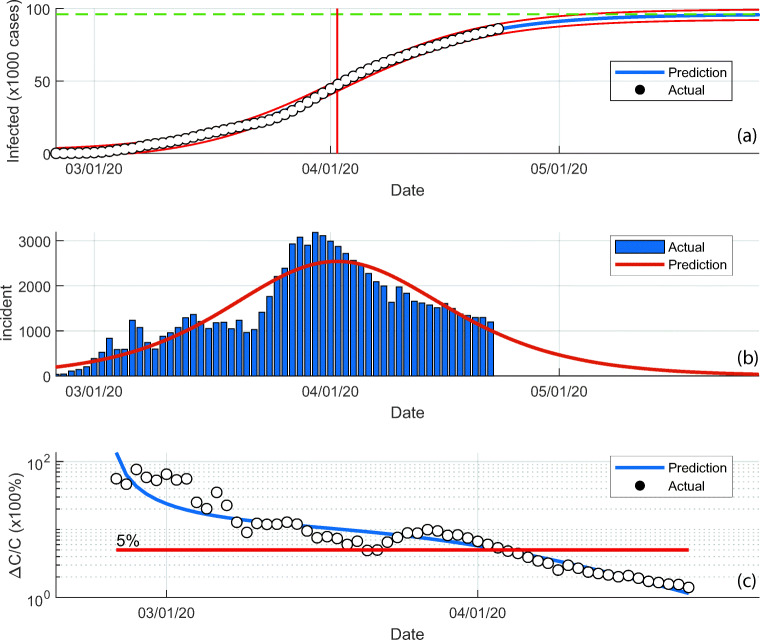
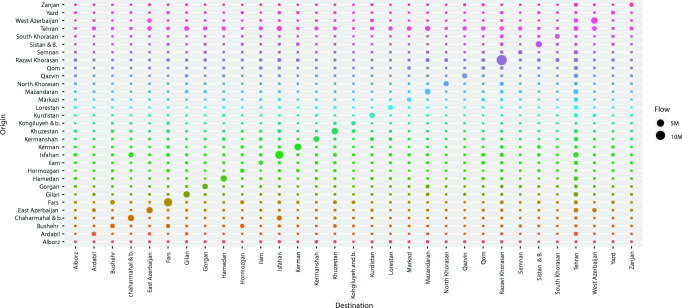
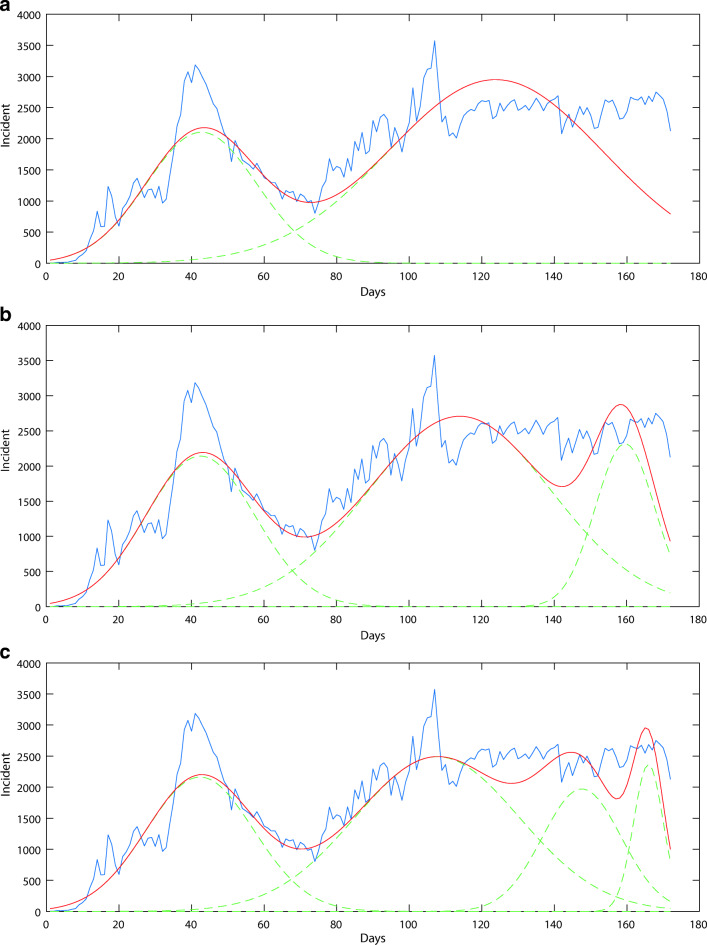
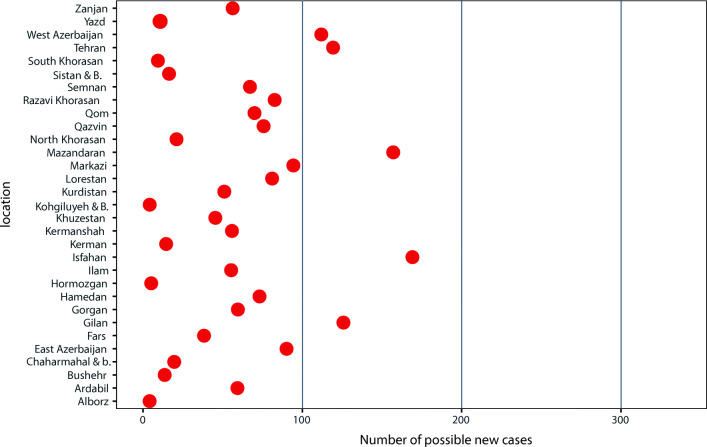
The COVID-19 pandemic is one of the contagious diseases involving all the world in 2019-2020. Also, all people are concerned about the future of this catastrophe and how the continuous outbreak can be prevented. Some countries are not successful in controlling the outbreak; therefore, the incidence is observed in several peaks. In this paper, firstly single-peak SIR models are used for historical data. Regarding the SIR model, the termination time of the outbreak should have been in early June 2020. However, several peaks invalidate the results of single-peak models. Therefore, we should present a model to support pandemics with several extrema. In this paper, we presented the generalized logistic growth model (GLM) to estimate sub-epidemic waves of the COVID-19 outbreak in Iran. Therefore, the presented model simulated scenarios of two, three, and four waves in the observed incidence. In the second part of the paper, we assessed travel-related risk in inter-provincial travels in Iran. Moreover, the results of travel-related risk show that typical travel between Tehran and other sites exposed Isfahan, Gilan, Mazandaran, and West Azerbaijan in the higher risk of infection greater than 100 people per day. Therefore, controlling this movement can prevent great numbers of infection, remarkably.
2019-2020 年期间,COVID-19 大流行是一种涉及全球所有国家的传染病。此外,所有人都在关注这场灾难的未来以及如何防止疫情持续爆发。一些国家在控制疫情方面并不成功;因此,发病率在几个高峰期观察到。在本文中,首先使用单峰 SIR 模型对历史数据进行了分析。关于 SIR 模型,疫情的结束时间应该在 2020 年 6 月初。然而,几个高峰期使单峰模型的结果无效。因此,我们应该提出一个支持具有多个极值的大流行的模型。在本文中,我们提出了广义 logistic 增长模型(GLM)来估计伊朗 COVID-19 疫情的次流行波。因此,所提出的模型模拟了观察到的发病率中的两个、三个和四个波的情况。在本文的第二部分,我们评估了伊朗省际旅行中的旅行相关风险。此外,旅行相关风险的结果表明,德黑兰和其他地区之间的典型旅行使伊斯法罕、吉兰、马赞达兰和东阿塞拜疆地区的感染风险更高,每天超过 100 人。因此,控制这种流动可以显著防止大量感染。