Xie Ying, Meng Wei-Yu, Li Run-Ze, Wang Yu-Wei, Qian Xin, Chan Chang, Yu Zhi-Fang, Fan Xing-Xing, Pan Hu-Dan, Xie Chun, Wu Qi-Biao, Yan Pei-Yu, Liu Liang, Tang Yi-Jun, Yao Xiao-Jun, Wang Mei-Fang, Leung Elaine Lai-Han
State Key Laboratory of Quality Research in Chinese Medicine/Macau Institute for Applied Research in Medicine and Health, Macau University of Science and Technology, Macau (SAR), China.
Respiratory Medicine department of Taihe Hospital, Hubei University of Medicine, Hubei, China.
Transl Oncol. 2021 Jan;14(1):100907. doi: 10.1016/j.tranon.2020.100907. Epub 2020 Nov 17.
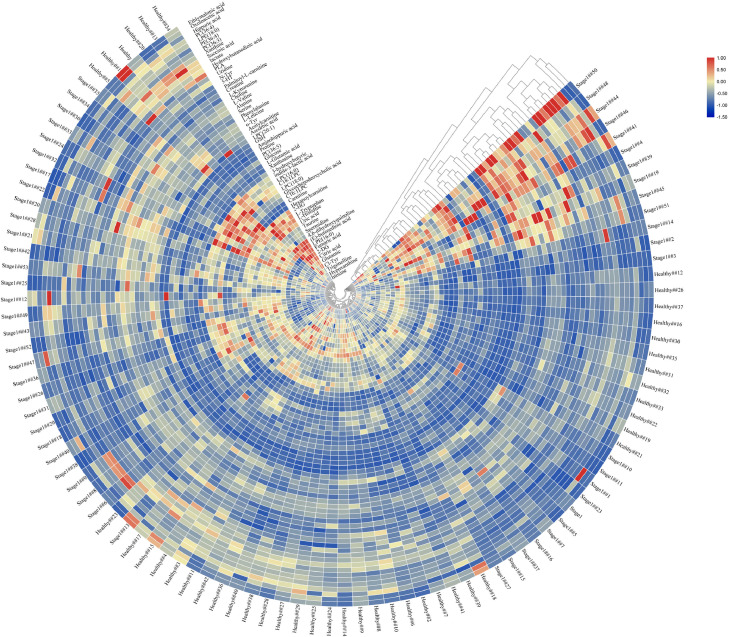
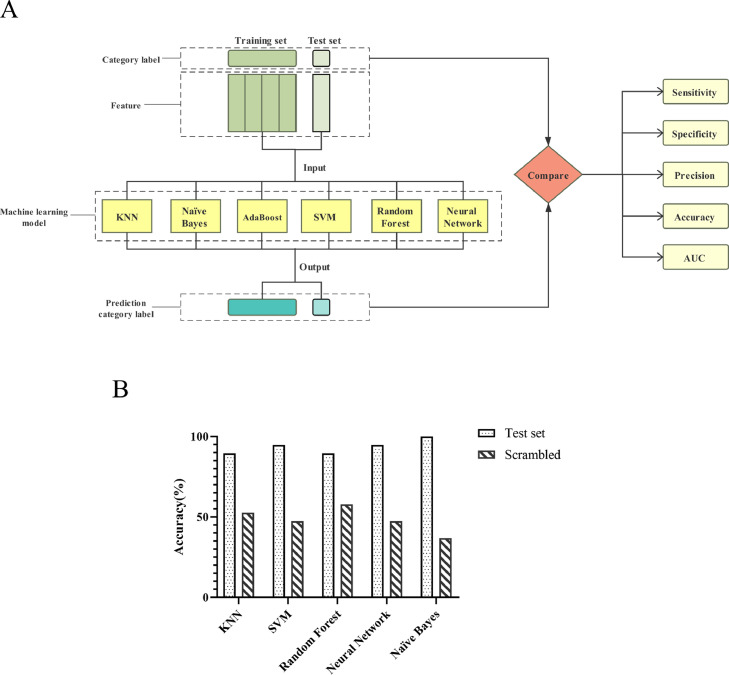
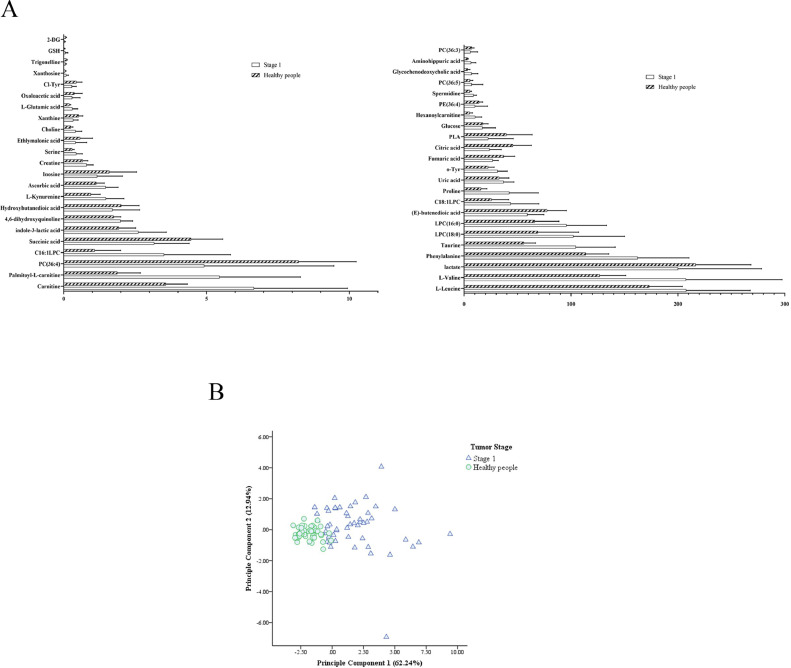
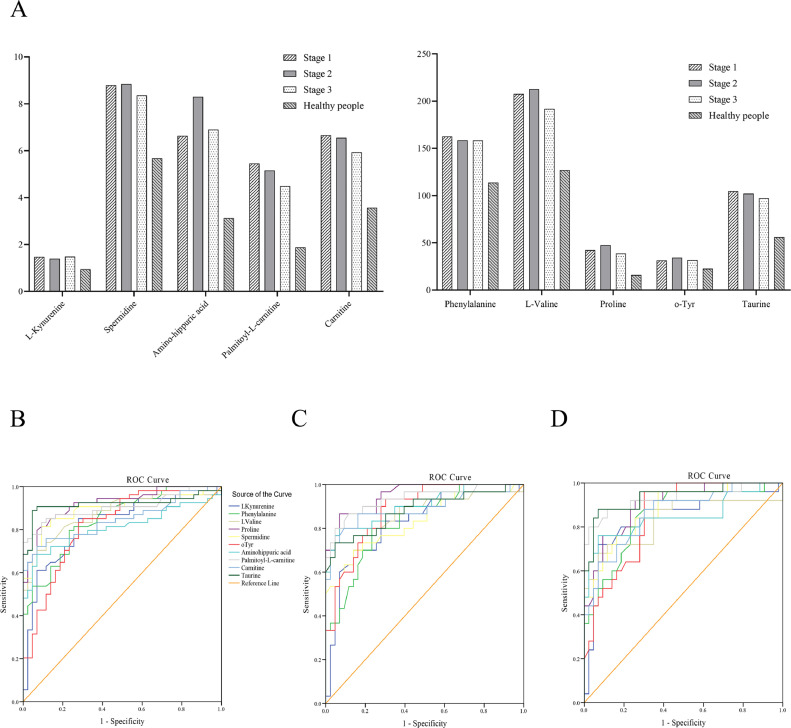
Early diagnosis has been proved to improve survival rate of lung cancer patients. The availability of blood-based screening could increase early lung cancer patient uptake. Our present study attempted to discover Chinese patients' plasma metabolites as diagnostic biomarkers for lung cancer. In this work, we use a pioneering interdisciplinary mechanism, which is firstly applied to lung cancer, to detect early lung cancer diagnostic biomarkers by combining metabolomics and machine learning methods. We collected total 110 lung cancer patients and 43 healthy individuals in our study. Levels of 61 plasma metabolites were from targeted metabolomic study using LC-MS/MS. A specific combination of six metabolic biomarkers note-worthily enabling the discrimination between stage I lung cancer patients and healthy individuals (AUC = 0.989, Sensitivity = 98.1%, Specificity = 100.0%). And the top 5 relative importance metabolic biomarkers developed by FCBF algorithm also could be potential screening biomarkers for early detection of lung cancer. Naïve Bayes is recommended as an exploitable tool for early lung tumor prediction. This research will provide strong support for the feasibility of blood-based screening, and bring a more accurate, quick and integrated application tool for early lung cancer diagnostic. The proposed interdisciplinary method could be adapted to other cancer beyond lung cancer.
早期诊断已被证明可提高肺癌患者的生存率。基于血液的筛查手段的可用性可以提高早期肺癌患者的接受度。我们目前的研究试图发现中国患者血浆代谢物作为肺癌的诊断生物标志物。在这项工作中,我们采用了一种开创性的跨学科机制,该机制首次应用于肺癌研究,通过结合代谢组学和机器学习方法来检测早期肺癌诊断生物标志物。我们的研究共收集了110名肺癌患者和43名健康个体。61种血浆代谢物水平来自使用LC-MS/MS的靶向代谢组学研究。六种代谢生物标志物的特定组合值得注意,它能够区分I期肺癌患者和健康个体(AUC = 0.989,灵敏度 = 98.1%,特异性 = 100.0%)。并且通过FCBF算法得出的前5个相对重要的代谢生物标志物也可能是早期肺癌检测的潜在筛查生物标志物。朴素贝叶斯被推荐作为早期肺肿瘤预测的可利用工具。这项研究将为基于血液的筛查的可行性提供有力支持,并为早期肺癌诊断带来更准确、快速和综合的应用工具。所提出的跨学科方法可适用于肺癌以外的其他癌症。