Lucey Patrick, Cohn Jeffrey F, Matthews Iain, Lucey Simon, Sridharan Sridha, Howlett Jessica, Prkachin Kenneth M
Department of Psychology, University of Pittsburgh, Pittsburgh, PA 15260, USA.
IEEE Trans Syst Man Cybern B Cybern. 2011 Jun;41(3):664-74. doi: 10.1109/TSMCB.2010.2082525. Epub 2010 Nov 22.
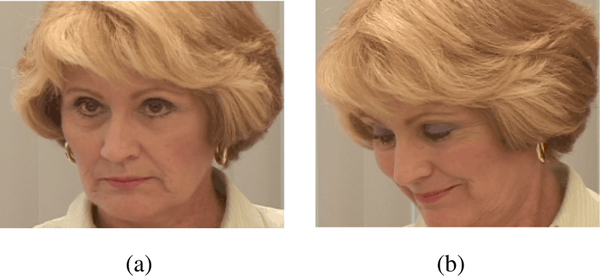
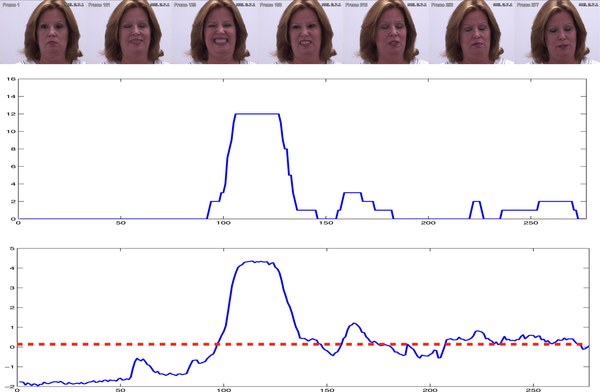
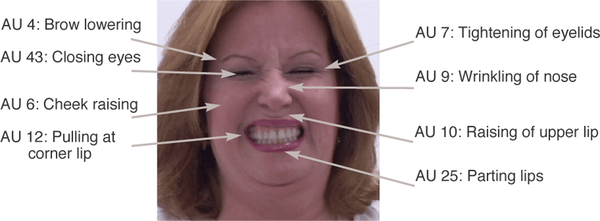
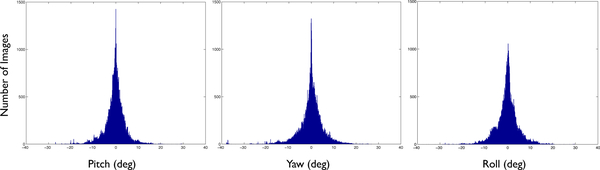
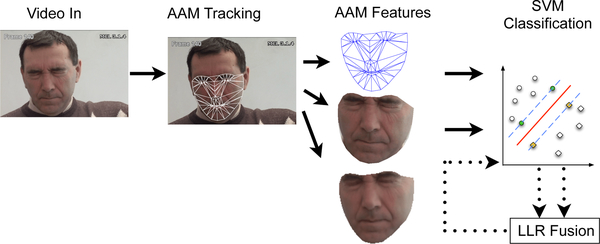
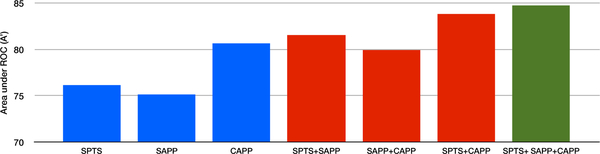
In a clinical setting, pain is reported either through patient self-report or via an observer. Such measures are problematic as they are: 1) subjective, and 2) give no specific timing information. Coding pain as a series of facial action units (AUs) can avoid these issues as it can be used to gain an objective measure of pain on a frame-by-frame basis. Using video data from patients with shoulder injuries, in this paper, we describe an active appearance model (AAM)-based system that can automatically detect the frames in video in which a patient is in pain. This pain data set highlights the many challenges associated with spontaneous emotion detection, particularly that of expression and head movement due to the patient's reaction to pain. In this paper, we show that the AAM can deal with these movements and can achieve significant improvements in both the AU and pain detection performance compared to the current-state-of-the-art approaches which utilize similarity-normalized appearance features only.
在临床环境中,疼痛是通过患者自我报告或观察者报告的。这些测量方法存在问题,因为它们:1)主观,2)没有给出具体的时间信息。将疼痛编码为一系列面部动作单元(AU)可以避免这些问题,因为它可以用于逐帧获得疼痛的客观测量。本文利用肩部受伤患者的视频数据,描述了一种基于主动外观模型(AAM)的系统,该系统可以自动检测视频中患者处于疼痛状态的帧。这个疼痛数据集突出了与自发情绪检测相关的许多挑战,特别是由于患者对疼痛的反应而导致的表情和头部运动。在本文中,我们表明AAM可以处理这些运动,并且与仅利用相似度归一化外观特征的当前最先进方法相比,在AU和疼痛检测性能方面都可以实现显著改进。