Institute for Translational Medicine, University of Pécs Medical School, Pécs, Hungary.
First Department of Medicine, University of Szeged, Szeged, Hungary.
Med Microbiol Immunol. 2021 Feb;210(1):33-47. doi: 10.1007/s00430-020-00696-w. Epub 2020 Nov 21.
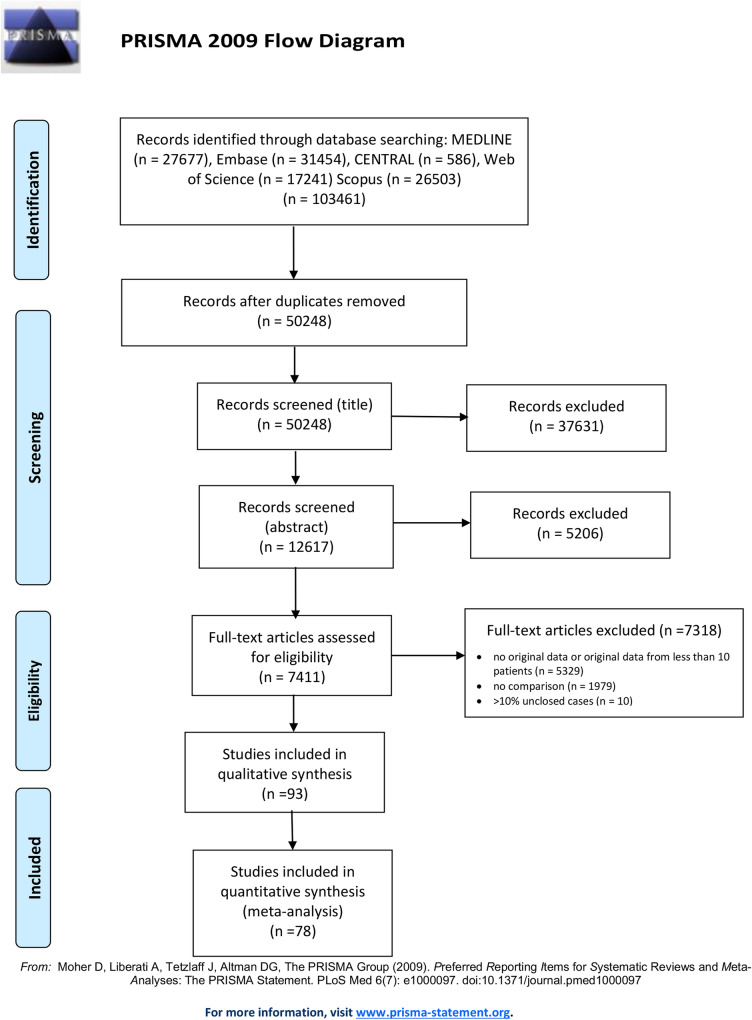
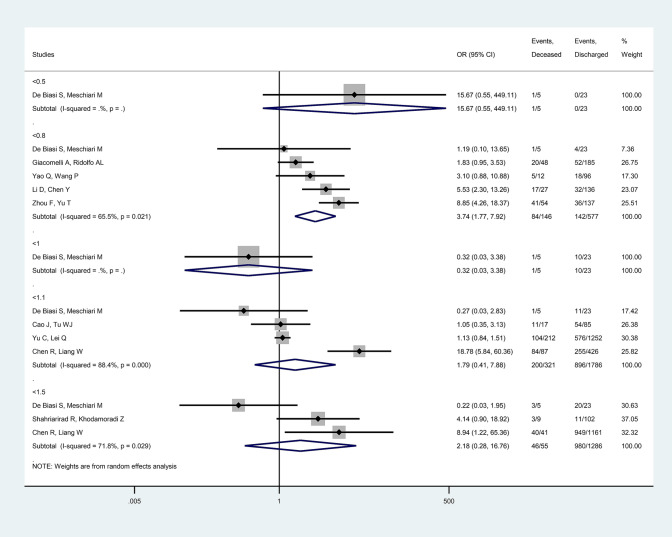
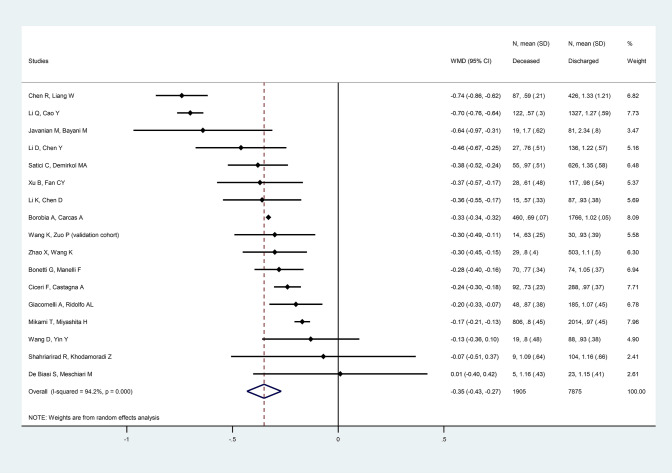
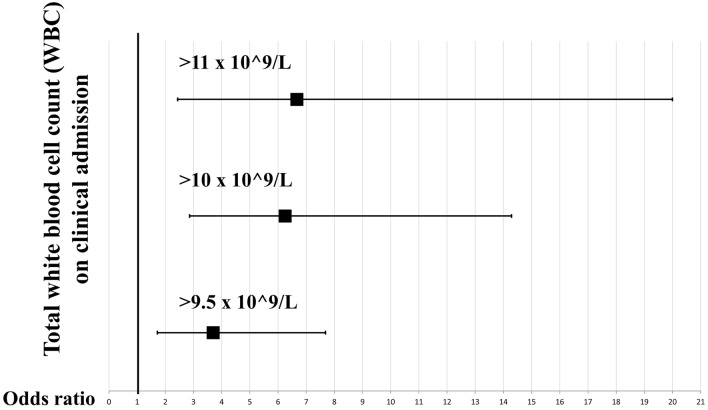
Despite the growing knowledge of the clinicopathological features of COVID-19, the correlation between early changes in the laboratory parameters and the clinical outcomes of patients is not entirely understood. In this study, we aimed to assess the prognostic value of early laboratory parameters in COVID-19. We conducted a systematic review and meta-analysis based on the available literature in five databases. The last search was on July 26, 2020, with key terms related to COVID-19. Eligible studies contained original data of at least ten infected patients and reported on baseline laboratory parameters of patients. We calculated weighted mean differences (WMDs) for continuous outcomes and odds ratios (ORs) with 95% confidence intervals. 93 and 78 studies were included in quantitative and qualitative syntheses, respectively. Higher baseline total white blood cell count (WBC), C-reactive protein (CRP), lactate-dehydrogenase (LDH), creatine kinase (CK), D-dimer and lower absolute lymphocyte count (ALC) (WMD = - 0.35 × 10/L [CI - 0.43, - 0.27], p < 0.001, I = 94.2%; < 0.8 × 10/L, OR = 3.74 [CI 1.77, 7.92], p = 0.001, I = 65.5%) were all associated with higher mortality rate. On admission WBC, ALC, D-dimer, CRP, LDH, and CK changes could serve as alarming prognostic factors. The correct interpretation of laboratory abnormalities can guide therapeutic decisions, especially in early identification of potentially critical cases. This meta-analysis should help to allocate resources and save lives by enabling timely intervention.
尽管人们对 COVID-19 的临床病理特征有了越来越多的了解,但实验室参数的早期变化与患者临床结局之间的相关性尚不完全清楚。在本研究中,我们旨在评估 COVID-19 患者早期实验室参数的预后价值。我们基于五个数据库中的现有文献进行了系统评价和荟萃分析。最后一次检索是在 2020 年 7 月 26 日,检索词与 COVID-19 相关。合格的研究包含至少 10 名感染患者的原始数据,并报告了患者的基线实验室参数。我们计算了连续结果的加权均数差 (WMD) 和 95%置信区间的比值比 (OR)。分别有 93 项和 78 项研究纳入定量和定性综合分析。较高的基线总白细胞计数 (WBC)、C 反应蛋白 (CRP)、乳酸脱氢酶 (LDH)、肌酸激酶 (CK)、D-二聚体和较低的绝对淋巴细胞计数 (ALC) (WMD = -0.35 × 10/L [CI -0.43, -0.27], p < 0.001, I = 94.2%; < 0.8 × 10/L, OR = 3.74 [CI 1.77, 7.92], p = 0.001, I = 65.5%) 均与较高的死亡率相关。入院时的 WBC、ALC、D-二聚体、CRP、LDH 和 CK 的变化可作为预警预后因素。对实验室异常的正确解读可以指导治疗决策,特别是在早期识别潜在的危急病例方面。本荟萃分析有助于通过及时干预来分配资源和拯救生命。