Alsagaff Mochamad Yusuf, Kurniawan Roy Bagus, Purwati Dinda Dwi, Ul Haq Alyaa Ulaa Dhiya, Saputra Pandit Bagus Tri, Milla Clonia, Kusumawardhani Louisa Fadjri, Budianto Christian Pramudita, Susilo Hendri, Oktaviono Yudi Her
Department Cardiology and Vascular Medicine, Faculty of Medicine, Universitas Airlangga - Dr. Soetomo General Academic Hospital, Surabaya, East Java, Indonesia.
Department Cardiology and Vascular Medicine, Universitas Airlangga Hospital, Surabaya, East Java, Indonesia.
Heliyon. 2023 Jul 24;9(8):e18553. doi: 10.1016/j.heliyon.2023.e18553. eCollection 2023 Aug.
The shock index (SI) ratio serves as a straightforward predictor to identify patients who are either at risk of or experiencing shock. COVID-19 patients with shock face increased mortality risk and reduced chances of recovery. This review aims to determine the role of SI in the emergency department (ED) to predict COVID-19 patient outcomes.
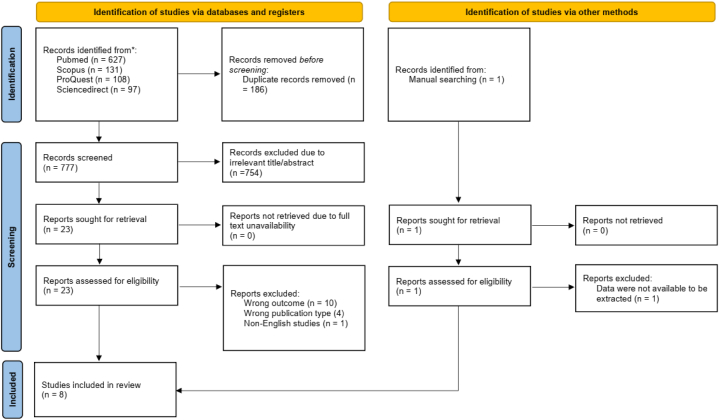
The systematic search was conducted in PubMed, ProQuest, Scopus, and ScienceDirect on June 16, 2023. We included observational studies evaluating SI in ED and COVID-19 patient outcomes. Random-effect meta-analysis was done to generate odds ratios of SI as the predictor of intensive care unit (ICU) admission and mortality. The sensitivity and specificity of SI in predicting these outcomes were also pooled, and a summary receiver operating characteristics (sROC) curve was generated.
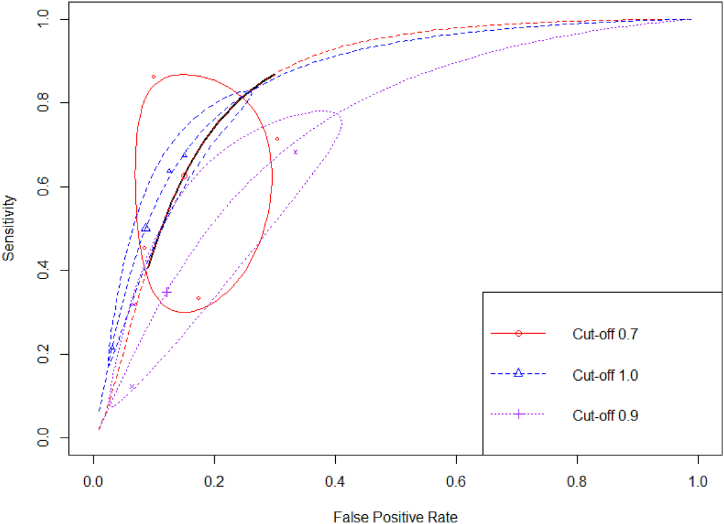
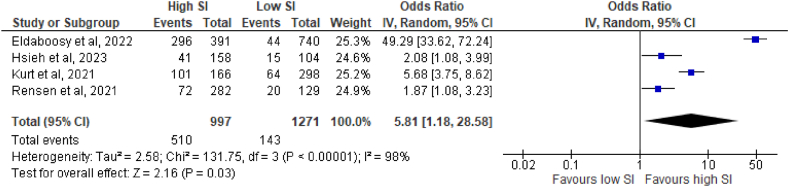
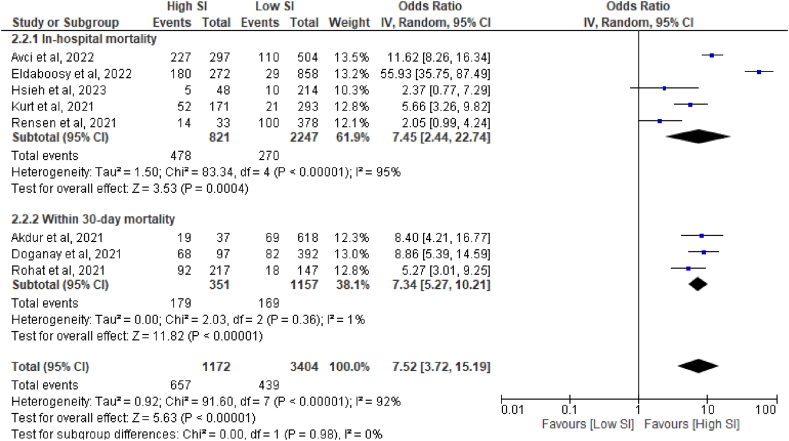
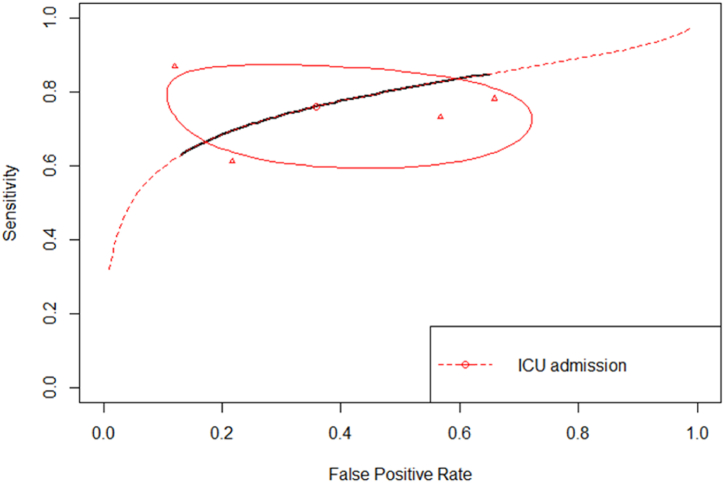
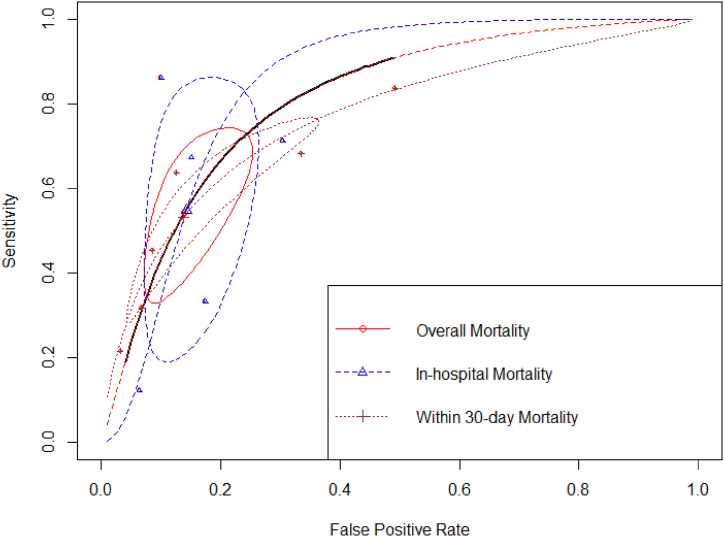
A total of eight studies involving 4557 participants were included in the pooled analysis. High SI was found to be associated with an increased risk of ICU admission (OR 5.81 [95%CI: 1.18-28.58], p = 0.03). Regarding mortality, high SI was linked to higher rates of in-hospital (OR 7.45 [95%CI: 2.44-22.74], p = 0.0004), within 30-day (OR 7.34 [95%CI: 5.27-10.21], p < 0.00001), and overall (OR 7.52 [95%CI: 3.72-15.19], p < 0.00001) mortality. The sensitivity and specificity of SI for predicting ICU admission were 76.2% [95%CI: 54.6%-89.5%] and 64.3% [95%CI: 19.6%-93.0%], respectively. In terms of overall mortality, the sensitivity and specificity were 54.0% (95%CI: 34.3%-72.6%) and 85.9% (95%CI: 75.8%-92.3%), respectively, with only subtle changes for in-hospital and within 30-day mortality. Adjustment of SI cut-off to >0.7 yielded improved sensitivity (95%CI: 78.0% [59.7%-89.4%]) and specificity (95%CI: 76.8% [41.7%-93.9%]) in predicting overall mortality.
SI in emergency room may be a simple and useful triage instrument for predicting ICU admission and mortality in COVID-19 patients. Future well-conducted studies are still needed to corroborate the findings of this study.
休克指数(SI)比率是一种简单的预测指标,用于识别有休克风险或正在经历休克的患者。感染新型冠状病毒肺炎(COVID-19)且出现休克的患者面临更高的死亡风险,康复机会也会减少。本综述旨在确定SI在急诊科预测COVID-19患者预后中的作用。
于2023年6月16日在PubMed、ProQuest、Scopus和ScienceDirect数据库中进行系统检索。我们纳入了评估急诊科SI与COVID-19患者预后的观察性研究。采用随机效应荟萃分析得出SI作为重症监护病房(ICU)入住率和死亡率预测指标的比值比。还汇总了SI预测这些预后的敏感性和特异性,并生成了汇总的受试者工作特征(sROC)曲线。
汇总分析共纳入8项研究,涉及4557名参与者。结果发现,高SI与ICU入住风险增加相关(比值比5.81 [95%置信区间:1.18 - 28.58],p = 0.03)。在死亡率方面,高SI与更高的院内死亡率(比值比7.45 [95%置信区间:2.44 - 22.74],p = 0.0004)、30天内死亡率(比值比7.34 [95%置信区间:5.27 - 10.21],p < 0.00001)和总体死亡率(比值比7.52 [95%置信区间:3.72 - 15.19],p < 0.00001)相关。SI预测ICU入住的敏感性和特异性分别为76.2% [95%置信区间:54.6% - 89.5%]和64.3% [95%置信区间:19.6% - 93.0%]。就总体死亡率而言,敏感性和特异性分别为54.0%(95%置信区间:34.3% - 72.6%)和85.9%(95%置信区间:75.8% - 92.3%),院内死亡率和30天内死亡率仅有细微变化。将SI临界值调整为>0.7时,预测总体死亡率的敏感性(95%置信区间:78.0% [59.7% - 89.4%])和特异性(95%置信区间:76.8% [41.7% - 93.9%])有所提高。
急诊科的SI可能是预测COVID-19患者ICU入住率和死亡率简单且有用的分诊工具。仍需要未来开展设计良好的研究来证实本研究的结果。