Emerg Infect Dis. 2020 Dec;26(12):2899-2906. doi: 10.3201/eid2612.191282.
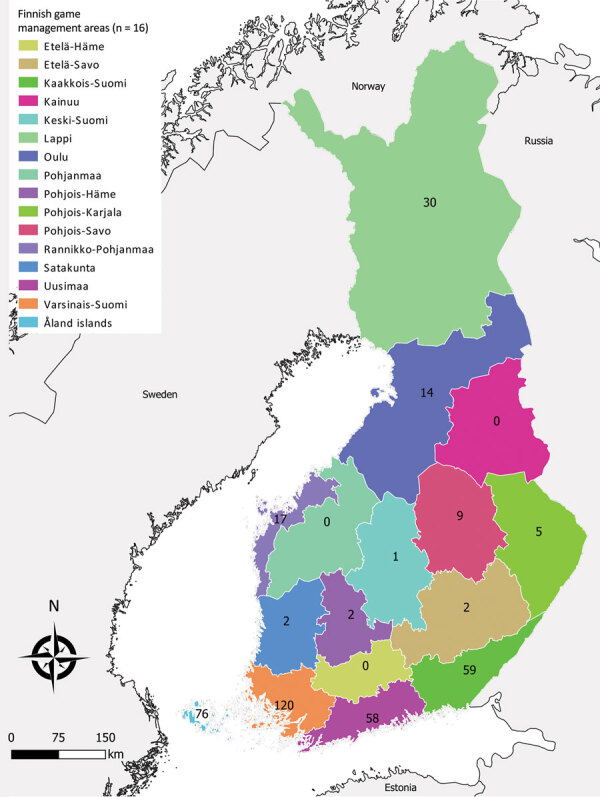
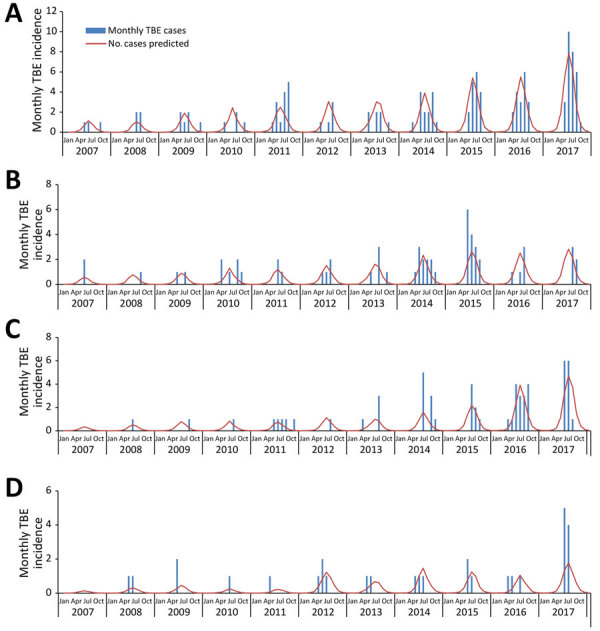
Tick-borne encephalitis (TBE) is an endemic infection of public health importance in Finland. We investigated the effect of ecologic factors on 2007-2017 TBE trends. We obtained domestic TBE case data from the National Infectious Diseases Register, weather data from the US National Oceanic and Atmospheric Administration, and data from the Natural Resources Institute in Finland on mammals killed by hunters yearly in game management areas. We performed a mixed-effects time-series analysis with time lags on weather and animal parameters, adding a random effect to game management areas. During 2007-2017, a total of 395/460 (86%) domestic TBE cases were reported with known place of exposure and date of sampling. Overall, TBE incidence increased yearly by 15%. After adjusting for the density of other animals and minimum temperatures, we found thatTBE incidence was positively associated with white-tailed deer density. Variation in host animal density should be considered when assessing TBE risks and designing interventions.
蜱传脑炎(TBE)是芬兰具有重要公共卫生意义的地方病感染。我们调查了生态因素对 2007-2017 年 TBE 趋势的影响。我们从国家传染病登记处获得了国内 TBE 病例数据、美国国家海洋和大气管理局的天气数据以及芬兰自然资源研究所关于猎人每年在猎物管理区杀死的哺乳动物的数据。我们对天气和动物参数进行了具有时间滞后的混合效应时间序列分析,并对猎物管理区添加了随机效应。在 2007-2017 年期间,总共报告了 395/460(86%)有已知暴露地点和采样日期的国内 TBE 病例。总体而言,TBE 发病率每年增加 15%。在调整了其他动物密度和最低温度后,我们发现 TBE 发病率与白尾鹿密度呈正相关。在评估 TBE 风险和设计干预措施时,应考虑宿主动物密度的变化。