Department of Rehabilitation Medicine, Shenzhen children\'s Hospital, Shenzhen, China.
J Rehabil Med. 2021 Apr 1;53(4):jrm00176. doi: 10.2340/16501977-2772.
The results of previous research into exercise interventions for children with cerebral palsy are inconsistent. The aim of this study is to assess the effectiveness of such exercise interventions.
Systematic review and meta-analysis.
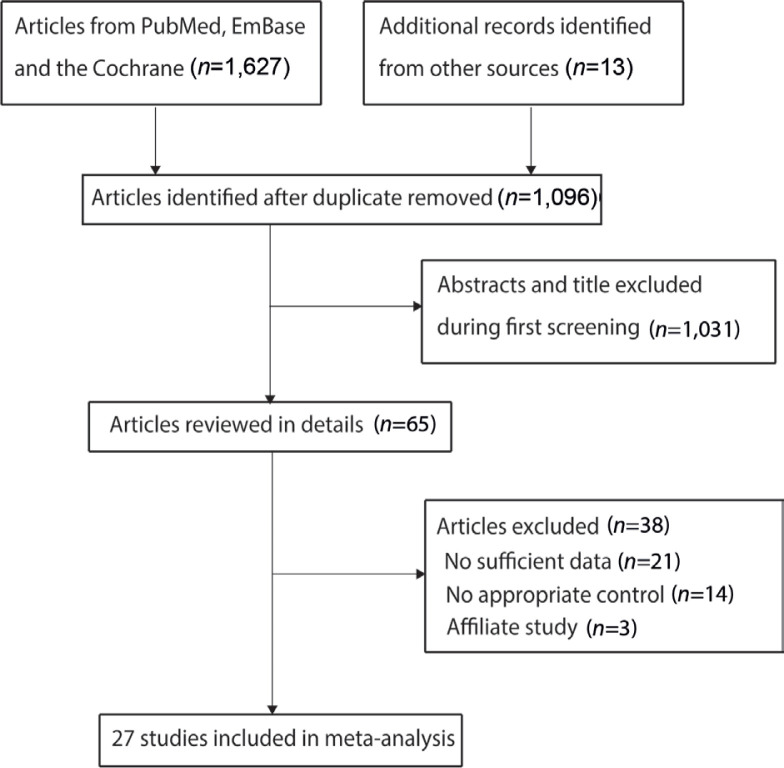
Systematic searches of the PubMed, Embase and Cochrane Library databases for randomized controlled trials involving exercise interventions for children with cerebral palsy, from inception to January 2020, were performed. Pooled weighted mean differences (WMDs) with 95% confidence intervals (95% CI) for gross motor function, gait speed, and muscle strength were calculated using random-effects models.
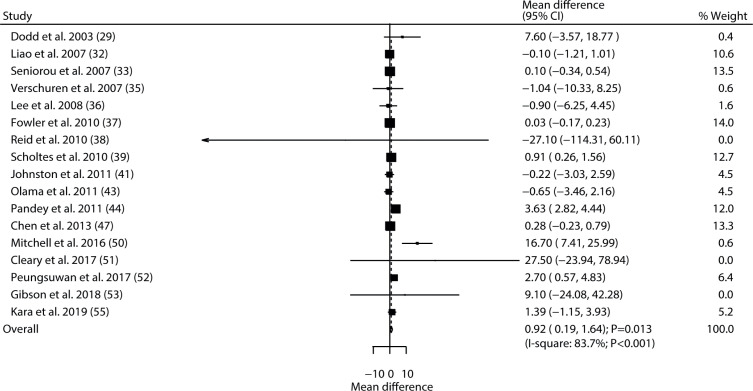
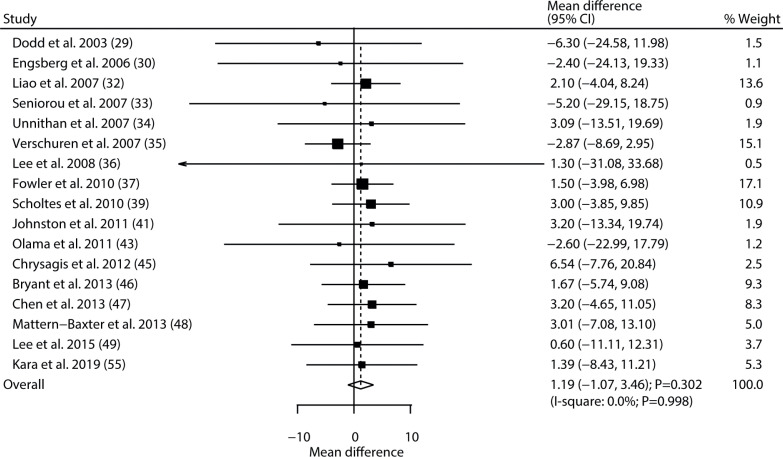
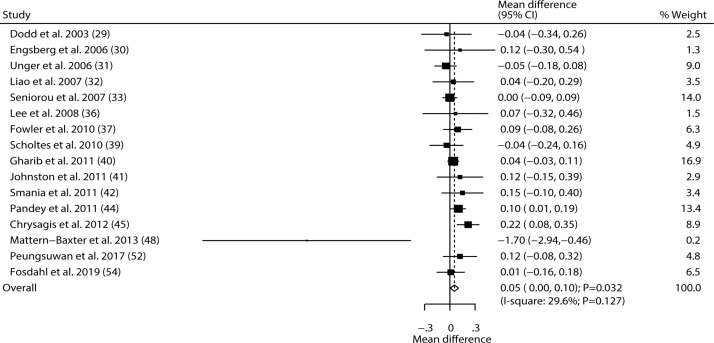
A final total of 27 trials, including 834 children with cerebral palsy, were selected for quantitative analysis. Exercise interventions had no significant effect on the level of gross motor function (WMD 1.19; 95% CI -1.07 to 3.46; p = 0.302). However, exercise interventions were associated with higher levels of gait speed (WMD 0.05; 95% CI 0.00-0.10; p = 0.032) and muscle strength (WMD 0.92; 95% CI 0.19-1.64; p = 0.013).
These results suggest that exercise interventions may have beneficial effects on gait speed and muscle strength, but no significant effect on gross motor function in children with cerebral palsy.
先前关于脑瘫儿童运动干预的研究结果并不一致。本研究旨在评估此类运动干预的效果。
系统评价和荟萃分析。
系统检索 PubMed、Embase 和 Cochrane Library 数据库,检索时间为建库至 2020 年 1 月,纳入针对脑瘫儿童的运动干预的随机对照试验。采用随机效应模型计算粗大运动功能、步态速度和肌肉力量的总加权均数差(WMD)及其 95%置信区间(95%CI)。
最终共纳入 27 项试验,包括 834 名脑瘫儿童,进行了定量分析。运动干预对粗大运动功能水平没有显著影响(WMD 1.19;95%CI -1.07 至 3.46;p=0.302)。然而,运动干预与更高的步态速度(WMD 0.05;95%CI 0.00 至 0.10;p=0.032)和肌肉力量(WMD 0.92;95%CI 0.19 至 1.64;p=0.013)相关。
这些结果表明,运动干预可能对脑瘫儿童的步态速度和肌肉力量有有益影响,但对粗大运动功能没有显著影响。