Jonker Soraya M R, Berendschot Tos T J M, Saelens Isabelle E Y, Bauer Noël J C, Nuijts Rudy M M A
University Eye Clinic Maastricht, Maastricht University Medical Center, Maastricht, The Netherlands.
Department of Ophthalmology, University Hospitals KU Leuven, Leuven, Belgium.
Indian J Ophthalmol. 2020 Dec;68(12):2779-2796. doi: 10.4103/ijo.IJO_2995_20.
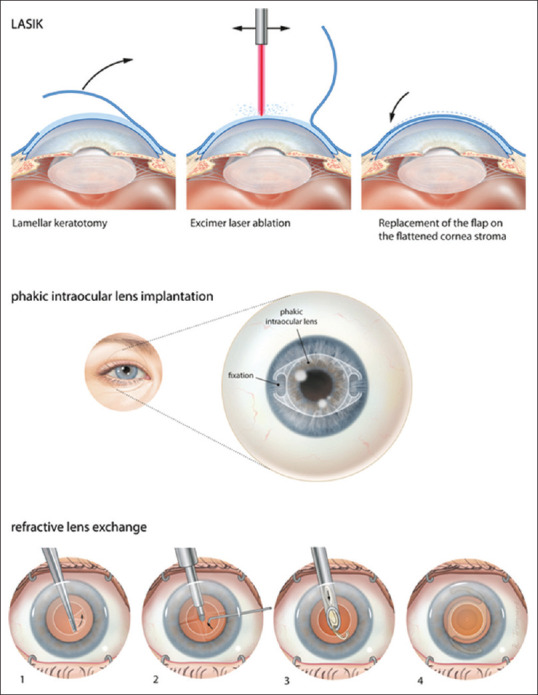
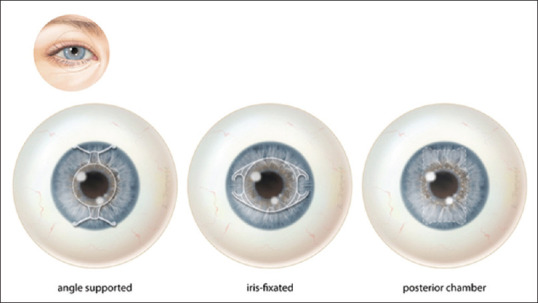
Phakic intraocular lenses (pIOLs) are a common solution for the surgical correction of high myopia and myopia in thin corneas. Global trends result in increasing rates of patients with high myopia which will result in increased rates of pIOL implantation. Three types of lenses can be distinguished: anterior chamber angle-supported, anterior chamber iris-fixated, and posterior chamber phakic IOLs. The efficacy of phakic intraocular lenses is generally very good, but pIOLs have undergone many changes over the years to improve the safety profile and decrease pIOL-related complications such as endothelial cell loss, corneal decompensation and cataract formation. This article describes the efficacy and safety profiles of the most recent pIOLs, as well as suggests gaps of knowledge that are deserve additional research to optimize the results of pIOLs.
有晶状体眼人工晶状体(pIOL)是手术矫正高度近视和薄角膜近视的常用解决方案。全球趋势导致高度近视患者比例上升,这将导致pIOL植入率增加。可区分三种类型的晶状体:前房角支撑型、前房虹膜固定型和后房有晶状体眼人工晶状体。有晶状体眼人工晶状体的疗效总体上非常好,但多年来pIOL经历了许多改进,以提高安全性并减少与pIOL相关的并发症,如内皮细胞丢失、角膜失代偿和白内障形成。本文描述了最新pIOL的疗效和安全性概况,并指出了值得进一步研究以优化pIOL效果的知识空白。