Institute of Pharmacology and Toxicology, University of Zurich-Vetsuisse, Zurich, Switzerland.
Neuroscience Center Zurich, University of Zurich and ETH Zurich, Zurich, Switzerland.
Mol Psychiatry. 2021 Feb;26(2):396-410. doi: 10.1038/s41380-020-00952-8. Epub 2020 Nov 23.
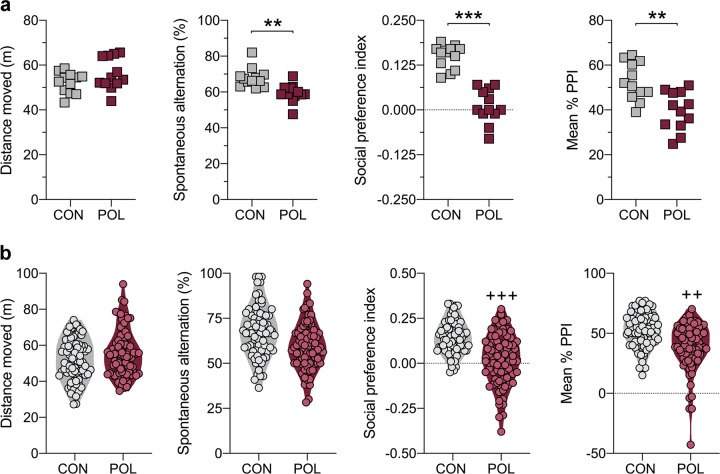
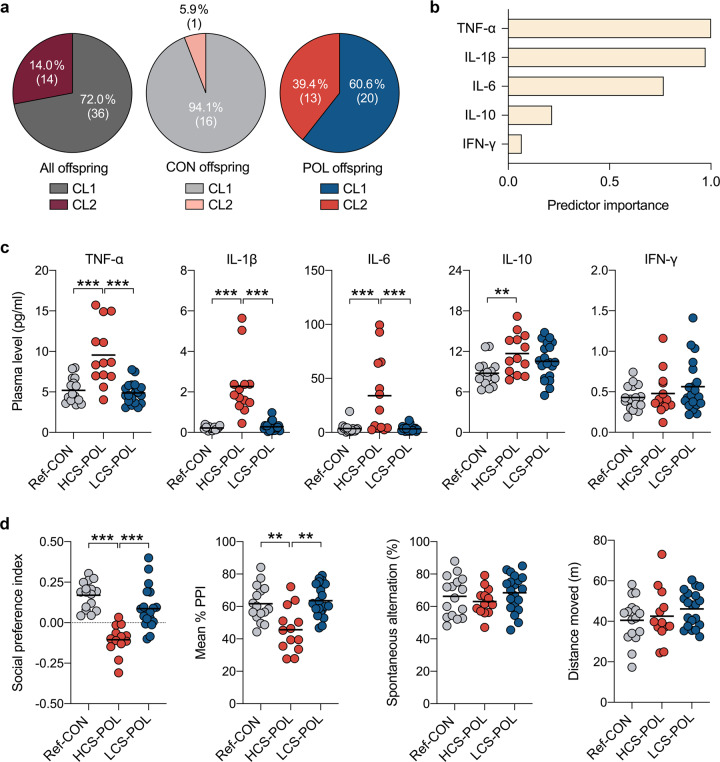
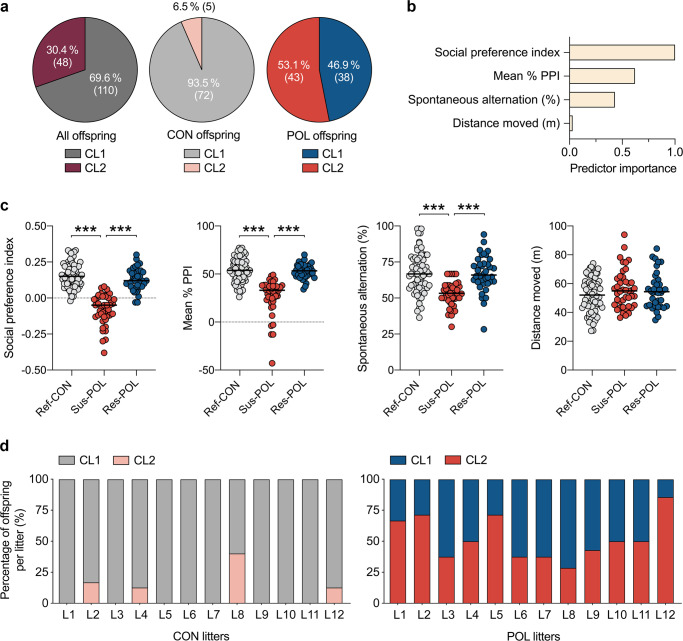
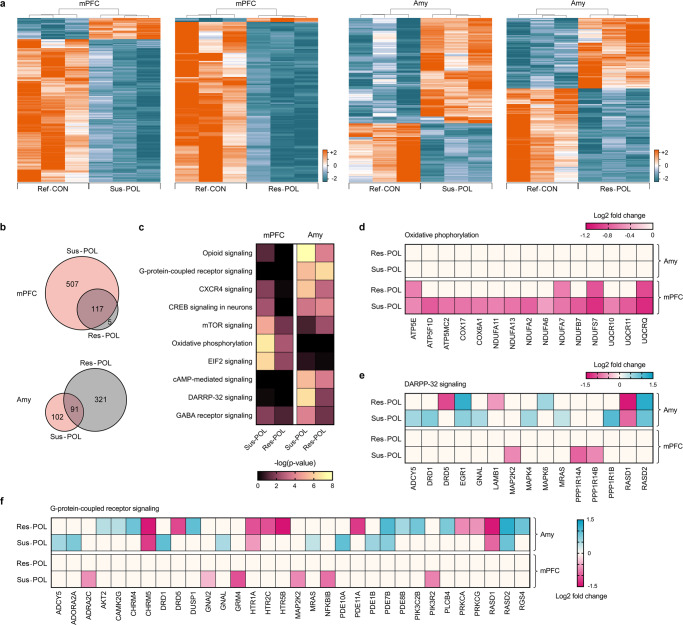
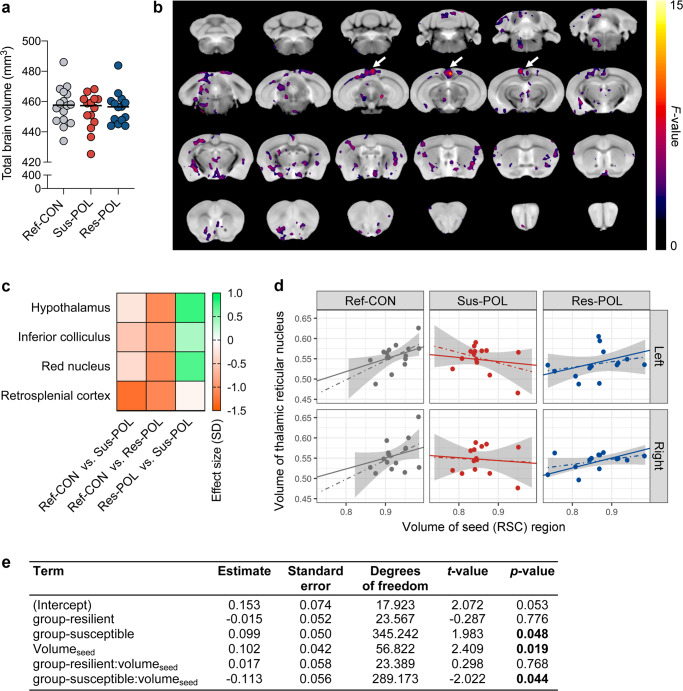
Infectious or noninfectious maternal immune activation (MIA) is an environmental risk factor for psychiatric and neurological disorders with neurodevelopmental etiologies. Whilst there is increasing evidence for significant health consequences, the effects of MIA on the offspring appear to be variable. Here, we aimed to identify and characterize subgroups of isogenic mouse offspring exposed to identical MIA, which was induced in C57BL6/N mice by administration of the viral mimetic, poly(I:C), on gestation day 12. Cluster analysis of behavioral data obtained from a first cohort containing >150 MIA and control offspring revealed that MIA offspring could be stratified into distinct subgroups that were characterized by the presence or absence of multiple behavioral dysfunctions. The two subgroups also differed in terms of their transcriptional profiles in cortical and subcortical brain regions and brain networks of structural covariance, as measured by ex vivo structural magnetic resonance imaging (MRI). In a second, independent cohort containing 50 MIA and control offspring, we identified a subgroup of MIA offspring that displayed elevated peripheral production of innate inflammatory cytokines, including IL-1β, IL-6, and TNF-α, in adulthood. This subgroup also showed significant impairments in social approach behavior and sensorimotor gating, whereas MIA offspring with a low inflammatory cytokine status did not. Taken together, our results highlight the existence of subgroups of MIA-exposed offspring that show dissociable behavioral, transcriptional, brain network, and immunological profiles even under conditions of genetic homogeneity. These data have relevance for advancing our understanding of the variable neurodevelopmental effects induced by MIA and for biomarker-guided approaches in preclinical psychiatric research.
感染性或非感染性母体免疫激活(MIA)是具有神经发育病因的精神和神经疾病的环境风险因素。虽然越来越多的证据表明其对健康有重大影响,但 MIA 对子代的影响似乎是可变的。在这里,我们旨在确定和描述暴露于相同 MIA 的同基因小鼠后代的亚组,通过在妊娠第 12 天给予病毒模拟物聚肌苷酸:聚胞苷酸(poly(I:C))在 C57BL6/N 小鼠中诱导 MIA。对来自包含>150 个 MIA 和对照后代的第一个队列的行为数据进行聚类分析表明,MIA 后代可以分为具有或不具有多种行为功能障碍的不同亚组。这两个亚组在皮质和皮质下脑区以及通过离体结构磁共振成像(MRI)测量的结构协变脑网络中的转录谱上也存在差异。在包含 50 个 MIA 和对照后代的第二个独立队列中,我们确定了一个 MIA 后代亚组,其在成年时表现出先天炎症细胞因子(包括 IL-1β、IL-6 和 TNF-α)的外周产生增加。该亚组还表现出社交接近行为和感觉运动门控的显著损伤,而具有低炎症细胞因子状态的 MIA 后代则没有。总之,我们的研究结果表明,即使在遗传同质性条件下,暴露于 MIA 的后代也存在具有不同行为、转录、脑网络和免疫特征的亚组。这些数据对于推进我们对 MIA 诱导的可变神经发育效应的理解以及在临床前精神科研究中的基于生物标志物的方法具有重要意义。