López-Yerena Anallely, Perez Maria, Vallverdú-Queralt Anna, Escribano-Ferrer Elvira
Department of Nutrition, Food Science and Gastronomy XaRTA, Faculty of Pharmacy and Food Sciences, Institute of Nutrition and Food Safety (INSA-UB), University of Barcelona, 08028 Barcelona, Spain.
Laboratory of Organic Chemistry, Faculty of Pharmacy and Food Sciences, University of Barcelona, 08028 Barcelona, Spain.
Pharmaceutics. 2020 Nov 21;12(11):1123. doi: 10.3390/pharmaceutics12111123.
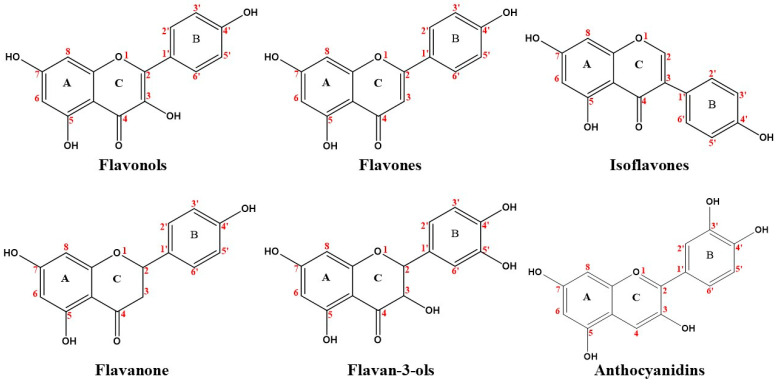
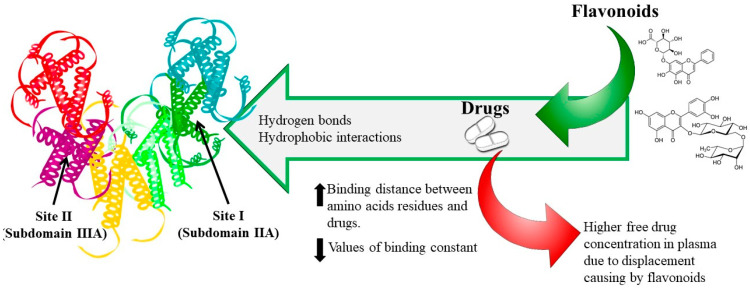
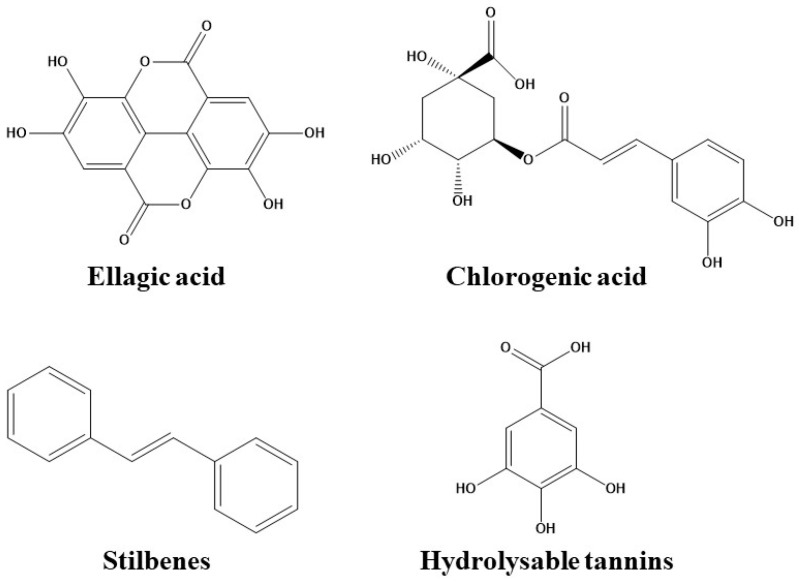
The distribution of drugs and dietary phenolic compounds in the systemic circulation de-pends on, among other factors, unspecific/specific reversible binding to plasma proteins such as human serum albumin (HSA). Phenolic substances, present in plant-derived feeds, foods, beverages, herbal medicines, and dietary supplements, are of great interest due to their biological activity. Recently, considerable research has been directed at the formation of phenol-HSA complexes, focusing above all on structure-affinity relationships. The nucleophilicity and planarity of molecules can be altered by the number and position of hydroxyl groups on the aromatic ring and by hydrogenation. Binding affinities towards HSA may also differ between phenolic compounds in their native form and conjugates derived from phase II reactions. On the other hand, food-drug interactions may increase the concentration of free drugs in the blood, affecting their transport and/or disposition and in some cases provoking adverse or toxic effects. This is caused mainly by a decrease in drug binding affinities for HSA in the presence of flavonoids. Accordingly, to avoid the side effects arising from changes in plasma protein binding, the intake of flavonoid-rich food and beverages should be taken into consideration when treating certain pathologies.
药物和膳食酚类化合物在体循环中的分布取决于多种因素,其中包括与血浆蛋白(如人血清白蛋白,HSA)的非特异性/特异性可逆结合。存在于植物性饲料、食品、饮料、草药和膳食补充剂中的酚类物质,因其生物活性而备受关注。最近,大量研究致力于酚-HSA复合物的形成,尤其关注结构-亲和力关系。分子的亲核性和平面性可通过芳环上羟基的数量和位置以及氢化作用而改变。酚类化合物的天然形式与其II相反应衍生的共轭物对HSA的结合亲和力也可能不同。另一方面,食物-药物相互作用可能会增加血液中游离药物的浓度,影响其转运和/或处置,在某些情况下还会引发不良反应或毒性作用。这主要是由于在黄酮类化合物存在下药物对HSA的结合亲和力降低所致。因此,为避免因血浆蛋白结合变化而产生的副作用,在治疗某些疾病时应考虑富含黄酮类化合物的食物和饮料的摄入量。